


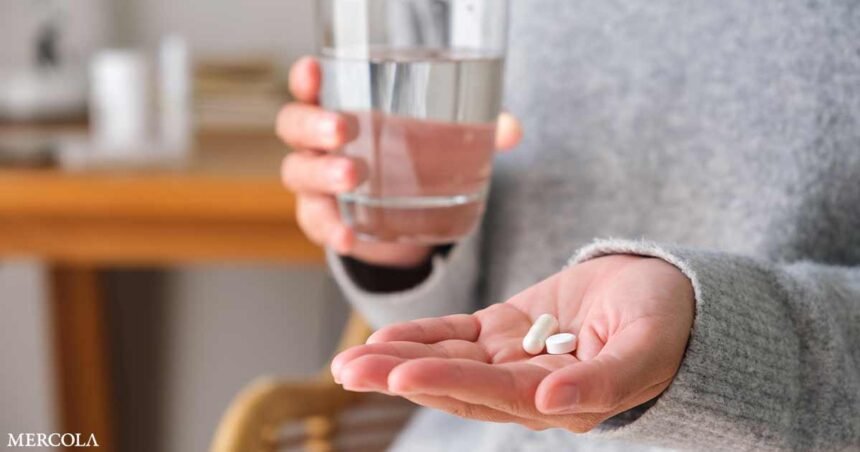
Virtually no one can maintain a supplement routine perfectly for long periods of time. Falling off the proverbial wagon is not a personal failure; it’s just being human. We see it constantly: Someone starts a new supplement routine strong, feels real momentum, and then a vacation, a deadline, a sick week, or a string of overscheduled days knocks them off the rails.
They skip their supplements for a few days. Motivation dwindles and it becomes more and more difficult to remember what they were supposed to take and when. And then comes the most damaging moment of all — the story they tell themselves about it: “I blew it. I’m just not a consistent person. What’s the point of even trying?”
The Slip Isn’t the Problem — the Story Is
That story ends more supplement routines than any missed week ever could. Because the benefit you lost out on during that week is not going to break you. The shame spiral it can set off, however, is far more detrimental. This is where the science is encouraging. How you talk to yourself after missing your supplements for a stretch can matter as much as the missed doses themselves.
Researchers call the healthier response self-compassion — the ability to treat yourself kindly in times of failure or distress rather than berating yourself — and it isn’t a fixed personality trait you either have or don’t. It’s something anyone can learn. In a systematic review of self-compassion programs, most studies found that people’s self-compassion rose with brief practice, and those increases tracked with improvements in healthy behaviors like eating and physical activity.1
And it’s specifically the response to a slip that matters. In a two-week study that checked in with people twice a day by phone, those who met an inevitable lapse in their health regimen with self-compassion reported a stronger intention to keep going — and expressed greater confidence that they actually could — than those who reacted with guilt and harsh self-criticism; the kinder response, not the harsher one, was what kept them on track.2
Translate that to a supplement routine and the implication is direct: how you handle the morning you forget your dose does more to determine whether you’re still taking it next month than the forgotten dose itself.
The flip side — shame — is the part that does the real damage to a routine. A separate review of compassion-based approaches found that learning to respond to yourself with kindness reduced shame and supported healthier behavior.3
That matters because shame rarely motivates you to start taking care of yourself again; more often, it motivates avoidance. The harsh inner voice that says you’ve failed makes you want to stop looking at the bottle you’ve been ignoring, which is precisely how a single missed week hardens into a supplement routine you’ve quietly abandoned.
So, the most useful skill here isn’t more discipline. It’s a kinder, quieter response the next time you inevitably miss a few days: “This is normal, it’s recoverable; I’ll take my next dose tonight.”
Backsliding Is Normal
Let’s say it plainly, because almost no one does: falling off a supplement routine now and then is normal. The goal isn’t to maintain a flawless streak of never missing a dose. The real goal is to make getting back to your supplements so easy that a missed week stays a missed week instead of becoming the end.
It helps to remember that even building a supplement habit in the first place rarely runs on a tidy schedule. A 2024 meta-analysis of how health habits form found that reaching the point where a behavior feels automatic took anywhere from about four days to nearly a year, with a typical time of roughly two months, with enormous variation from one person to the next.4 If the very process of forming a habit is that uneven, expecting yourself to have perfect adherence was never realistic.
Once you accept that slides are a normal part of life rather than evidence of a personal character flaw, the emotional weight you attach to them begins to soften. A day of skipped supplements can then be viewed for what it is: a Tuesday that got away from you.
There’s an old piece of wisdom worth borrowing here. When an engine has been sitting unused for a period of time, you don’t floor it back to full speed in an instant, because parts have stiffened and forcing it only does damage. You start it gently and let it warm back up.
Restarting a supplement routine — or any other health-related routine — works in a similar way. After a slide, the instinct is an all-or-nothing crackdown — back to following every rule at once, as penance for the lapse. It feels virtuous, yet it is almost guaranteed to fail again, because it reinstates the exact burden that caused you to fall off in the first place. The better move is the exact opposite: a gentle, forgiving re-entry. One serving, today, with no penance required.
And here’s another key: that gentle re-entry is only possible if the supplement routine was simple enough to begin with. If restarting means counting out a dozen capsules, rebuilding an elaborate multi-dose schedule, and summoning fresh willpower, many people simply won’t do it. But if getting back on means stirring a scoop of nutritional powder into a breakfast smoothie, they probably will.
Why a Simple Routine Is Easier to Come Back To
The research on what helps people stick with a daily regimen points the same direction: in a systematic review pooling 83 studies of people on daily treatment routines, a simplified regimen was among the strongest enablers of staying consistent, while complex regimens and forgetfulness were among the biggest barriers.5
This is exactly why we’ve been redesigning some of our supplements the way we have. A simple, food-centered, low-friction supplement routine isn’t just easier to keep day to day, it’s also dramatically easier to return to after you’ve fallen off. And the easier your routine is to resume, the less any single missed stretch will cost you.
The Bottom Line
A missed week is recoverable; the shame spiral is what does the lasting damage — and the antidote isn’t harsher discipline but a kinder response and a supplement routine that is easy enough to resume without drama.
Make getting back to it easy and forgiving, and the roller coaster stops being a reason to quit. Few people are able to take their supplements “perfectly” for long periods of time. It’s normal. What matters is that you keep getting back to them, and by reformulating some of our supplements into easy-to-use powders meant to be added to food and beverages, we strive to make it as simple and easy to restart as possible.
Frequently Asked Questions
Q: I always fall off my supplement routine after a week or two. What am I doing wrong?
A: Almost certainly nothing about your character. Sticking with supplements tends to be a bit like a roller coaster, not a straight climb, and nearly everyone slides when life gets busy. The slide isn’t the problem — what usually ends a supplement routine is the self-blame that follows it. The fix isn’t to add more reminders in an effort to never miss a dose; it’s to make getting back on so easy that a missed week doesn’t derail your entire program.
Q: Isn’t being “easy on myself” just an excuse to stop taking them?
A: It’s the opposite. Harsh self-criticism and shame tend to drive avoidance. Research on self-compassion, which is simply treating yourself kindly after missing a few days, links it to better follow-through, not less. Being kind to yourself is what makes getting back to your supplements possible.
Q: After I’ve fallen off, what’s the best way to restart my supplements?
A: Gently. Resist the all-or-nothing crackdown — it tends to reinstate the very burden that caused you to fall off and make you “fail” again. Instead, just take your next serving today, with no penance required.
Q: How does a simpler supplement routine help when I backslide?
A: Because the easier your routine is to resume, the less any missed stretch will cost you. If getting back on means rebuilding an elaborate multi-pill regimen, most people won’t. If it means stirring a scoop of nutritional powder into breakfast, they will. A food-centered routine removes most of the friction that makes a single bad week turn into a permanently abandoned regimen.
These statements have not been evaluated by the U.S. Food and Drug Administration.
This article is for general education. The products described are dietary supplements intended to support normal health and wellbeing as part of a food-first lifestyle. They are not a substitute for a varied diet, a healthy lifestyle, or the advice of your physician. If you are pregnant, nursing, taking medication, or managing a health condition, talk with your healthcare provider before beginning any supplement.
This article is for informational purposes only and does not constitute medical advice. Consult a qualified healthcare provider before making changes to your health regimen.
Test Your Knowledge with Today’s Quiz!
Take today’s quiz to see how much you’ve learned from yesterday’s Mercola.com article.
What do you call the clear fluid that cushions the brain and spinal cord?