


Peloton, Kohl’s, Target, General Mills, Macy’s have something in common. These brands are engaged in brand turnarounds. Some of these brand turnarounds are brand turnaround-turnarounds, led by smart executive teams, some with new CEOs who offer new strategic approaches. These teams appear to be diligent and creative in improving product offerings.
There is just one problem.
A product is not a brand. A product is the truth of a brand’s promise. A brand is a promise of an expected, relevant, differentiated experience. The product (s) support this promise. But the product (s) are not the promise.
This article is part of Branding Strategy Insider’s FREE newsletter. Join the world’s smartest marketers and subscribe here for actionable insights delivered directly to your inbox.
All of these brands, Peloton, Kohl’s, General Mills, Macy’s, and Target, recognize that their current experiences are not driving customers to the brands. However, statements from C-suite executives do not promote efforts to define their brands’ expected, relevant, differentiated experiences. The statements focus on exercise equipment, merchandising assortments, inventories, digital access, departments, and reorgs.
We live in an experience economy. But, this is not news.
Almost 30 years ago, in 1998, B. Joseph Pine II and James H. Gilmore wrote a seminal book, The Experience Economy. The experience economy is not just for the wealthy. Every person wants to have a great, defining, problem-solving, need-satisfying, occasion-specific brand experience. Of course, these experiences must be affordable. But, again, value is more than mere price. The total brand experience matters.
Peloton has lost muscle ever since COVID-19. Peloton is now segueing to commercial exercise equipment to save the brand. This is a new strategy in a very long line of now-defunct strategies created to generate shareholder value. Do you remember the recent strategy aimed at young men? From the beginning of its communications, Peloton focused on its products: its indoor cycle, then the treadmill, which had its safety problems.
Peloton has skirted communicating the core essence of its brand. Peloton’s purpose: Empower people to live fit, strong, long, and happy lives. Peloton’s mission: Bring fitness and wellness experiences to Members anytime, anywhere. If you want to know how brand-defeating it is to not focus on your brand promise, just think about Beyond Meat. Beyond Meat never told customers what the experience would be; the brand just touted its product as a hero.
Peloton is a brand that generates a community of dedicated users who believe in Peloton’s vision of “discovering a best version of themselves through the power of sweat anytime, anywhere.” Peloton is a connected, bonded community of unique individuals, empowered and inspired to grow stronger together. Peloton also actualizes a key human driver: the maximization of inclusiveness and individuality. However, Peloton’s strategies focus on the products.
Target’s current CEO, Michael Fiddelke, reports that Target lost its brand experience. Target is no longer “a pacesetter.” Mr. Fiddelke said that Target is not an everything store, adding that Target’s brand experience has been inconsistent. Facing the facts, Mr. Fiddelke said Target lost its distinctiveness. But Target’s solution to the inconsistent, indistinct brand experience is to address out-of-stock items and the transitional encounter. In the 1990s, Target stores became purveyors of cheap-chic offerings. It became a place where stylish, well-designed products were affordable. The brand’s trendy, fashionable, modish items, from an Alessi teakettle to Mossimo Giannulli clothing, gave the brand its moniker Targét (Tar-ZHAY). Target made stylish available to the masses—affordable stylishness. Target democratized stylishness. In today’s economy, this is a powerful promise.
General Mills announced that its view of the year ahead is shaky due to the current macro uncertainties. Having said this, General Mills’ answer to revitalizing its brand portfolio is more variety, aka package sizes, more protein versions, and offers dedicated to GLP-1 users. Do you think the cereal aisle needs more SKUs?
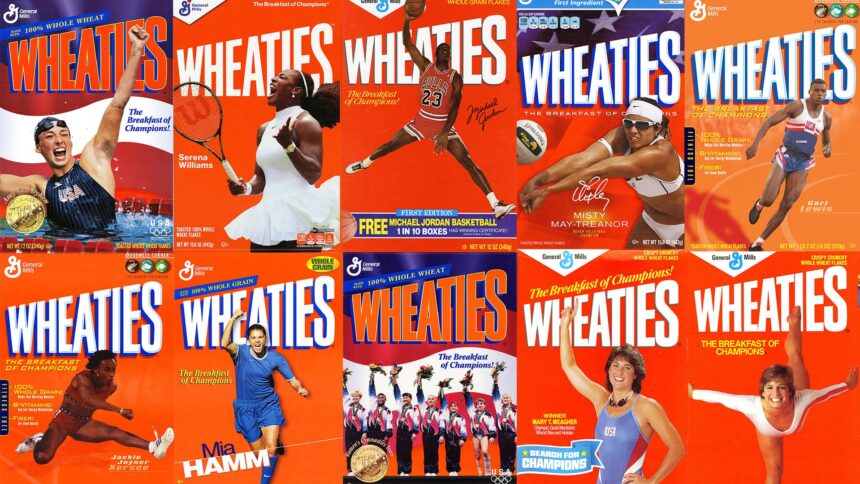
If you are thinking that a cereal cannot have an experience, General Mills’ Wheaties proves your thinking is wrong. The idea that Wheaties was the breakfast of champions allowed consumers to believe that they could be just like the person featured on the box.
General Mills also owns Betty Crocker cake mixes. Decades ago, when cake mixes made cake-making easy, some people thought cake mixes were a sign of not being a good mom. To ease the apprehensions, Betty Crocker showed kids thanking mom for the great, delicious cake. “Thank you, mom” provided maternal appreciation.
At least General Mills is telling analysts that brand rejuvenation is not a short-term strategy. General Mills is willing to take a short-term hit in order to rebuild its brand portfolio.
Kohl’s is in a turnaround situation that The Wall Street Journal indicates has “stalled.” Of course, in a turnaround, a brand must stop the bleeding. But that does not mean ignoring the total brand experience. Kohl’s CEO, Michael Bender, said that Kohl’s tactics were to “… improve its merchandising assortment.” The goal: develop a “more curated assortment.” There is also a statement indicating that Kohl’s promotional strategy will be “retooled.”
Communications that one assumes personify the target customer, the Kohl’s mom, do not appear to deliver on a promise of a relevant, differentiated brand experience. We know she loves Kohl’s and Kohl’s cash.
Here is an interesting, ongoing story about the power of brand experience.
Pizza Hut may be just one slice away from a rumored sale. Pizza Hut reported a “3% decline in sales last quarter of 2025, its ninth consecutive quarter of decline.” Domino’s is far out-pacing Pizza Hut with a 3.7% increase in sales.
Pizza purveyors are everywhere. Pizza is the only sector in which independent restaurants have a higher market share than the largest chain. In 2022, data showed there were 44,644 independent pizza restaurants in the U.S., roughly 4,800 more than the previous year. Meanwhile, the number of U.S.-based pizza chain units counted 35,531. 2024 data indicate that 30% to 40% of the approximately 75,000 pizza restaurants (chains included) are independents.
In its rivalry with Domino’s and Papa John’s, Pizza Hut segued into price promotions as a compelling reason to frequent the brand. Pizza Hut used to be a dine-in establishment. Becoming a carryout store cut deeply into what Pizza Hut stood for, turning it into a generic takeout place.
What exactly is the Pizza Hut relevant, differentiated brand experience?
Years ago, Pizza Hut enlisted our two-person team to conduct a deep-dive into the brand to articulate the Pizza Hut brand promise, essence, and guiding principles. I wrote the Pizza Hut Brand Book and the Pizza Hut Plan to Breakthrough. At a huge convention in Las Vegas, we unveiled the Pizza Hut brand work – along with the KFC brand work, which we conducted simultaneously.
As a dine-in establishment. Pizza Hut restaurants had a relevant, differentiated vibe. The Brand Book told the Pizza Hut story.
In 1958, Dan and Frank Carney opened a 550-square-foot pizza restaurant in Wichita, Kansas. The Carneys created an innovative, high-quality, engaging, informal eating experience in a friendly neighborhood restaurant. Pizza Hut became a popular place with the teenage and college crowd. Pizza Hut attracted families who enjoyed a night out, eating meals they would not have had at home. After the families left, Pizza Hut became a hangout for college-age kids. Having a good time was essential to Pizza Hut. The idea caught on. A second Pizza Hut opened in December 1958 in downtown Wichita. By 1963, there were forty-two Pizza Hut restaurants.
Pizza Hut was always more than just the pizza. The Pizza Hut brand experience was generosity, hard work, friendships, innovation, naturalness, and fun.
Our work with Pizza Hut led us to conclude that Pizza Hut should be the most popular, informal restaurant experience, offering other casual ways to enjoy unequaled restaurant-quality foods that energize a spirit of camaraderie and good times, any time, any day of the week. Pizza Hut would offer the most contemporary, leading, and casual restaurant experience for customers. Customers can enjoy the unequaled restaurant-quality Pizza Hut food in their homes, in the office, in all kinds of places, and at a Pizza Hut restaurant.
Pizza Hut is about being happy with friends, family, or spontaneous affiliations, creating great times. Regardless of the time of day or day of the week, the Pizza Hut experience enhances any occasion because its food triggers the good times with an involving, infectious, convivial spirit.
Recently, some Pizza Hut franchisees have rediscovered this Pizza Hut relevant differentiating brand experience, bringing the content I wrote for the brand book to life in restored, dining-in restaurants.
The New York Times reported that some franchisees are “remodeling” Pizza Huts to “unlock a Portal To the Past.” This “classic” Pizza Hut, with its promised brand experience, is a hit with customers, becoming a very popular destination.
And although The New York Times writes that even Pizza Hut executives are not all clued in to the revised classic stores, the Internet, especially Reddit, is right on top of this story. Customers agree that the experience’s nostalgia element is incredibly appealing. The Times writer stated that the Pizza Hut classic restaurant “exudes a remarkable sense of place. It’s familiar. And, to walk into that space and find it exactly as I remembered was indeed like finding a portal back to my past.”
Customers feel that connecting with a fond, warm, experiential memory in a welcoming, friendly, family-friendly place that is part of lost Americana is remarkably meaningful in today’s digital, AI world.
As a marketer, your job is to compete. Compete differently with The Blake Project.
This Pizza Hut classic revisit is a testament to the power of a relevant, differentiated brand experience. Brands that are focusing on product offerings and promotions should take note ASAP. Unless you stand for something relevant and differentiated, you stand for nothing.
Brand experience – your brand’s promise – is not a theoretical concept. Please get over that hurdle.
Adam Ross Sorkin’s DealBook column reports that thriving malls are malls that have shifted to “experiences,” albeit more high-end experiences.
“This (mall) rebirth has caught the attention of the ultimate stay-at-home company, Netflix, which has launched Netflix House in Dallas and Philadelphia, locations that showcase interactive experiences related to hit shows “Stranger Things,” “Wednesday,” and “Squid Game.”
“Much of this recent success and innovation has been driven by Gen Z, which has become infatuated with IRL shopping experiences. According to the Ipsos Consumer Tracker, 58 percent of shoppers aged 18 to 34 said they shop at malls often, twice the rate of adults over 55.”
What exactly do Kohl’s, Target, General Mills, Peloton, and Macy’s want to stand for in the customers’ minds? The answer cannot be more or fewer varieties. There must be a relevant, differentiated brand experience for these brands. Brand experience is imperative.
Products are the truth of the brand promise. Now, what is your brand promise?
Contributed to Branding Strategy Insider by Joan Kiddon, Partner, The Blake Project, Author of The Paradox Planet: Creating Brand Experiences For The Age Of I
At The Blake Project, we help clients create meaningful differences that increase value and underpin competitive advantage. Please email us to learn how we can help you compete differently.
Branding Strategy Insider is a service of The Blake Project: A strategic brand consultancy specializing in Brand Research, Brand Strategy, Brand Growth, and Brand Education