

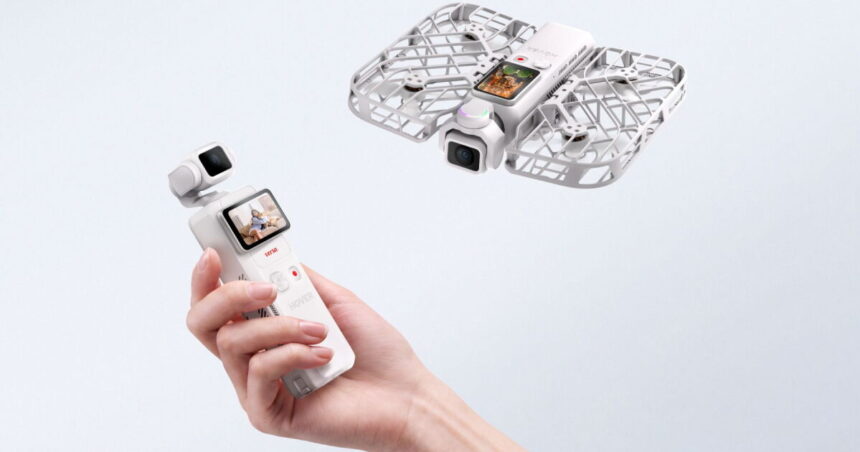
HoverAir has spent years shrinking the drone form factor into a controller-free personal camera. The Versa is its latest take on the idea, pushing beyond existing self-flying models by starting out as a pocket-sized handheld device with a three-axis gimbal.
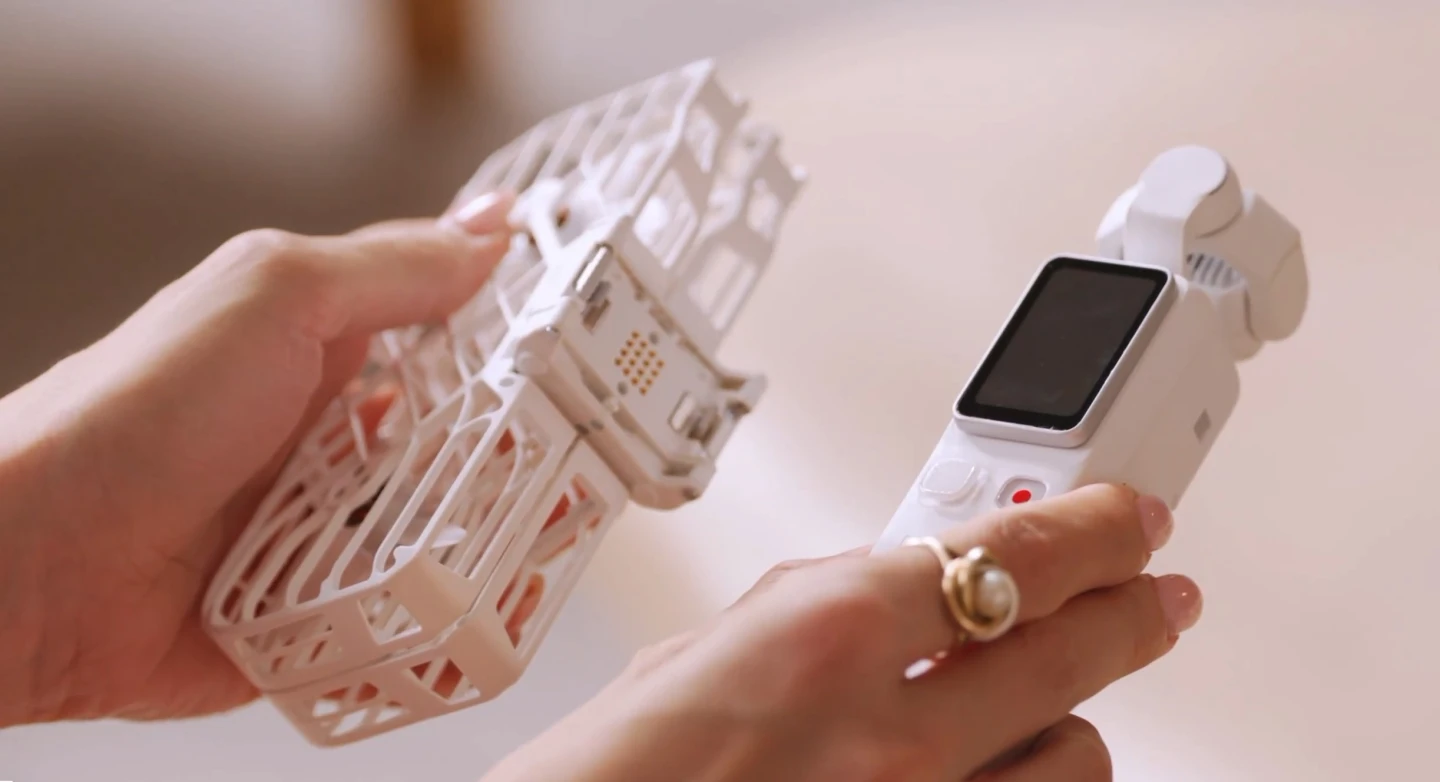
Attach the lightweight propeller-wing module with one click, and the device turns into an autonomous flying camera. There’s no conventional controller, and no piloting experience needed. Just power it on, launch, and the tracking system handles the rest.
This gives Versa a broader scope than a regular follow-me camera drone. It’s designed for handheld selfies, stabilized point-of-view (POV) footage, automatic follow shots, and higher aerial angles, potentially taking on the roles of both a compact gimbal camera and a separate drone.
With the wings removed, the core unit relies on its mechanical stabilization to capture smooth handheld footage without extra gear. HoverAir says its image processor is tuned for high dynamic range – preserving bright highlights in scenes like neon streets and sunsets without losing shadow detail.
The company also claims strong low-light performance, though it hasn’t yet revealed the sensor size, resolution, lens specs, or frame-rate options. Until we learn more about these details, it’s hard to say whether the Versa feels like a capable camera on its own, or merely the handle for its flight module.
HoverAir
In the air, the wing module converts the gadget into an automated flying camera operator. A single button press initiates flight, while AI subject tracking keeps you in frame as the aircraft maneuvers. HoverAir says there will be more than 10 intelligent flight modes that will cover tracking angles and automated cinematic paths.
Like earlier HoverAir models, this one is built around capturing the person carrying it rather than sending a conventional drone off to capture distant landscapes. The difference here is that the Versa is still useful after it lands, switching straight back into a stabilized handheld device rather than just becoming extra baggage.
Some of the device’s more unique tricks are in its AI framing and 3D Worlds features. The framing tool analyzes your surroundings and suggests where to position the camera, while intelligent cropping locks onto a more balanced composition. The company says you can still adjust the final shot; you don’t have to hand the software full creative control unless you want to.
3D Worlds takes the flying side a step further. The Versa follows a precise 360-degree route around a subject, then reconstructs the captured image as a navigable three-dimensional scene. You can view the result from multiple angles and share it – though its usefulness will ultimately depend on processing quality, speed, and how easily those scenes work across different devices.
HoverAir
This technology mashup is the latest step in the self-flying-camera evolution of Zero Zero Robotics/HoverAir. It follows the Hover Camera Passport in 2016, Hover Camera in 2018, V-Coptr Falcon the year after, X1 in 2023, X1 Pro and ProMax in 2024, and the waterproof Aqua and Falcon Mini – both in 2025.
There are still a few unanswered questions flying around the Versa, including actual physical dimensions, total weight, flight time, obstacle avoidance, pricing, and release timing. The hybrid concept is compelling in theory, but its value hinges on whether it can truly replace both a dedicated handheld stabilizer and a self-flying drone. HoverAir says full launch specs and availability will be announced in the near future.
Product page: HoverAir Versa
New Atlas may receive commission if you purchase through our links