


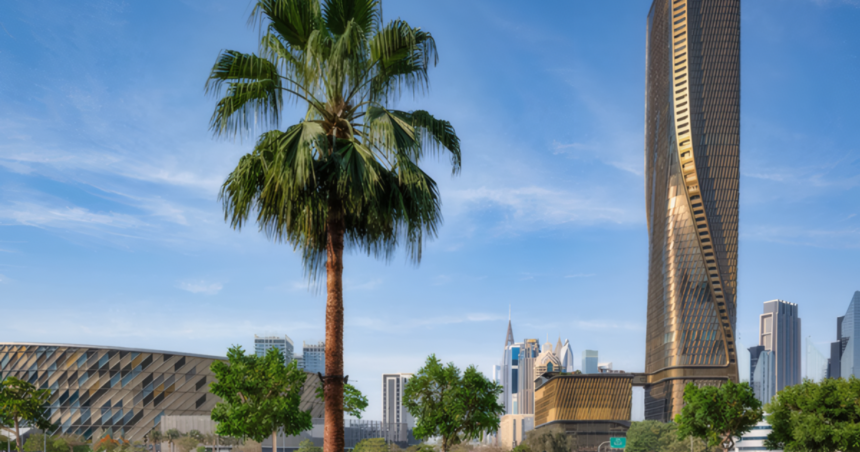
In a world dominated by glass rectangular towers, the recently completed Wasl Tower takes a different approach to skyscraper design. The supertall features a twisting form wrapped in thousands of sculpted terracotta fins that help shade and cool the building in Dubai’s scorching heat.
First revealed almost a decade ago, Wasl Tower is designed by UN Studio, in collaboration with engineering expert Werner Sobek, and is located near the world’s tallest skyscraper, the Burj Khalifa. The building reaches a height of 302 m (991 ft), making it just about a supertall – the designation is given for towers over 300 m (984 ft) – and has one of the world’s tallest terracotta facades.
JohnseyePhotography
The skyscraper twists as it rises to produce a distinctive form enveloped in both glass and a ceramic “cloak” made up of terracotta fins, lending it a unique textured look and enabling it to take the sting out of the extreme local heat. It also hosts an intricate custom lighting system, designed in partnership with Arup Lighting, that’s programmed to give the building subtle shifts in appearance.
“Thousands of ceramic fins provide shading, reduce heat radiation and capture high winds, adapting to the desert climate while reducing cooling loads by approximately 10% compared to older towers in the city,” explains the studio. “Ceramics, a traditional material in the region, were reimagined by UNS for high-rise application, combining low-tech manufacturing methods with advanced design techniques. Its reinvention at scale signals a continuity between material heritage and modern innovation.
“Each composite ceramic fin features a custom terracotta profile, baked with a metallic glaze that enables it to transform visually throughout the day and seasons. As the fins channel wind around the building, integrated aluminum grills enable the airflow to cool the heat absorbed by the ceramic modules, while the cavity between the fins and the tower’s interior curtainwall system further supports passive cooling. This dual-purpose envelope combines functionality with expressive design, creating a facade that is both energy efficient and visually striking.”
Inside, the tower contains a luxury hotel, as well as office space, residences, restaurants, wellness facilities, and event spaces. Elevated social and dining areas are distributed throughout the interior, and an adjacent low-rise building, linked by a skybridge, hosts a carpark and ballroom. There are also multiple terrace areas with swimming pools.

Ahmad Alnaji/SARAB
Dubai is one of the world’s skyscraper capitals, with many other high-profile projects planned for the Arab Emirate, including several by Mercedes-Benz, MVRDV, and even the Chelsea soccer club.
Source: UN Studio