


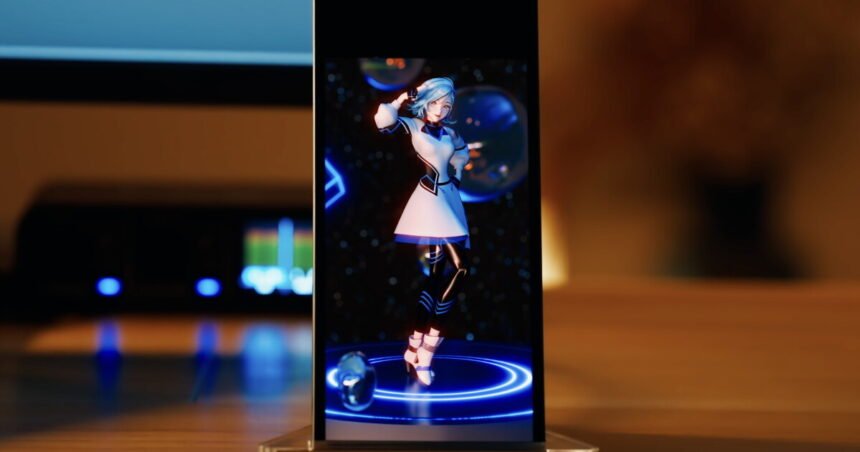
Glasses-free 3D has had its share of false starts, but the idea of a little window into a three-dimensional world sitting on your desk just won’t go away. We’ve seen it take shape with the Looking Glass Factory’s portable Go display, which adds depth to photos and AI chatbot characters, while Sony has been quietly refining its own eye-tracking Spatial Reality Display monitors for a few years.
Until now, though, Sony’s take on the tech has mostly lived on the desks of designers, engineers, and medical professionals, with price tags to match. The company’s new ELF-MN1 changes that, shrinking the same core idea down to a 6-inch screen aimed squarely at everyday users.
What You Imagine, Within Reach|Concept Video|Spatial Reality Display ELF-MN1
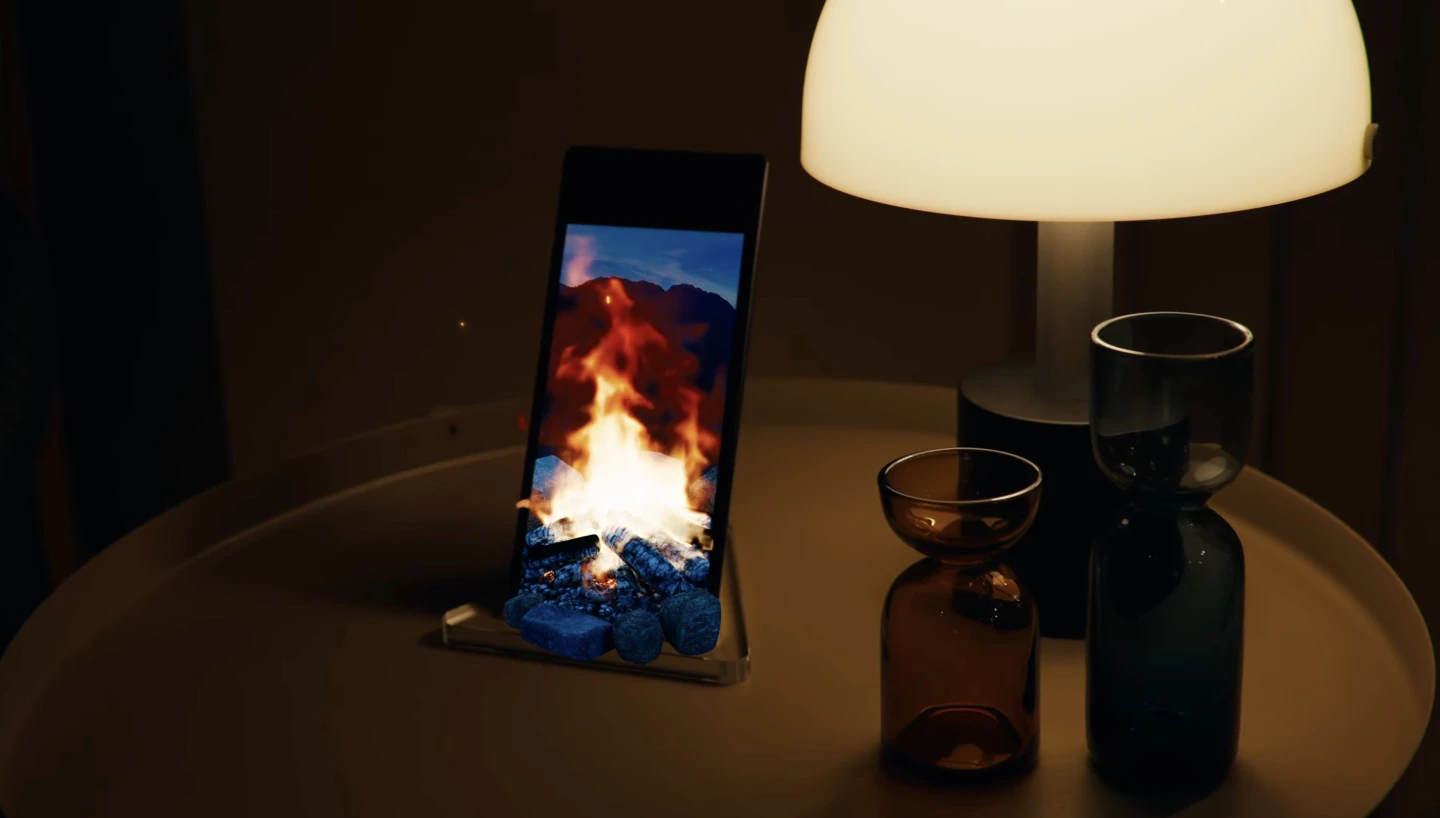
Rather than visualizing CAD models, the ELF-MN1 is all about personal content: anime characters, avatars, and digital figures that appear to be standing right in front of you, with no headset or special glasses required. It hooks up to a smartphone or PC with a single cable, and Sony is pitching it as a way to bring 3D creations into everyday life on your desk.
It’s a niche product, sure, but it’s also the most approachable version of Sony’s spatial display tech yet.
Like its bigger siblings, the ELF-MN1 pairs an LCD with a micro-optical lens layer and a high-speed sensor that tracks your pupils. As you move your head, it renders a fresh image for each eye in real time, so characters gain real depth and you can peek around them a little. Sony has also added an infrared sensor to its third-generation eye tracker, which should keep things locked on in dim rooms.
Sony
The 6-inch panel has a resolution of 1,080 x 2,160 pixels, or 403 ppi, making it Sony’s sharpest Spatial Reality Display yet. It’s rated for 470 nits and a 1,350:1 contrast ratio, and Sony says a two-viewpoint system helps cut blurring and ghosting. The 3D effect works best from 30 to 80 cm (12 to 31.5 in) away, for one viewer at a time.
The display weighs 300 g (10.5 oz), or 350 g (12.3 oz) on its acrylic stand, which helps it blend into your desk. There are also 1-W stereo speakers and a mic for voice-interactive apps.
It connects over USB-C to recent iPhone, Pixel, Galaxy, and Xperia phones, or a Windows 11 PC with an RTX 2070 Super-class GPU, and with a beefy enough power adapter, it can even charge your phone while in use.
Sony
The ELF-MN1 launches in Japan on December 11, with an estimated street price of around ¥54,000 (roughly US$340), and Sony hasn’t yet said whether it’ll make its way to other markets. For context, the 27-inch ELF-SR2 sells for around ¥550,000 in Japan, so this is a dramatically cheaper way into Sony’s 3D ecosystem, landing in the same ballpark as the $299 Looking Glass Go.
At launch, content comes through a handful of compatible apps, including Gugenka’s HoloModel digital figure service, Deskrium, Animates, and Fenestra. Developers get a Unity SDK with OpenXR support for building their own apps on Windows, Android, and iOS, and Sony says it plans to work with XR and spatial content creators on new material.
That content pipeline is really where the ELF-MN1 will live or die. The hardware looks like a genuine step forward for compact glasses-free 3D, but its single-viewer design and reliance on compatible apps make it more of a digital figure cabinet than a general-purpose screen.
Still, if Sony can build a healthy library around it, the ELF-MN1 could be a compelling way to pull 3D characters out of your phone and onto your desk.
Source: XYN Sony