


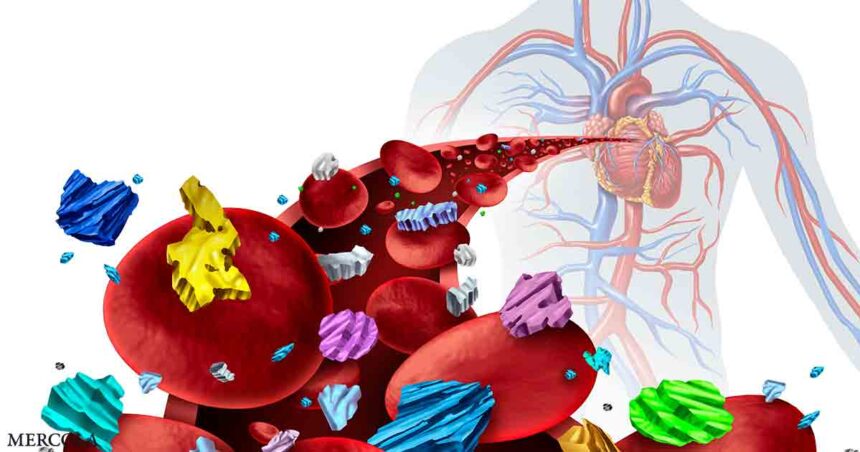
You can’t see them, but the plastic you encounter every day is breaking down into fragments small enough to slip past your body’s defenses. These microplastics and nanoplastics arrive through the food you eat, the water you drink, and the air you breathe — and unlike the visible plastic waste we’ve been warned about for decades, these particles are tiny enough to interact directly with your cells.
Once inside, the smallest particles don’t just pass through and leave; the tiniest lodge in tissue and stay. Two recent reviews lay out what happens next, and read together, they trace a troubling path from your bloodstream to your brain. The first, published in Nutrients, examined how these particles may disrupt blood sugar regulation and contribute to the oxidative stress and insulin resistance associated with Type 2 diabetes.1
The second, published in the International Journal of Molecular Sciences, followed the same particles into the brain, where researchers believe they may feed the insulin resistance and cellular damage now linked to Alzheimer’s, a condition some scientists have begun calling “Type 3 diabetes.”2 Notably, this term is an informal label, not an officially recognized diagnosis.
What caught my attention was that neither review stopped at the damage. Both turned to the same question: can what you eat change how well your cells defend themselves? At the center of that defense sits a single protective pathway your body already has — one that certain food compounds appear able to switch on.
That shifts the conversation from simply avoiding exposure, which is no longer fully possible, to actively building resilience. What follows is how microplastics weaken those defenses, and which nutrients help restore them.
Your Diet Influences How Well Your Cells Fight Plastic-Related Damage
The Nutrients review examined how specific food-derived compounds interact with Nrf2, a protein that controls one of your body’s most important antioxidant defense systems.3 The researchers explored whether nutrients found in foods could strengthen cellular resilience and help counter the oxidative stress, inflammation, and metabolic disruption linked to plastic exposure.
Oxidative stress is what happens when damaging molecules called free radicals pile up faster than your cells can neutralize them, a kind of internal rust that wears down tissue over time.
Humans encounter microplastics and nanoplastics through contaminated food, beverages, household products, and airborne particles from textiles and plastics. Global plastic production was expected to reach roughly 400 million tons annually in 2025, while cumulative production could reach 33 billion tons by 2050.4 As exposure increases, scientists have become increasingly concerned about what happens when these particles accumulate inside the body.
• The concern extends far beyond simple pollution — Microplastics accumulate in organs involved in blood sugar regulation, including the liver, pancreas, and kidneys. In experimental studies, these particles triggered oxidative stress, inflammation, cellular barrier disruption, and metabolic dysfunction — processes that resemble those commonly seen in diabetes and its complications.
Several studies discussed in the review found that exposure to polystyrene microplastics and nanoplastics increased insulin resistance and worsened glucose tolerance in mice.5 Insulin resistance means your cells stop responding efficiently to insulin, forcing your body to keep blood sugar levels elevated for longer periods.
Researchers found that nanoplastics measuring just 100 nanometers produced greater toxicity than larger microplastic particles in diabetic mice. These tiny particles increased liver inflammation, disrupted gut bacteria, and intensified fat metabolism problems inside the liver. Their small size allows them to cross biological barriers more easily and reach tissues that larger particles struggle to enter.
• Your cells already have a built-in emergency response system — Researchers point to Nrf2 as the body’s master switch for antioxidant defense. Most of the time it sits idle, until cellular stress trips the alarm and it springs into action. When cells encounter stress, Nrf2 moves into the nucleus and switches on a large network of protective genes that help neutralize harmful molecules and repair damage.
Researchers emphasized that many plant-derived nutrients work by stimulating this same pathway, effectively helping your cells activate their own internal repair and defense programs.
• Several nutrient families activate the body’s defense genes — Polyphenols, flavonoids, phenolic acids, terpenoids, and related plant compounds are activators of the Nrf2 pathway. These naturally occurring compounds are found in a range of plant foods, including berries, herbs, spices, and colorful fruits and vegetables.
Once activated, Nrf2 switches on a network of antioxidant and detoxification enzymes that help cells neutralize oxidative stress, repair damage, and maintain normal metabolic function despite ongoing environmental exposures.
• The review connected environmental pollution with personalized nutrition — Researchers proposed that future dietary recommendations could be tailored not only to a person’s genetics, but also to their exposure to environmental pollutants such as microplastics. The goal would be to identify nutrients that activate protective pathways like Nrf2 and match those nutrients to individuals who are most vulnerable to oxidative stress, inflammation, and metabolic damage.
Microplastics Could Be Hitting Your Brain Too
A review published in the International Journal of Molecular Sciences examined how microplastics and nanoplastics affect the brain and whether specific nutrients help protect against that damage.6 The authors focused on a growing concern: the possibility that long-term plastic exposure contributes to brain insulin resistance, a condition increasingly linked to Alzheimer’s disease.
Unlike Type 2 diabetes, which affects how your body responds to insulin, brain insulin resistance affects how neurons use glucose for energy. Your brain consumes enormous amounts of energy every day. When brain cells struggle to access or use glucose efficiently, memory, learning, and cognitive function begin to suffer. Researchers explained that this process contributes to the buildup of beta-amyloid plaques and tau tangles, two hallmarks of Alzheimer’s disease.*
• Microplastics are capable of reaching the brain itself — Plastic particles have been detected in human tissues, including the lungs, liver, kidneys, and brain. Animal studies found that smaller nanoplastics cross the blood-brain barrier, the protective filter that normally shields the brain from harmful substances, more easily than larger particles. Once inside brain tissue, these particles trigger oxidative stress, inflammation, and cellular dysfunction.
• Brain inflammation creates a vicious cycle — Researchers described how plastic-induced oxidative stress damages neurons while simultaneously weakening the brain’s antioxidant defenses. As oxidative stress rises, inflammation increases. As inflammation increases, insulin signaling worsens. That decline in insulin signaling may promote additional oxidative stress and accelerate the formation of beta-amyloid plaques and tau protein abnormalities associated with cognitive decline.
Healthy brain cells rely on specialized glucose transporters that move glucose across the blood-brain barrier and into neurons. Aging, inflammation, and insulin resistance reduce the activity of key transporters, limiting glucose availability to brain cells. The result is an energy shortage that affects memory, concentration, and cognitive performance long before obvious symptoms appear.
• Several studies linked plastic exposure directly to memory problems — Researchers reviewed evidence showing that nanoplastics impaired learning and memory in animal models in a dose-dependent manner. One study found that exposure to 80-nanometer polystyrene nanoparticles disrupted learning and memory in mice after only seven days.7
Other experiments showed that microglia, the immune cells that protect the brain, became activated after exposure and shifted into a chronic inflammatory state that interfered with nearby neurons.8
• Researchers identified several nutrients that counteracted the same pathways disrupted by microplastics — The review highlighted a group of plant compounds that activate Nrf2 and related resilience pathways, which help defend brain cells against the oxidative stress, inflammation, and insulin-signaling problems linked to microplastic exposure.
Rather than acting through a single mechanism, these nutrients targeted multiple stages of the damage process, including antioxidant defenses, glucose metabolism, inflammation control, and neuronal survival. According to laboratory and animal research:
◦ Ursolic acid, found in apple peels, berries, and herbs, improved memory, reduced beta-amyloid toxicity, and increased antioxidant enzyme activity.
◦ Verbascoside, a plant compound found in species such as lilac, mullein, and lemon verbena, improved gut health, reduced inflammatory markers, and enhanced insulin sensitivity in the brain, supporting the growing connection between the gut-brain axis and cognitive health.
◦ Diosmin, a flavonoid concentrated in the white pith of citrus fruit, which is exactly the part most people discard, boosted antioxidant defenses and improved both working and long-term memory.
◦ Baicalein, a flavonoid extracted from the roots of Chinese skullcap (Scutellaria baicalensis), reduced neuroinflammation, lowered beta-amyloid plaque formation, and improved glucose metabolism and insulin signaling in brain tissue.
◦ Cynarin, a major compound in artichokes, reduced inflammation, lowered beta-amyloid and tau protein accumulation, and improved cognitive performance in Alzheimer’s models.
• Many of these nutrients targeted brain insulin resistance directly — One of the review’s central themes was that Alzheimer’s disease shares many features with diabetes, including impaired insulin signaling inside the brain. In laboratory and animal studies, several of the highlighted nutrients improved key pathways involved in glucose uptake, insulin sensitivity, and cellular energy production, helping restore the ability of brain cells to access and use fuel efficiently.
Researchers argued that preserving these pathways could help interrupt the progression from oxidative stress and inflammation to cognitive decline. Rather than targeting a single symptom, the nutrients appeared to strengthen the underlying cellular defense network that keeps brain tissue functioning properly despite ongoing environmental stressors.
*These findings are from laboratory or animal research and may not directly apply to human health. To date, no long-term human studies have confirmed that microplastics cause Type 2 diabetes or Alzheimer’s disease in people.
Strengthen Your Defenses Against Microplastic Damage
The reality is that you can’t completely eliminate microplastic exposure. Plastic particles are already present in food, water, and the environment. That reality is why I wrote “Microplastics Cure,” available for preorder now. In it, I explain how these invisible particles enter and accumulate throughout the body, why they become increasingly difficult to remove once they lodge in tissues and blood vessels, and how everyday choices either increase or reduce that accumulation.
You’ll also find practical, science-based strategies that help lower ongoing exposure while supporting your body’s own protective systems. The goal is simple: understand what drives microplastic accumulation, identify the habits that contribute to it, and take meaningful steps to reduce the damage before the burden grows larger.
Avoidance is only part of the solution. A better strategy is to reduce your exposure wherever possible while strengthening the cellular defense systems that help your body handle oxidative stress and inflammation. Your daily choices influence how resilient your cells remain when they encounter environmental toxins.
1. Reduce the largest sources of plastic exposure — Start with the exposures you control every day. Avoid heating food in plastic containers, replace plastic water bottles with glass or stainless steel, and choose fresh foods instead of heavily packaged products whenever possible.
If you regularly drink bottled water, switching to filtered water stored in glass containers immediately reduces one of the most common sources of microplastic intake. Every source you eliminate lowers the amount of plastic your body has to process and store over time.
2. Build your meals around Nrf2-activating foods — The strongest nutritional message from both reviews is that certain plant compounds help activate Nrf2, one of your body’s most important cellular defense systems. Nrf2 helps switch on antioxidant and detoxification enzymes that protect tissues from the oxidative stress and inflammation triggered by microplastics.
Rather than focusing on a single food, build your meals around a variety of foods that naturally contain these protective compounds:
• Include apple peels, fresh herbs, and other minimally processed plant foods regularly, instead of relying on packaged products that often contribute additional microplastic exposure.
• Add artichokes to meals when available. They provide a unique mix of polyphenols that are largely absent from the modern processed-food diet.
• Choose whole citrus fruits regularly. They offer beneficial plant compounds along with fiber and nutrients that support metabolic health.
• Experiment with a wider variety of herbs, teas, and traditional plant foods rather than eating the same handful of foods every week. Greater plant diversity exposes you to a broader range of protective compounds.
• Build meals around colorful fruits, vegetables, herbs, and spices. Different colors signal different families of beneficial plant compounds, giving your body a wider range of nutritional tools to draw from.
3. Support cellular energy production — Oxidative stress becomes more damaging when your cells struggle to produce energy efficiently. Support mitochondrial function by getting regular sunlight, avoiding seed oils, eating adequate protein, and consuming enough carbohydrates — about 250 grams a day — to support healthy metabolism. Your cells repair damage more effectively when they have the energy required to run their antioxidant and detoxification systems.
4. Control blood sugar before metabolic damage develops — Microplastic exposure is linked to insulin resistance and impaired glucose control. One of the smartest steps you can take is to track your metabolic health before symptoms appear. I recommend monitoring your Homeostatic Model Assessment of Insulin Resistance (HOMA-IR) score, rather than relying solely on fasting glucose.
HOMA-IR is a calculation based on your fasting insulin and fasting glucose levels that provides one of the clearest pictures of how hard your body is working to keep blood sugar under control.
A higher score suggests greater insulin resistance, often years before obvious symptoms appear. Keeping your HOMA-IR low helps reduce oxidative stress and limits many of the same inflammatory pathways that microplastics appear to activate. For most people, if your HOMA-IR creeps above 1.0, it’s time to pay closer attention to factors like sugar intake, seed oils, plastic exposure, and gut health.
Talk to your health care provider about whether this testing is appropriate for you.
5. Create daily habits that activate your body’s resilience systems — The Nrf2 pathway responds to more than nutrition. Regular movement, quality sleep, healthy circadian rhythms, and consistent exposure to natural daylight all help maintain cellular resilience. Turn this into a simple daily challenge.
Get morning sunlight. Walk every day. Build meals around nutrient-dense whole foods. Reduce packaged products. Small actions repeated consistently strengthen your internal defense systems far more effectively than occasional bursts of effort.
FAQs About Food Nutrients and Microplastic Exposure
Q: How do microplastics affect my health?
A: Microplastics and nanoplastics can accumulate in tissues throughout your body, including the liver, pancreas, kidneys, and brain. Research — primarily in laboratory and animal models — suggests they may trigger oxidative stress, inflammation, and cellular dysfunction, which are linked to insulin resistance, metabolic disorders, and cognitive decline.
Q: What is Nrf2 and why is it important?
A: Nrf2 is one of your body’s most important cellular defense systems. When activated, it switches on genes that help neutralize oxidative stress, reduce inflammation, and support cellular repair. Researchers found that many beneficial plant compounds help activate this pathway, strengthening your body’s ability to cope with environmental stressors such as microplastic exposure.
Q: Can microplastics affect brain health and memory?
A: In animal studies, very small plastic particles crossed the blood-brain barrier and triggered inflammation, oxidative stress, and impaired insulin signaling inside the brain. These changes are associated with memory problems, reduced cognitive function, and biological processes linked to Alzheimer’s disease.
Q: Which foods contain nutrients that help protect against microplastic-related damage?
A: A variety of whole foods provide compounds that support your body’s antioxidant defenses. Apple peels, berries, herbs, and spices provide ursolic acid and other polyphenols. Artichokes contain cynarin, citrus fruits provide diosmin, Chinese skullcap contains baicalein, and plants such as lemon verbena and mullein contain verbascoside. These compounds help support antioxidant activity, healthy glucose metabolism, and inflammation control.
Q: What are the most effective ways to reduce the health risks associated with microplastics?
A: A practical approach combines reducing exposure and strengthening cellular resilience. Steps include avoiding heating food in plastic containers, reducing bottled water use, choosing fresh foods over heavily packaged products, supporting metabolic health, monitoring insulin resistance with HOMA-IR, and regularly eating nutrient-dense foods that activate protective pathways such as Nrf2.
Daily habits such as exercise, quality sleep, and natural daylight exposure also help maintain cellular defenses.
This article is for informational purposes only and does not constitute medical advice. Consult a qualified healthcare provider before making changes to your health regimen.
Test Your Knowledge with Today’s Quiz!
Take today’s quiz to see how much you’ve learned from yesterday’s Mercola.com article.
What makes a pill routine harder to follow?