

From space and defence to medical and avionics, systems engineering unifies design, manufacturing and reliability to deliver mission-ready electronics at scale.
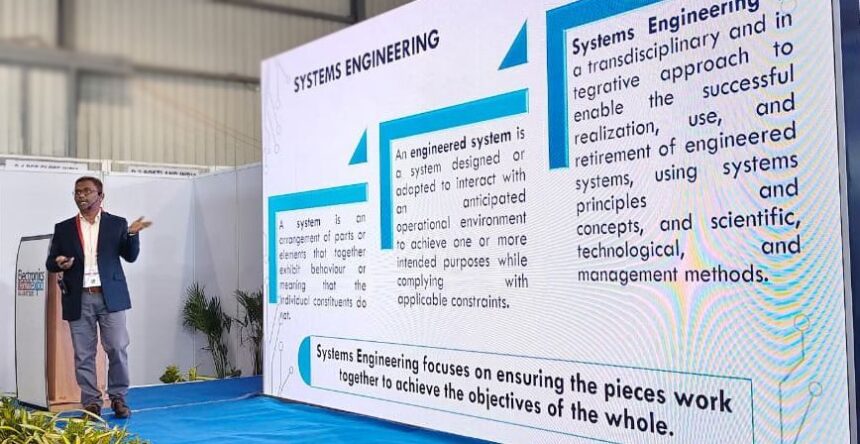
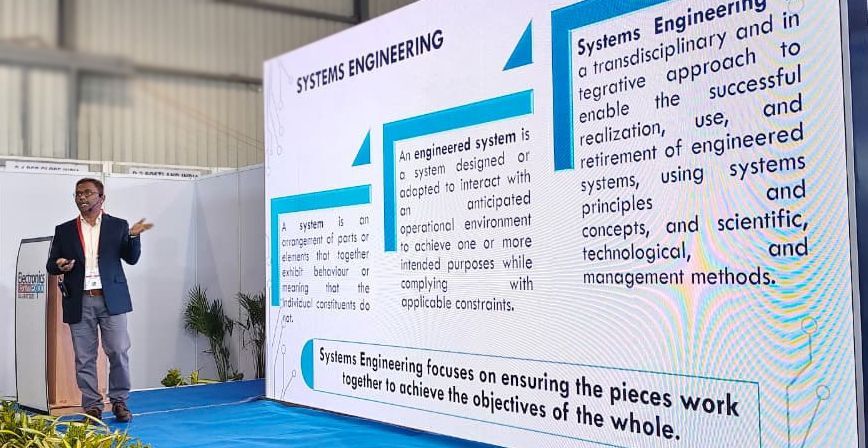
Based on my experience, systems engineering adds significant value to strategic electronic systems and products. To utilise systems engineering effectively in productionizing value-added products and services, it is essential to understand the basic definition of a system and how it evolves into an engineering system, precisely a system of systems, and finally into systems engineering.
What is systems engineering all about?
Systems engineering comes into play when multiple engineering disciplines are brought together to create value that individual components cannot deliver on their own. It treats different sections as a whole rather than as isolated parts. The primary focus is on breaking functional silos, integrating them thoughtfully, and delivering a complete solution to the customer.
It goes beyond being multidisciplinary. Systems engineering is transdisciplinary. Requirements are connected from concept through design, development and final delivery, ensuring all teams align on a shared platform to maximise customer value.
This approach ensures mission reliability. The mission is the purpose for which the system or board is built. Once delivered, the system must perform reliably throughout its intended lifetime. Preventing failure in the customer’s hands has always been a core objective of systems engineering in my work.
Systems engineering also helps manage complexity across functions and processes. It elevates the system so the final product delivers value, supports innovation, and enables the adoption of new technologies within the organisation.
Core processes in systems engineering
A system is a collection of interrelated, interconnected and intertwined processes designed to produce value for the customer. Value is what the customer is willing to pay for when receiving a product or service. In this context, there are three levels of thinking:
- System design process:
Focuses on capturing customer requirements, translating them into functional requirements and design parameters, and producing a proper value audit document. - Technology and management process:
Focuses on managing technologies and the associated management aspects. - Product realisation process:
Focuses on how the product is visualised and realised.
When these three areas are combined effectively, they cover concept, design, development, realisation and management of the system until the end of its life. These form the core processes of systems engineering. In the space industry, this journey is often described as moving from blueprint to orbit.
From blueprint to orbit
In space programs, I have worked with, manufacturing and launch readiness are central. Collaboration between design agencies and manufacturers, along with compliance to standards, drives the spacecraft assembly, integration and testing (AIT) process. Mechanical integration comes first, followed by stepwise integration of LRUs and submodules, culminating in full electrical integration and a complete operational space artefact.
Systems engineering begins with identifying sub-assemblies, payloads, and functional processes. Modules undergo integrated verification and validation, supported by power and communication systems, before entering quality and reliability stages. This approach enables mission readiness, rapid prototyping, commercial launch capability, and democratisation of space access.
The ecosystem includes original equipment manufacturers (OEMs), universities, research and development (R&D) labs, and micro, small, and medium enterprises (MSMEs) supporting system integrators such as the Indian Space Research Organisation (ISRO), along with tiered suppliers. Advanced techniques such as 3D, 4D and 5D printing, industrial Internet of Things (IoT), cloud cybersecurity, global navigation satellite system (GNSS) development, satellite integration, and MEMS-based payload manufacturing improve responsiveness. India’s innovative ‘Jugaad’ mindset further strengthens these collaborations.
In aviation and defence, the Government of India targets ₹6.81 trillion across strategic objectives, with 21 per cent of output allocated to private industry. Sixteen defence public sector undertakings (DPSUs) contribute to value addition, supported by over 500 licensed companies, more than 2000 MSMEs, and 74 per cent foreign direct investment (FDI) inflow. Growth drivers include domestic demand, offset policies, cost advantages, a skilled talent pool, and IT competitiveness. Over the past five years, the sector has recorded an 18 per cent compound annual growth rate (CAGR) in production and exports.
What comes next?
From an engineering leadership perspective, the future is shaped by Industry 5.0, Quality 5.0 and Society 5.0. Humans and intelligent machines are expected to work together to create sustainable and ethical systems. The focus has shifted from automation alone to human-centric innovation.
Key enablers include artificial intelligence, robotic process automation, collaborative design and strong human-machine interface. Model-based systems engineering must be adopted across organisations of all sizes. Supply chain optimisation is especially critical, with a significant portion of defence budgets now focused on this area.
Emerging technologies include digital twins, additive manufacturing, AI-driven inspection, computer vision, extended reality, IoT-based failure reporting, digital quality systems, blockchain-enabled supply chains, quantum computing, edge computing and AI-powered chip testing. Unmanned systems across land, air and water present major opportunities, with institutions such as IIT Bombay actively developing platforms and seeking industry collaboration.
There is also strong potential in advanced avionics, electro-optical sensors, smart materials, electronic warfare systems, collaborative robots and AI-driven integration. Across all these areas, systems must remain human-centric, agile, sustainable, ethical and resilient.
Medical electronics is another high-growth area that is strongly advocated for, given the scale of opportunity in medical-grade components, compliant systems, and analytics. While startups often face integration challenges, the potential for innovation and scale remains significant.
Systems engineering and analytics are evolving from diagnostic to prescriptive. Cloud-based real-time analysis enables organisations to understand system-wide impacts rather than isolated issues. Without differentiation, organisations risk becoming invisible. For Indian startups and MSMEs, systems engineering offers a clear pathway to long-term value creation.
The article is based on the talk at the EFY Expo Gujarat 2025, titled ‘From Blueprint to Orbit: How Systems Engineering is the Key Enabler to Realising India’s Private Space & Aerospace Ambitions’, featuring the opening speech by Dr Balbadra Kishore, Director Systems, Nference & BEL. It has been transcribed and curated by Saba Aafreen, Tech Journalist at EFY.