


Despite what the headlines would have you believe, artificial intelligence (AI) isn’t new. The term and early technology date back to the 1950s, but generative AI (which emerged in the 2010s) is undeniably new terrain.
With both leaving their mark on consumer search behavior, marketing strategies like generative engine optimization (GEO) are not just becoming popular but essential.
But that doesn’t mean generative trauma ensues. Let’s unpack how your business and marketing team can navigate the changes, unknowns, and competition with generative AI SEO best practices.
Table of Contents
What is generative engine optimization?
Generative engine optimization (GEO) is about making your website and content easy for AI-powered search tools (like ChatGPT, Gemini, Perplexity) to find, understand, and cite.
When someone asks one of these tools a question, the AI systems scan content across the web to create an answer. It doesn’t give you a list of resources that could be helpful, like search engine optimization, but it aims to directly answer your question while citing websites it thinks are reliable. GEO helps your content get chosen as one of those lucky resources.
TLDR: SEO gets you on the party guest list (SERP). GEO gets you a VIP seat and a shoutout from the DJ (Citation).
GEO vs AEO
Ok, so SEO is clearly different from GEO, but what about AEO? Answer engine optimization (AEO) is closely related to GEO, but there’s a distinction worth understanding.
AEO targets direct-answer features that have been around for a while; think featured snippets in Google, knowledge panels, and voice assistant responses. It’s about showing up in those quick-answer boxes.
Generative engine optimization, on the other hand, focuses specifically on newer AI tools that generate original responses by combining information from multiple sources. It helps you be one of those sources.
Overall, many tactics work for both goals (and even SEO), but GEO requires extra attention to how you structure information and establish credibility so AI systems feel confident citing your work.
Why generative engine optimization matters now
Let’s not get it twisted: GEO isn’t replacing SEO. Rather, it’s extending it for a world where AI plays a bigger role in how people discover information. The marketers who figure this out early will have a significant advantage.
(So, if you’re reading this, congrats! You’re in good company.)

BrightLocal research shows that Google still drives 61% of all general searches, but AI platforms are noticeably growing as destinations where people start their research.
In fact, according to GWI, 31% of Gen Zers already say they use AI platforms or chatbots most frequently to find information online, and Gartner even predicts that 40% of B2B queries will be handled by an answer engine by the end of the year.
Add the prevalence of voice assistants like Siri and Alexa on our smartphones and in our homes, and the need to evolve is even more apparent. A list of links isn’t always helpful to users; they want synthesized, actionable answers with clear sources they can trust. That’s where generative engines come in.
If you don’t invest in GEO now, you could be missing out on all of these possibilities — but this challenge isn’t a bad thing. GEO just demands we level up. AI tools ultimately prioritize quality, and the best way to compete is to just keep delivering more and better value in your content.
Tools like HubSpot’s Content Hub can help by making it easier to create structured, well-organized content that aligns with GEO best practices.
Generative Engine Optimization Best Practices You Can Implement Today
Regardless of the tools you use, here are some best practices for generative engine optimization you use to put your best foot forward.
1. Lead with clear, direct answers
AI systems love resources that get straight to the point. In other words, they favor content where the information they need isn’t buried. That said, start each section by directly answering the target question as concisely as possible (aim for fewer than 300 words), then expand with context and details.
Think of it like this: if someone pulled out just one paragraph from your article, would it make sense and answer their question on its own? That‘s what you’re aiming for.
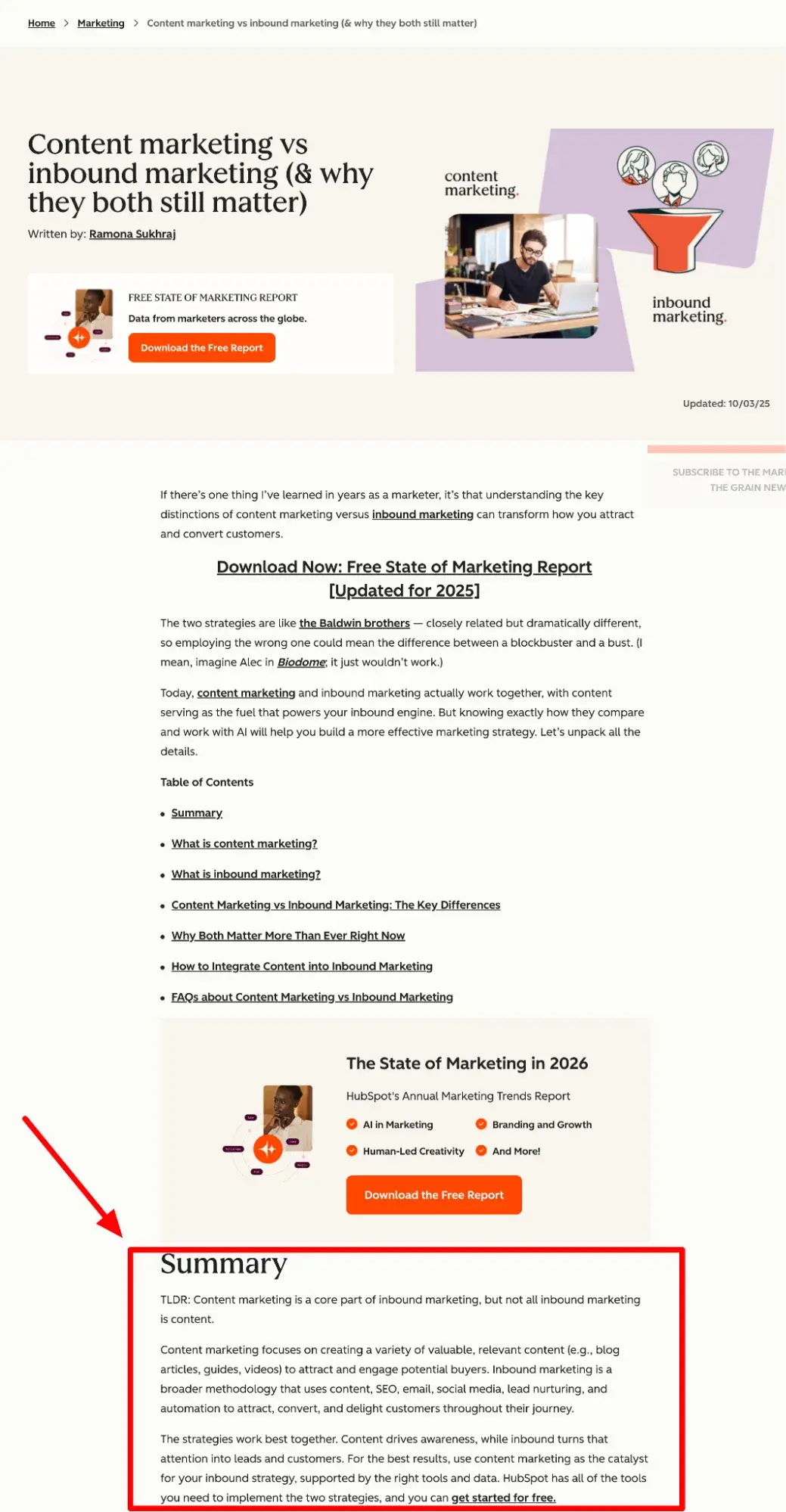
Answer the question first, then explain the nuances. This is how you should approach writing for AI search in general — clarity first, depth second. Here at HubSpot, we’ve been experimenting with “summaries” at the beginning of our articles to accomplish this:
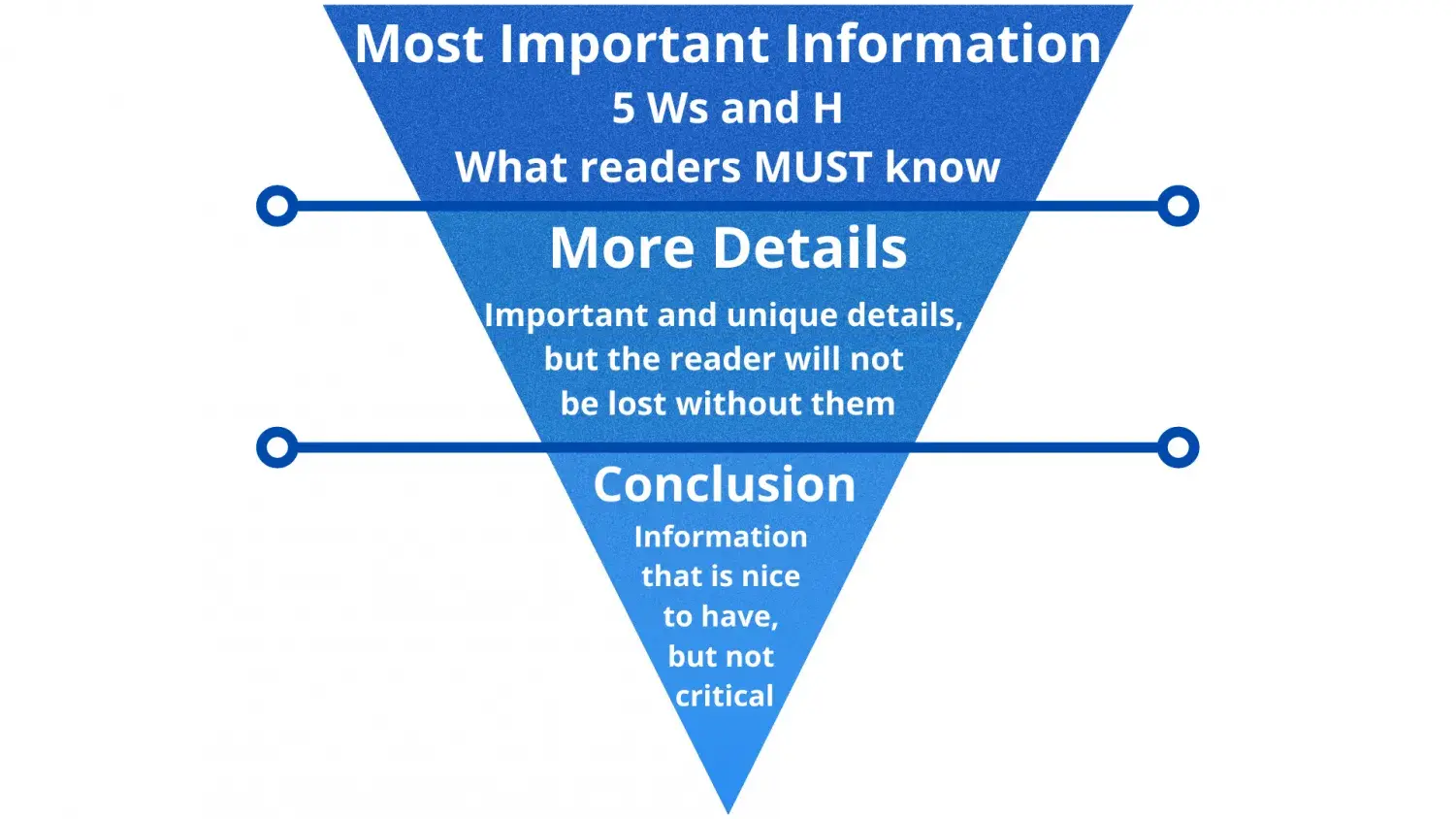
Pro tip: Use the “inverted pyramid” approach to writing journalists lean into: Put the most important stuff at the top, supporting details below. This makes it easy for AI to find and extract your main points accurately.
You can also use HubSpot’s Content Hub to create templates that enforce this answer-first structure across all your content, so it becomes automatic.
2. Be specific about who and what you’re talking about
Sometimes when you’re reading about complicated topics, it’s easy to lose the thread. Maybe you’re reading an explanation of X and Y and how they relate to Z, but suddenly you’re unsure whether the last sentence was about Z or X or something else entirely.
AI systems are similar in a way. They process and cite content by recognizing its subject matter, like specific people, places, companies, and concepts. Depending on the context, vague references in your content can confuse AI and reduce your chances of being cited.
For example, saying “The company launched it in 2024,” may leave AI systems asking, “What company?” Instead, you’d want to write “HubSpot launched Content Hub AI in 2024,” so AI gets the details right.
Keep these clarity best practices in mind when writing for generative engine optimization:
- Use full names first (then you can shorten them)
- Spell out acronyms before using them repeatedly
- Link to official pages for companies and concepts
- Stick with consistent terms throughout your content
- Avoid unclear pronouns when they could refer to multiple things
3. Optimize the technical elements of your website
GEO is just as much about what’s off the page as what’s on the page. That means keeping your website running smoothly and organized in a way that AI can understand, with strong technical SEO is critical to getting found and cited.
Here’s what you can do:
Add Schema Markup
Schema markup is backend code that explains what your content is about in a way that’s crystal clear to AI systems. According to Schema.org statistics, pages with properly implemented schema are processed more accurately by AI systems because there’s no ambiguity about their meaning.
There are countless different types of schema, but don’t get overwhelmed. Focus on these types first for the most common “query” impact:
- Article schema with author information and dates
- FAQ schema for question-based content
- HowTo schema for guides and tutorials
- Organization schema to establish who you are
- Breadcrumb schema to show how your content connects
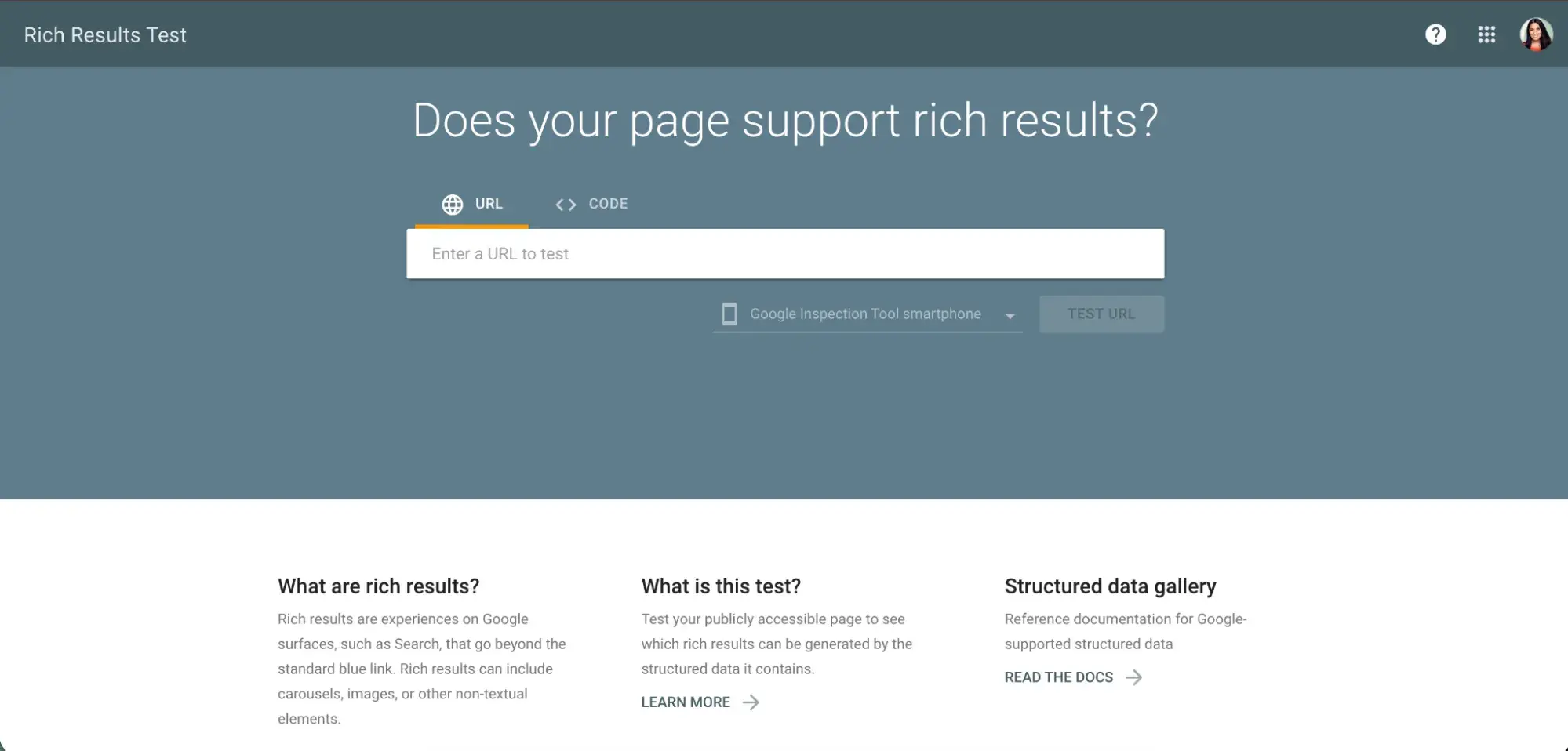
Test your schema using Google’s Rich Results Test to catch any errors that might confuse AI systems.
Keep your website fast and functional
Both AI systems and search engines consider site performance a trust signal. Slow, broken sites are deprioritized because they’re seen as lower quality and, frankly, deliver a worse user experience. That’s the last thing anyone wants.
That said, use tools like Google PageSpeed Insights and GTmetrix to find and fix website performance issues.
I popped Apple in as an example, and even giants like it have room for improvement.
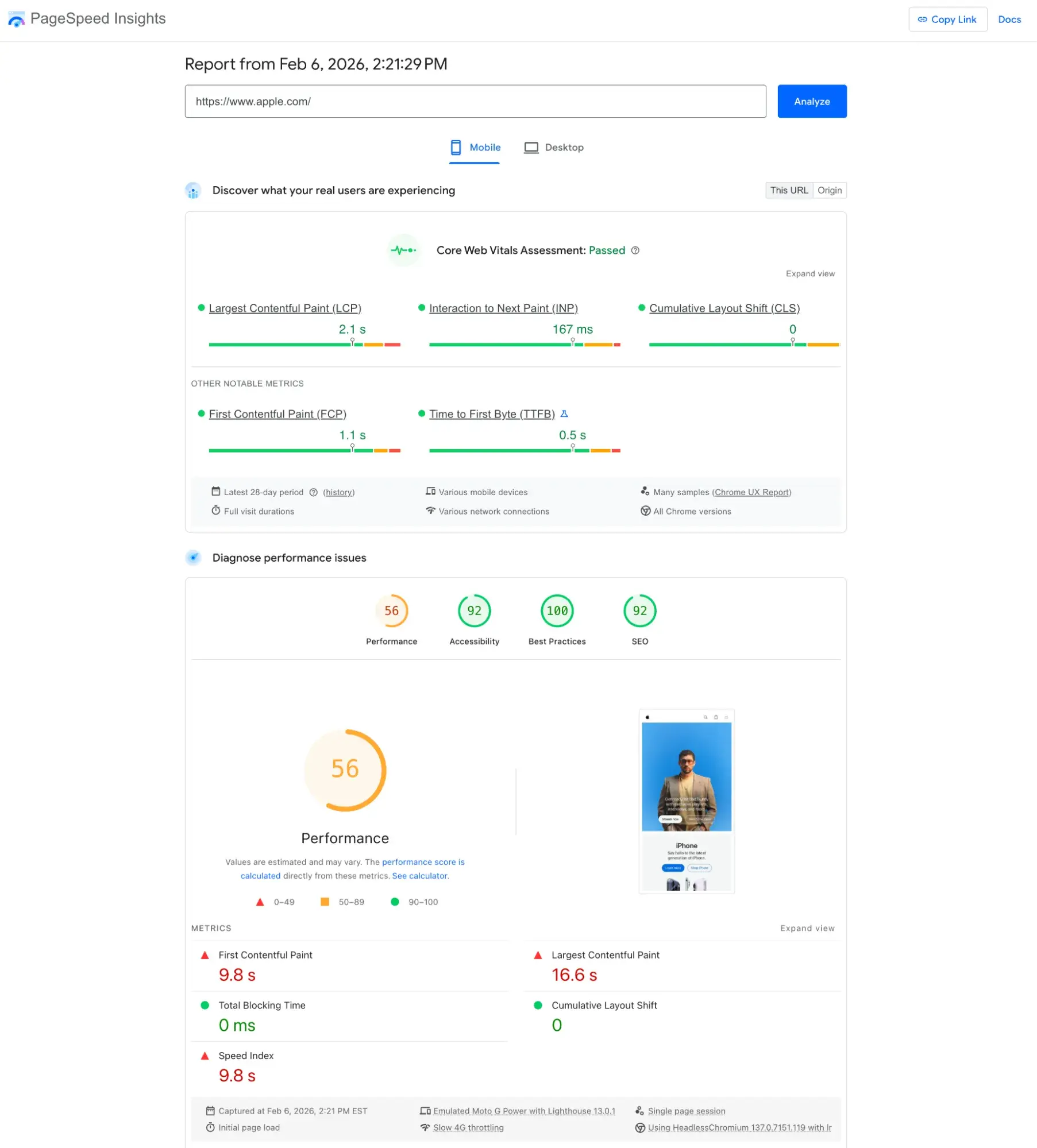
Pay special attention to maintaining:
- Page speed (aim for under 2.5 seconds to load)
- Mobile experience (AI systems prioritize mobile-friendly content)
- Security (always use HTTPS)
- Clear navigation (helps AI understand how content relates)
- Clean, functioning code (reduces confusion for automated systems)
Pro Tip: Use HubSpot’s CMS to automatically handle many technical requirements for fast, AI-friendly websites (e.g., mobile responsiveness and security).
To learn more about optimizing your site speed, you can also check out our articles, “Here’s How I Measure Website Speed and Guarantee Performance (+Tips)” and “19 Website Speed Optimization Strategies [New Data].”
Optimize your metadata
While traditional metadata targets search result pages, GEO-optimized metadata helps generative search quickly understand and accurately summarize what your content covers. In today’s search landscape, you ideally want to appeal to both.
With that in mind:
- Ensure all your images have alt tags
- Make your title tags, headers, and linked text as specific and keyword optimized as possible
- Write descriptions that:
- Clearly state what the content is about
- Highlight your unique perspective or value
- Use natural, conversational language
- Stay within 155-160 characters
- Include specific claims or numbers when relevant
AI systems often use well-written meta descriptions and data as the foundation for understanding your content and retrieving information.
4. Establish credibility
As a user, I’ve definitely seen my share of AI hallucinations and odd citations, but to their credit, most AI systems make an active effort to check whether websites actually know what they’re talking about before citing them. So, how can yours make the cut?
Experience, Expertise, Authoritativeness, and Trustworthiness (E-E-A-T) has been around for a while now, but it is still important in the AI age. It’s actually the core evaluation criterion that AI systems (and Google) use to assess the credibility of sources. In other words, strong E-E-A-T signals dramatically increase the likelihood of citations.
Strengthen yours by adding:
- Author bios showing relevant experience and credentials (like mine, seen below). Even better, implement Author Schema markup.
- About pages. Talking about your company’s founding, history, mission, and accomplishments, among other things, helps establish its expertise.
- Links to authoritative sources. Like you want to see AI cite credible resources, it wants to see the same from you. This means sources that are original, current, and list specific accountable parties or authors.
- Publication dates showing your content is current
- Clear editorial standards demonstrating your commitment to quality

According to Google’s Quality Rater Guidelines (updated regularly through 2024), expertise and trustworthiness are the primary ways to evaluate content quality — and AI systems are trained using these same standards.
5. Showcase deep subject matter expertise
Another part of establishing credibility is showing a deep understanding of your industry, product, and desired area of expertise. Here’s how:
Make your content comprehensive
One way tools evaluate subject-matter expertise is by looking for comprehensive coverage of a specific topic across your website and content. For example, think of how HubSpot covers digital marketing and business growth, and Healthline covers wellness.
Research from Clearscope shows that thorough content (2,500+ words with comprehensive topic coverage) received 3.2x more AI citations than shorter, surface-level pieces. Semrush also found that comprehensive, well-sourced content earns 77.2% more backlinks than shallow content, which helps both your GEO and traditional SEO performance.
So, go deep. That means:
- Covering multiple aspects of a subject.
- Providing real, unique examples and step-by-step guidance.
- Including data and statistics to support your points
- Addressing common questions and edge cases
- Linking to related resources for people who want to learn more
Bottomline: AI systems prefer sources that thoroughly address a topic rather than providing quick, incomplete answers.
Create pillar pages
Credibility and comprehensive coverage typically happen naturally over time with consistency, but you can help it along. Consider creating pillar pages on your core topics, then supporting articles that go deep into specific aspects under that umbrella.
For example, if your pillar topic is “email marketing,” create supporting content on segmentation, automation, deliverability, metrics, and platform comparisons.
From there, strategically link the pieces together. Linking is fundamental to effective content optimization in the AI era, as it signals to AI and search engines that pages are related. Make sure each piece leads back to the pillar and the pillar down to each piece.
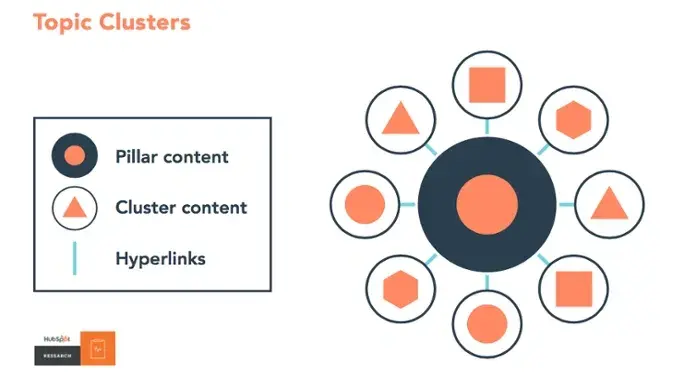
The goal is to be complete. Hobbyists scratch the surface. Experts go deep.
Pro tip: Topic clusters and pillars can get complicated. Use HubSpot’s topic cluster tool in Content Hub and Marketing Hub to map out your content and spot gaps where you might be missing important pieces.
6. Include images, videos, and other visual content
Research from Princeton and Georgia Tech found that content with relevant images, charts, and videos got 40% more AI citations than text-only content. That’s a big advantage, but why exactly?
Not only do visuals make content more engaging and memorable for your audience, but they also help AI systems understand context. They also signal that you’ve put real effort into making information accessible and clear from many different angles. It’s a sign of being thorough, and AI loves thorough.
In your content, include:
- Custom images with detailed alt text descriptions. This is not just for accessibility, but because AI systems read that text to understand what the image shows.
- Charts and graphs that make data and trends easier to grasp
- Videos that explain complex ideas
- Infographics that summarize key points
- Screenshots that show step-by-step processes or examples of what you’re discussing.
(This article is a good example of this tip in action.)
7. Write like a real person to a real person
Don’t you hate it when AI sounds like a robot? Ironically, it hates that too.
AI systems are trained on conversational questions and natural language. Content that’s overly formal, technical, or stuffed with keywords is harder for AI to interpret and cite accurately.
Write as if you’re explaining something to a smart colleague who may be new to the topic:
- Address readers directly using “you.”
- Include personal experience and insights with words like “I,” “My,” “Our.”
- Include questions that readers might ask or leads typically ask.
- Define technical terms when you need to use them
- Don’t go overboard with jargon
This conversational style isn‘t just better for GEO — it’s also more engaging for human readers, improving your content performance across the board.
Pro Tip: If you’re using AI to actually write your content, make sure to edit and humanize it before publishing.
Search engines and AI engines claim they don’t penalize AI-generated content, but they do penalize unoriginal content, which is an inherent risk with AI tools. More on that shortly.
8. Publish regularly and keep content fresh
Freshness matters enormously for GEO. AI systems prefer recent content as it’s more likely to be up to date. Content Marketing Institute’s 2024 research found that organizations publishing weekly or more often had AI citation rates 67% higher than those publishing monthly or less often.
Build a content refresh strategy:
- Review content every quarter to catch outdated information
- Update dates when you make significant changes
- Add new sections on emerging developments
- Replace old sources with recent research and data
- Track what you’ve updated so AI systems notice the changes
Content that hasn’t been touched in over 18 months is much less likely to be cited, no matter how good it originally was.
Common Generative Engine Optimization Pitfalls (and How to Avoid Them)
1. Being vague or inconsistent about who/what you’re discussing
The mistake: Switching between different names for the same thing (like “HubSpot,” “the company,” “the platform,” “it”) without enough context, or using pronouns when it’s unclear what they refer to.
Why it hurts: AI systems identify specific people, places, and things to understand and recommend content. Vague references create confusion, preventing potential citations.
Fix it fast:
- Search your content for words like “it,” “they,” and “this.”
- Replace unclear references with specific names
- Create a style guide for consistent terminology
- Use structured data to explicitly define key terms
2. Skipping schema markup or implementing it wrong
The mistake: Publishing content without schema markup, using outdated formats, or implementing it incorrectly so it doesn’t work properly.
Why it hurts: AI systems use schema as a reliable way to understand your content. Missing or broken schema can affect how AI interprets what you’re saying.
Fix it fast:
3. Citing questionable or outdated sources
The mistake: Linking to unreliable sites, news aggregators, or research from before 2024 when current information is available.
Why it hurts: AI systems evaluate the credibility of sources. Weak or outdated citations signal low-quality content that shouldn’t be trusted.
Fix it fast:
- Replace citations older than 18 months
- Link to original sources or reputable sources instead of roundups
- Remove links or references to low-authority sites or voices
- Add publication dates to all citations
- Prioritize academic, government, and recognized industry sources
4. Publishing AI-written content without editing
The mistake: Using AI-generated content directly without adding a unique perspective, original research, your brand voice, or expert input.
Why it hurts: AI systems recognize and downrank generic, AI-generated content that lacks original value. Ironically, AI-written content often doesn’t perform well for GEO.
Fix it fast:
- Add real, unique examples from your experience
- Include your own data or case studies
- Add quotes and insights from experts on your team
- Include your personal perspective, commentary, and emotion
HubSpot’s brand voice tool can help with this.
Read: How to humanize AI content to rank, engage, and get shared
5. Never updating or revisiting content
The mistake: Creating content and never revisiting it, even as information becomes outdated or new developments happen.
Why it hurts: AI systems heavily favor recent content. Stale information is skipped in favor of fresher sources, even if your original content was of higher quality.
Fix it fast:
- Set up a quarterly content review calendar for high-quality and high-ranking pieces (aka Historic Optimization)
- Update statistics and examples to current year data
- Refresh publication dates after substantial updates
- Review and replace examples and screenshots
- Add new sections on recent developments
6. Leaving out author credentials and authority signals
The mistake: Publishing content without author information, credentials, or organizational background that helps AI systems evaluate trustworthiness.
Why it hurts: AI systems are trained to assess credibility based on an author‘s expertise and an organization’s authority. Anonymous or poorly attributed content is treated as less trustworthy.
Fix it fast:
- Add detailed author bios to all content
- Connect author bylines to credentials
- Create strong “about” and “team” pages
- Link authors to professional profiles (LinkedIn, company pages)
- Include your editorial standards and fact-checking process
Read: Professional Bio Examples: 29 Work Bios I Keep in My Back Pocket for Inspo [+ Templates]
7. Not tracking whether your GEO efforts are working
The mistake: Implementing GEO tactics without measuring whether they’re increasing AI citations, traffic from AI platforms, or brand mentions.
Why it hurts: You can‘t improve what you don’t measure. Without tracking, you might waste time on things that don’t actually help.
Fix it fast:
- Set up Google Search Console to track AI Overview appearances
- Monitor brand mentions in ChatGPT, Perplexity, and other AI tools
- Track traffic from AI platforms in Google Analytics
- Use tools like BrandWell’s AI Visibility Score to measure citations
- Create monthly GEO performance dashboards
8. Over-optimizing for specific AI platforms
The mistake: Tailoring content to a specific tool (i.e., ChatGPT or Perplexity) without considering how the landscape is changing.
Why it hurts: The AI search world is evolving fast. Platform-specific tricks might not work as new systems emerge, and existing ones change.
Fix it fast:
- Focus on fundamental content quality rather than platform hacks
- Build broad expertise that works across platforms
- Stay informed about new AI search tools
- Implement universal best practices (schema, credibility, sources)
- Avoid manipulative tactics in favor of genuinely useful content
FAQs About Generative Engine Optimization Best Practices
Is generative engine optimization replacing traditional SEO?
No, GEO isn‘t replacing traditional SEO; it’s complementing it. Search engines still drive the majority of website traffic, so SEO is critical. Plus, a lot of GEO, and AEO for that matter, is rooted in the same criteria as search engines.
All of them prioritize quality content, credible sources, technical excellence, and user value. The main difference is that SEO focuses on ranking in search results, while GEO focuses on getting cited by AI tools that create synthesized answers.
The smartest approach combines both strategies.
When you implement GEO best practices like thorough content, strong sources, clear language, and structured data, you’re also strengthening your traditional SEO. Think of GEO as SEO evolving for a world where AI plays a bigger role, not as a replacement.
How long does it take to see results from GEO?
You’ll typically start seeing GEO results within 4-12 weeks of implementation, though timing varies based on your existing content quality, site authority, and the extent of your optimization.
Quick wins (2-4 weeks):
- AI platforms start citing your newly optimized content
- Better structured data helps AI understand your content more accurately
Medium-term results (2-3 months):
- More frequent citations as AI systems recognize your expertise
- Higher visibility in AI responses for your target topics
Long-term gains (6+ months):
- Established authority drives consistent citations
- Comprehensive topic coverage makes you a go-to source
Unlike traditional SEO, where ranking changes can take months, GEO can show results faster because AI systems continuously update their source preferences. That said, building sustainable GEO performance requires the same long-term commitment to quality that SEO demands.
How can I get cited by AI tools more often?
TLDR: Getting more citations from AI tools requires a combination of content quality, technical setup, and strategic positioning.
Key citation drivers:
- Show clear expertise: Include author credentials, organizational history, and evidence that you know the topic overall. Showcase social proof.
- Cover topics thoroughly: Create in-depth content that really truly explores subjects rather than skimming the surface.
- Use credible sources: Link to and work with trustworthy, verifiable references that AI systems can validate.
- Add structured data: Use schema markup to clearly signal what your content is about.
- Optimize your technical performance: Speed and functionality are signals of quality.
- Keep content fresh: Regular updates with current data and information
- Build connected content: Develop related articles showing comprehensive subject knowledge
According to research from Arizona State University published in 2024, the strongest predictors of AI citations are content depth, source authority, and technical quality — not keyword stuffing or link volume.
Tactical approach: Start with your highest-authority content (based on backlinks, traffic, and engagement), then optimize those pieces first with GEO best practices. This creates momentum that extends to newer content as AI systems recognize your site as reliable.
What schema should I start with for GEO?
If you’re just getting started with schema for GEO, focus on these four types that deliver the biggest impact:
1. Article schema: Tells AI systems about your content type, author, publication date, and headline. This is the foundation for all editorial content.
2. Organization schema: Establishes who you are and why you should be trusted as a source.
3. FAQ schema: Maps directly to how people ask AI tools questions, making your content highly relevant for conversational searches.
4. Breadcrumb schema: Helps AI understand how your content connects and relates, important for showing comprehensive coverage.
After getting these core types in place, expand to a more specialized schema:
- HowTo schema for guides and tutorials
- Product schema for reviews and comparisons
- Person schema for author credibility
- VideoObject schema for video content
Use Schema.org as your reference guide, and validate your implementation using Google‘s Rich Results Test. HubSpot’s Content Hub includes built-in schema tools that simplify implementation without needing technical expertise.
Do I need separate GEO workflows for enterprise and SMB?
The core GEO best practices work universally, but how you implement them should match your resources, scale, and organizational structure.
Enterprise GEO workflows should emphasize:
- Centralized standards: Consistent schema templates, content guidelines, and quality controls across teams
- Dedicated resources: Specialized roles for GEO implementation and monitoring
- Automated processes: Programmatic schema deployment and content auditing
- Cross-team coordination: Integration between SEO, content, and technical teams
- Advanced tracking: Sophisticated measurement and AI citation monitoring
SMB GEO workflows should focus on:
- High-impact priorities: Start with core schema types and your best content first
- Scalable processes: Template-based approaches that don’t require huge resources
- Integrated tools: Platforms like HubSpot’s Content Hub that bundle GEO capabilities
- Simple measurement: Track AI referral traffic and brand mentions rather than complex attribution
- Gradual expansion: Begin with top-performing content and grow from there
The goal is the same regardless of organization size: create trustworthy, well-structured content that AI systems cite. The path just needs to fit your resources and setup.
Generating Generative Success
I get it. While AI is technically not new, it feels like it is. With answer engines and generative engines, we’ve never seen artificial intelligence at this level or so easily accessible to the general public.
But don’t let the marketing tabloids scare you. Your old SEO playbook isn’t useless; in fact, much of generative engine optimization is rooted in the same principles.
Start with your most important content, get the technical foundations right (like schema and clear language), and commit to keeping your expertise fresh, current, and valuable. Organizations that treat GEO as a strategic priority rather than a checkbox will maintain their visibility as search continues to evolve.
Ready to implement these GEO best practices at scale? HubSpot’s Content Hub provides integrated tools for creating, optimizing, and measuring AI-ready content without needing a technical team.