




There’s been extensive analysis about Walt Disney World attendance going down in 2026, resulting in lighter crowds at the parks and lower resort bookings as a result. While there are valid reasons to believe WDW might see a downturn next year, our assessment is the opposite: that increases at the hotels and theme parks are more likely.
Before we delve into the reasons why Walt Disney World is poised for higher crowd levels in 2026, we should first address the headwinds to higher attendance. Because there actually are countless compelling arguments for worsening numbers, so we’d be remiss if we didn’t at least acknowledge those.
Here’s a quick-ish rundown of why Walt Disney World attendance could be even lower in 2026–along with why we’re skeptical of these arguments:

Epic Universe
For the first year of Universal Orlando’s new park, the ‘rising tides’ thesis proved accurate and Walt Disney World’s approach was vindicated. Even Universal seemed to acknowledge that Epic Universe grew the Central Florida market. To the extent there was any collateral damage, it was for smaller-scale attractions.
Epic Universe’s sophomore season could be a different story, especially given how often we heard from fans that they were going to “wait out” the crowds. Universal Orlando has also loosened up its park access policies for Epic Universe, making an on-site vacation package more attractive. With park hopping now on the table, guests may opt to stay on-site at Universal Orlando and spend more days at Epic Universe.
On the other hand, more may opt to skip the new park entirely! Fans are often in our own bubble. Many of us love Epic Universe and consider the ambitious and envelope-pushing new park a triumph. We are willing to overlook its operational woes; average guests are less forgiving (or able to ‘overcome’ these issues). It wouldn’t surprise us in the least if word-of-mouth on Epic Universe is negative, and it’s going to take longer than 2026 to overcome its early growing pains.

International Travel Pullback
By all accounts, there has been a sharp drop in international tourism to the United States. Well, almost all accounts. Orlando International Airport reported that international traffic was actually up 9.2% year-over-year.
Disney likewise indicated during earnings calls earlier in the year that to the extent there had been any decrease from any international markets, it was negligible or offset by increases elsewhere. Disney has also seemingly offered more deals to entice Canadians (and perhaps others?) to visit.
It is possible that there’s such a lag between booking and traveling among international visitors that this decrease will be felt more in 2026. We’re skeptical. Unless the situation worsens (always a possibility), it would seem that Central Florida was at least somewhat insulated from this downturn.

No New Lands or Attractions
It’s fair to say that 2026 is an ‘off-year’ before blockbuster new land & attractions start coming online at Walt Disney World. There’s going to be a lot of construction, ride reimaginings, and it’s just generally a time of transition.
This isn’t to say there aren’t exciting new additions (there are!), but they’re primarily aimed at fans. (See Should You Skip Disney World in 2026 & Wait for 2027?) This is going to result in at least some potential guests sitting out 2026, waiting for 2027.
However, it’s also fair to say all of this was true in 2024-2025. Since we’re concerned with year-over-year changes, this should be a non-factor. Or should it? Most guests–even fans–do not visit annually. Many visit once every 2-3 years, so the further removed from the last big additions, the less that’s new to attract that audience.
Moreover, the closer to major new openings, the greater the incentive (and lower the downside) of waiting another year or so. On balance, I do think there’s validity to this concern. It’s not going to be a major drag, but it’ll have an impact.

Economic Uncertainty & Consumer Confidence
It seems like every month for the last few years, I’ve read about consumer confidence hitting a multi-year low for expectations in the future (here’s the December edition). Along with this, fears and forecasts of a recession rise. And yet, spending continues chugging along.
Suffice to say, there’s a reason for the joke that economists have predicted 9 of the past 5 recessions. Eventually, that prediction will prove true. Recessions invariably happen from time to time, and it sure seems like we’re overdue for (at minimum) a correction.
Will 2026 be the year? The economists don’t even know–do you really expect a Disney blogger to offer a credible answer?! If there is a correction or recession–even a mild and shallow one–all bets are off. That becomes the overriding factor.

Summer Isn’t Salvageable
Even with the best discounts since 2019, Walt Disney World was not busy from May through August. It was a slow summer at Orlando’s theme parks, for reasons discussed in Why Summer is the New Low Crowds Season at Disney World.
This shouldn’t be a huge shock, as this was a trend first observed in 2016-2018. It’s just become more pronounced in the last few years. There are a variety of explanations for the hollowing out of summer, but even Disney concedes it’s happening–and is trying to correct misconceptions of summer being peak season.
It’s entirely possible that this trend is only going to accelerate in the years to come, and that it’s irrecoverable. That consumer behavior and preferences have shifted for countless reasons, and even earlier and better discounting won’t undo that.

Reputation & Brand Damage
That Disney is turning its back on middle class Americans has been a common refrain for years, and it’s only growing louder. This is no surprise, as Walt Disney World is Worried About Its High Prices took the spotlight this spring and was an incredibly hot topic.
We took that a step further in Is Walt Disney World Too Expensive for Middle Class Americans? by digging into data. That covered the average costs of a Disney vacation, typical consumer spending on travel at different income brackets, and more. While the company originally denied that it’s unaffordable for America’s middle class, they later admitted to targeting higher income guests (see below).
Disney’s upmarket strategy will work…until it doesn’t. There are countless reasons as to why that could happen, but it could pose problems for the company. The potential for these issues increases in the long-run as consumer perceptions increasingly view Walt Disney World as a destination for the wealthy.
That’s something we discussed this year in Disney’s Reputation Falls to Only “Fair.” That’s simply the latest in a years-running series about Disney’s long reputational decline. Brand damage is hard to undo, and there are obvious negative long-term ramifications to pricing out families and alienating middle class families who are the lifeblood of Walt Disney World. Will more aggressive discounts be the remedy? We shall see.

Current Trajectory
Disney’s 10-K showed that attendance was down 1% year over year at the domestic theme parks for the last fiscal year, which ended with the start of October. Despite this, the parks & resorts delivered record results for the 2025 fiscal year. This was thanks to the domestic parks reporting an increase in per guest spending of 5%, which is fairly significant.
From this, it appears that Walt Disney World is satisfied with making more money from a shrinking pool of guests. This was reinforced by the Rich Rescuing Walt Disney World from a Spending Slump, with data showing that higher income consumers have continued to spend big on travel and leisurely, whereas there’s already been a slowdown among the lower classes.
The company continues to do well, according to its own CFO, thanks to Walt Disney World targeting guests in “higher income deciles.” Suffice to say, if the current trendline holds, Disney will continue to see higher revenue on lower attendance. As we’ll discuss below, there’s reason to be skeptical that this will continue to be the case.
These are far from the only reasons why predicting lower crowds at Walt Disney World in 2026 is the safe bet. The above should not be construed as an exhaustive list, because it’s not. The whole point of this article is arguing that attendance will actually increase–so why would I present an exhaustive case for the opposite?!
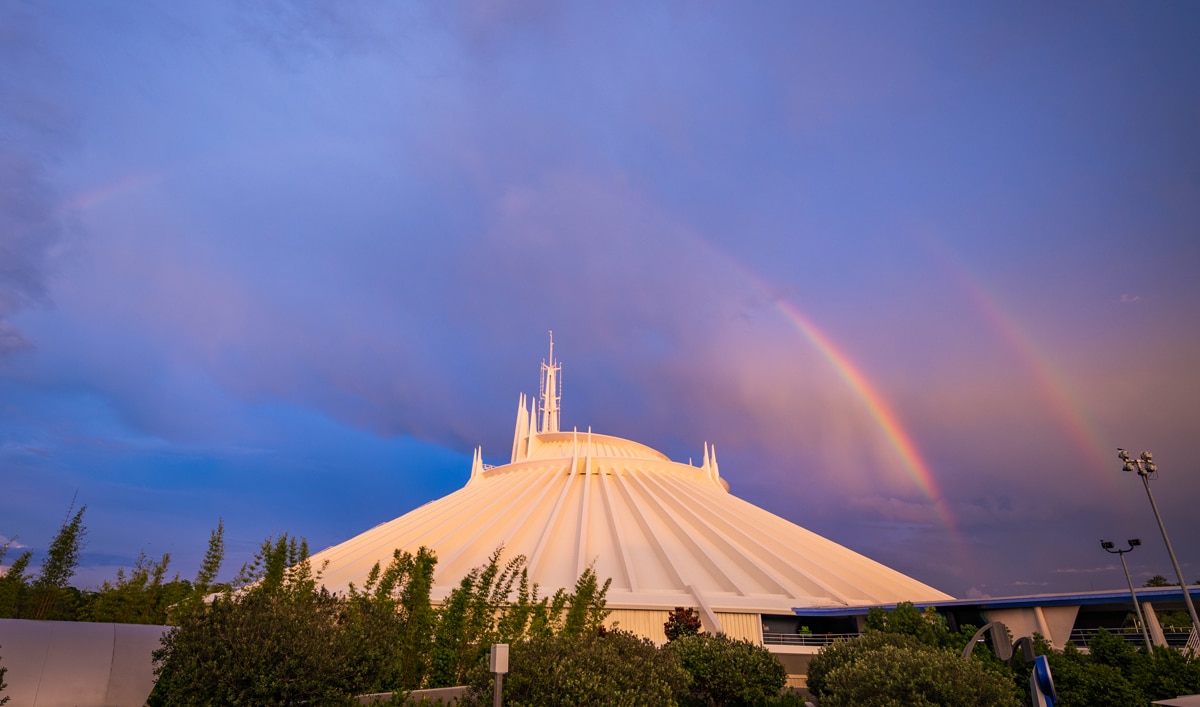
Why Walt Disney World Crowds Will Increase in 2026.
Current Trajectory is Good, Actually
Walt Disney World attendance being down 1%–the first decrease since the COVID closure–is attention-grabbing. However, it doesn’t tell the full story.
Disney had to navigate the opening of Epic Universe, and the parks overperformed during that period with stronger than anticipated bookings. Many fans were predicting the worst before Epic Universe opened, and if you told them that Walt Disney World would only drop 1% for the year, many would be surprised…or disappointed!
More surprising still would be the added nuance that the 1% decrease had absolutely nothing to do with Epic Universe. According to Disney’s CFO, the attendance decline could be explained entirely by the hurricane scares in the first quarter (meaning October 2024, the start of Disney’s 2025 fiscal year).
Disney directly addressed those hurricanes on multiple earnings calls over the last year, previously warning that Walt Disney World operating income would be adversely impacted by approximately $130 million due to storms. Hurricane Milton caused the parks to close and had a long tail of lower crowds due to cancellations in the days and weeks afterwards. We observed this in wait times data at the time, and in fact, crowd levels were up significantly year-over-year in October 2025.

Resort Occupancy is Up
Disney’s same 10-K filing that indicated domestic attendance was down also revealed that resort occupancy increased from 85% to 87% at Walt Disney World and Disneyland.
Meaning that even with attendance down 1%, Walt Disney World was able to shift stays from off-site to on-site. And they did so as Universal Orlando just opened 3 new resorts, and countless other hotels have debuted recently in Central Florida. There was a greater incentive to stay on-site at Universal Orlando–and many guests did exactly that–but Disney also improved. This further reinforces the ‘rising tides’ thesis, and that Epic Universe is growing the market to the benefit of both Universal and Disney.
This higher occupancy is likely directly attributable to better special offers. As noted above, Summer 2025 had the most aggressive discounts we’ve seen in a long time. Lower prices on resorts paired with higher occupancy resulted in higher per room guest spending, which is a rare win-win for Disney and guests.
That’s the added nuance to the above point about Walt Disney World making more money from a smaller pool of guests–more on-site hotel stays (a costly component to any trip), plus the aforementioned hurricane-induced closures and cancellations. Add in a dash of inflation, and there’s much less concern for the trajectory of attendance in 2026. To the contrary, it points to a potential bounce-back if Walt Disney World plays its cards right and lucks out with weather.

Record Tax Returns
This is the big one from our perspective. When taxpayers file their 2025 tax returns in 2026, a majority will see larger refunds than in recent years, per an analysis by the Tax Foundation’s Center for Federal Tax Policy. That’s due to the One Big Beautiful Bill Act (OBBBA), which reduced individual income taxes for 2025 by an estimated $144 billion.
The new law included several retroactive tax changes for 2025, including a bigger standard deduction; more generous maximum child tax credit; a higher limit for the state and local tax deduction; a $6,000 tax break for seniors; and deductions for auto loan interest, tip income and overtime pay. These seven provisions are the key drivers in reducing income taxes.
Despite this applying retroactively, the IRS did not adjust withholding tables, which offer guidelines to employers on how much to take from worker paychecks. This means that most employees continued to withhold more taxes from their paychecks than the OBBBA required. As a result, instead of gradually receiving the benefit of the tax cuts throughout the year via higher take-home pay, most taxpayers will receive a lump-sum ‘windfall’ when filing their returns.

In an investor note titled, “The Investment Implications of the Refund Surge,” JPMorgan Asset Management reinforced the above analysis, while adding its own color commentary: “These higher income tax refunds should work much like a new round of stimulus checks, adding to consumer demand and inflation pressures early next year.”
JPMorgan called this a prospective “economic sugar rush” from record refunds. Further driving home that point, their analysis added the following “these refunds are sugar, not protein, and when their effects fade, it is quite possible that Washington will provide yet another round of stimulus to boost demand ahead of the mid-term elections.”
As a Disney blog, we aren’t here to debate the economic merits of the OBBBA or further stimulus. But it would be foolish to ignore this in a conversation about Disney crowds, since we’ve been down this road before. All that matters for our purposes is that higher tax refunds and increased consumer spending is the consensus on Wall Street. It’s expected that retail stocks will be big beneficiaries, with some analysts arguing that this is already priced-in.

It should be a similar story for Walt Disney World, which saw bookings surge–and discounts dry up–in 2021 and 2022 as Americans spent lavishly on travel. What’s difficult to untangle there is how much of that was attributable to revenge travel after people were stuck at home, and how much was due to stimulus spending.
My guess here is that the record tax refunds will be enough to give Walt Disney World a big boost. The average tax refund for this year’s filing season was $2,945 according to IRS data. For the upcoming 2026 filing season, analyst projections are all over the place–from an increase of $500 on the low end to an average refund of over $4,000 on the high end.
In parsing these numbers a bit further, it appears that guests generally regarded as Walt Disney World’s target demographic will be the biggest beneficiaries. In our view, that degree of increase–and that overall amount of return–is more than enough to get people thinking about spending on travel as opposed to just clothes and electronics. Especially for families who have taken a year or two off, or stuck closer to home as they felt the pressures of inflation, etc.

More Aggressive Discounts
These higher tax returns might be priced into retail stocks already, but it’s highly unlikely that they’re baked into Walt Disney World’s degree of discounting for 2026.
As we’ve covered at great lengths over the last few years, Disney is incredibly reactive–as opposed to proactive–with pricing, special offers, and pretty much everything. That’s precisely why last summer offered last-minute deals, instead of lower base rates, despite years of the summer slowdown.
Each year since the pent-up demand era, Walt Disney World has gotten savvier with its special offer strategy. They’ve been pulling from the 2019 playbook–and then some. This is precisely why occupancy increased last year; it wasn’t by accident. Our expectation is that they’ll continue to refine their approach and offer even more aggressive discounts to fill more resorts and utilize the excess park attendance bandwidth.

In fact, several discounts for next year are already available, and a couple of them are historically strong or outright unprecedented. And this is just the start of discounts–another round consisting of 3-4 special offers is likely to be released in early 2026!
Already-available special offers include the deeply-discounted Disney+ 3-Day, 3-Park WDW Ticket, the popular Save Up to $250 Per Night at Walt Disney World in Winter to Summer 2026 special offer and the straightforward Save Up to 25% Off WDW Resorts Room-Only Discount for January to Spring Break 2026. There’s also the $99 Per Night at Walt Disney World in Winter 2026.
The most impactful of these, from the perspective of crowds, is the 3-Day, 3-Park Walt Disney World Ticket Deal. This is a date-based ticket with start dates from January 12 to May 22, 2026. This one caught our attention because ticket deals help boost attendance, and contribute to crowds.

That’s not normally noticeable year over year, since very similar special offers are offered annually. However, the 3-Day, 3-Park Ticket Deal and $99/Night Room Discount are not normally offered during this timeframe. Winter has become one of the busier and higher-occupancy seasons, so it’s notable that Walt Disney World would get even more aggressive during this timeframe.
This bodes well for even earlier and bolder discounts from May through August. And while we’re on that note, personally, I do not believe that the summer trendline is irreversible. Offering bigger discounts and spreading greater awareness about lower crowds are powerful incentives, especially for price-sensitive middle class families. It’ll just take time.
As for winter, there will almost certainly be an even deeper discount on tickets for Florida residents that runs roughly the same dates and is eligible at all 4 parks. This one is worth watching in light of the 2026 Disneyland California Park Hopper Ticket Deal: $68 Per Day or Less!
That is the best deal we’ve seen during that timeframe at Disneyland in well over a decade (and that’s unadjusted for inflation), with a massive ‘sweetener’ offered via authorized third party ticket sellers (that is likely courtesy of Disney–otherwise, those sellers are taking massive loses).
If Walt Disney World offers a similar deal to Floridians, it could be a huge driver of attendance. (There are actually several ideas Walt Disney World could borrow from Disneyland–the PIN Code and Costco ticket deals were also incredibly savvy and would translate well to the WDW market.)

Conventional “wisdom” is that Walt Disney World is satisfied with higher revenue on lower volume. We do not believe this. Our view, which is fully supported by the aforementioned special offers, is that Walt Disney World wants to have it all–higher revenue, stronger guest spending, and increased attendance. We wrote about this at length a few years back in Disney Doesn’t Want Lower Crowds. That still mostly applies today.
It’s our belief that the above narrative has been forged around recent results–flat to negative attendance and record record–as opposed to a concerted effort by the company. That they’ve had some tough comparisons after lapping the 50th Anniversary and pent-up demand that made achieving higher crowds challenging. And it’s easier to pretend that was the plan all along to paint the results in a positive light.
To be sure, there are some limits on this. Guest satisfaction is certainly one. It’s unlikely we’ll see a return to 2019 levels of attendance until the 2030s. But Walt Disney World’s business model benefits from a certain crowd threshold, as that helps incentivize Lightning Lane sales. When there’s plenty of excess bandwidth in park capacity and resort bookings, they want to capture that. Hence the more aggressive discounts!

Ultimately, it’s our view that these last two points are what matters most and will override whatever valid points might exist as headwinds to higher attendance and crowds. More aggressive discounts colliding with higher tax refunds will be the outcome-determinative factors here. That’s enough to overcome everything else, especially when the other variables aren’t that influential in the first place. As the saying goes, “money talks.”
Our prediction is that 2026 will offer its own twist on 2021-2022. Back then, stimulus money plus pent-up demand were strong drivers of attendance for Walt Disney World. Enough to overcome price increases and a lack of discounts, plus a whole host of temporary & permanent cutbacks, and chorus of fan complaints. The Walt Disney World of 2026 is better positioned from a guest experience and satisfaction perspective, and the table is set for a repeat of the revenge travel run.
We will be closely monitoring both the 2026 Walt Disney World attendance and special offers situation, and will keep you updated on crowd levels and discounts. We should know a lot more about the latter in the next few days, and we’ll send you an alert if you sign up for our FREE Walt Disney World newsletter!
Planning a Walt Disney World trip? Learn about hotels on our Walt Disney World Hotels Reviews page. For where to eat, read our Walt Disney World Restaurant Reviews. To save money on tickets or determine which type to buy, read our Tips for Saving Money on Walt Disney World Tickets post. Our What to Pack for Disney Trips post takes a unique look at clever items to take. For what to do and when to do it, our Walt Disney World Ride Guides will help. For comprehensive advice, the best place to start is our Walt Disney World Trip Planning Guide for everything you need to know!
YOUR THOUGHTS
What do you think is likely to happen with Walt Disney World attendance and resort occupancy in 2026? Are you expecting higher or lower crowd levels and wait times? Think the reasons for tourists to avoid WDW in 2026 are stronger? Or will bigger tax refunds and better discounts win out? Will you be avoiding or visiting Walt Disney World in 2026? Any questions we can help you answer? Hearing your feedback–even when you disagree with us–is both interesting to us and helpful to other readers, so please share your thoughts below in the comments!