

For twenty years, the CPG innovation failure rate has remained between 70% and 90%.
During that same period, the industry adopted many frameworks – Design Thinking, Jobs To Be Done, Blue Ocean Strategy, and Horizon Mapping. Each framework was positioned as a way to make organizations more effective in translating consumer opportunity. Each was implemented with training, toolkits, and ceremony.
But the failure rate has held steady.
The problem is not with the frameworks themselves. They work as intended. The problem is that they are being applied inside organizations whose operating systems are fundamentally category-centric.
This article is part of Branding Strategy Insider’s newsletter. Join the world’s smartest marketers and subscribe here for actionable insights delivered directly to your inbox.
Category-centricity defines opportunity by where products sit on the shelf today. It segments consumers by what they purchase in the aisle today. It treats the category as the default frame and sees consumer behavior only through that lens. This orientation aligns with organizational structures, making the work measurable and manageable. It is brilliant, perhaps even mandatory, for near-term innovation.
But it becomes limiting when organizations attempt to define strategy and build longer-horizon or more transformational pipelines, because category logic is rooted in the “now.”
1. Design Thinking collapses when the problem is defined by the category
Design Thinking was designed to help us see our business problem from the consumer’s point of view so that we could ideate and prototype based on a real human problem or opportunity. Jeanne Liedtka’s research at UVA Darden shows that breakthrough outcomes emerge from redefining the problem, not from generating more ideas.
Within category-centric organizations, it has become the latest idea generator because the category has already defined the opportunity. The problem is inherited rather than interrogated. So you end up with a lot of Post-its, a lot of dot voting, and often, the very same ideas you got in your scrappy ideation the previous year.
Outcome: Design Thinking becomes an execution ritual layered over the assumptions it was meant to challenge.
2. JTBD collapses when jobs are rewritten as category benefits
Jobs To Be Done was intended to shift our thinking from product features to human motivations. Clayton Christensen’s research showed that most brand switching is driven by emotional or contextual jobs, not functional ones.* The purpose of the framework was to elevate thinking beyond the confines of the category.
But when the category remains the anchor, JTBD is repurposed as a list of organizational tasks. Jobs are rewritten in category language because those are defensible in a meeting.
“Shake my morning blues with a little self-indulgence” becomes “high-quality, premium coffee.”
“I want to make up for my terrible dietary choices yesterday” becomes “I want a breakfast protein bar.”
One workshop I attended called it “Brand Jobs To Be Done” and expected what was essentially a list of category benefit statements.
Outcome: A sophisticated justification tool for existing roadmaps, stripped of the power it was meant to deliver.
3. Trend work collapses when trends are treated as ingredient inspiration
Trend immersion reveals how behaviors manifest in what people search for, explore, and buy. Datassential, Tastewise, Innova, and WGSN provide immersive, inspirational perspectives grounded in emerging ingredient and format signals.*
The issue is how organizations interpret those signals. Instead of asking why a behavior is emerging, trends become a menu of attributes, and teams focus on what can be executed within existing category constraints.
Outcome: A product development wishlist built on what is trending now, which may or may not be relevant when the product launches.
4. Horizon Mapping collapses when horizons are filtered through the current category structure
Horizon Mapping balances near-term performance with long-term advantage. Horizon 1 stabilizes. Horizon 2 grows. Horizon 3 explores. BCG’s work shows that outperformers win by investing where they possess a structural advantage, not by spreading resources across every possibility.*
Inside most organizations, only Horizon 1 truly matters. Horizon 3 becomes a wishlist of technologies or ingredients with no path to build capability. Horizon 2 collapses into incremental renovations. Nothing receives real investment until it already appears in the category. Organizations do not create strong platforms that can benefit multiple business units because the units themselves are structured as silos based on the category.
Outcome: A method designed to create a roadmap to the future ends up reinforcing the short-termism it was built to counter.
What Consumer Centricity Could Look Like
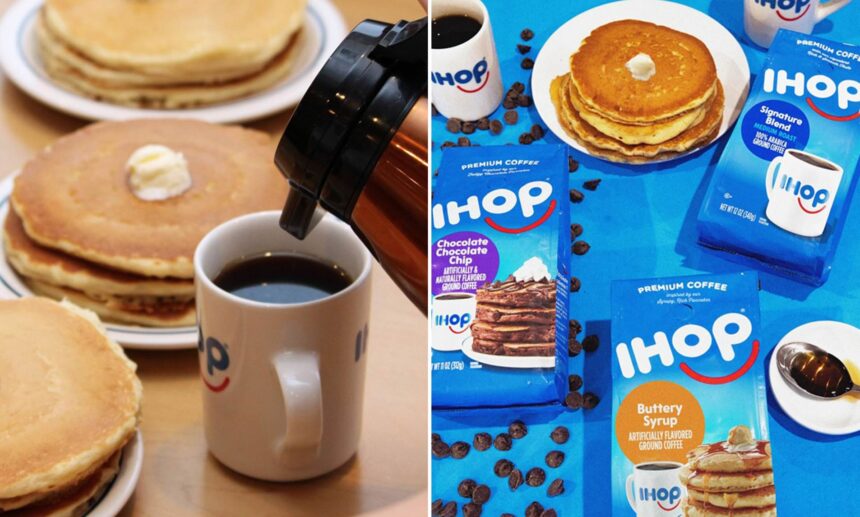
Consider IHOP’s launch into retail coffee. It is an excellent, premium coffee brand.
Category logic would have ensured we chased premium coffee nomenclature because that was how the category giants behaved. If we had followed that path, we would not have been meaningfully differentiated. It would have also been a disadvantage, as many premium players had expert coffee credentials.
Consumer centricity ensured we examined not only how people were buying coffee in the aisle but how beverage behaviors were evolving outside it. It uncovered the growing influence of younger drinkers who were spending money on café-style beverages that were often dessert-like. Origin, terroir, and tasting notes were less important than sensory gratification and emotional payoff. Coffee was not merely a morning caffeine routine for younger consumers. It was a treat.
That reframe shaped everything: product strategy, positioning, and the definition of premium in coffee. It delivered one of Kraft Heinz’s most successful innovations in nearly a decade while reinforcing IHOP’s equity in taste and indulgence.
Reframe
Bain’s analysis shows that only 12% of CPG innovations deliver meaningful incremental growth. That number has not moved in two decades.
Not because frameworks are weak. Not because teams lack capability. Because the lens never shifts, this traps teams in near-term thinking.
Category-centricity defines opportunity, sets the brief, interprets the data, evaluates ideas, and determines risk based on how consumers behave in the category today. It is effective for near-term innovation. If you have Circana or Nielsen panel data, you already have one of the most potent tools to scope what to do now to drive revenue.
But the challenge of innovation is rarely what to do now. It is what to prioritize next.
If every framework is filtered through the logic of “now,” the output cannot drive meaningful growth. Everyone is doing the same thing, inside the same frame.
As a marketer, your job is to compete. Compete differently with The Blake Project.
Consumer centricity requires stepping outside category boundaries long enough to understand the behaviors that shape choice. Until organizations shift the lens, every new methodology will follow the same pattern: adopted with enthusiasm, absorbed by the category, producing the same results.
The tools were never the problem. The lens was.
Contributed to Branding Strategy Insider by Sweta Kannan, CPG Marketing and Innovation Executive
At The Blake Project, we help clients worldwide, in all stages of development, define and articulate what makes them competitive and valuable at pivotal moments of change. Please email us to learn how we can help you compete differently.
Branding Strategy Insider is a service of The Blake Project: A strategic brand consultancy specializing in Brand Research, Brand Strategy, Brand Growth, and Brand Education
Post Views: 13