



Walt Disney World has sent cease & desist warnings to small businesses providing unauthorized guest services in the theme parks & resorts, threatening trespass notices for those who don’t comply. This is likely the most wide-ranging crackdown on the commercial activity ban at WDW in a long time, following a long list of more targeted enforcement actions.
There’s a long list of controversial commercial crackdowns from the last 6 or so years. The most recent of these is Disney’s still-ongoing crackdown on commercial DVC point rental businesses. Although that probably isn’t the best example since you might put air quotes around “crackdown,” as there doesn’t seem to have been teeth to the policy change and it might’ve been more aimed at appeasing disgruntled members.
A more notable rule recent change occurred at Fort Wilderness Campground, where Walt Disney World banned third party golf cart rents and now requires insurance of owners, while also limiting RV rental providers to its approved list. This is actually a much better example that’s relevant to the current crackdown, as this fulfilled goals of limiting legal liability and increasing guest safety, while also oh-so-conveniently benefiting Disney’s list of partner vendors.
There are countless other examples of this happening. Who can forget the infamous EVC delivery ban of ’19, or the infamous oversized stroller crackdown of ’19, or the infamous loose ice ban…also of ’19?! That last one had nothing to do with third party businesses, but I still haven’t quite made sense of it.
Perhaps there was a cottage industry of ice harvesters and resellers impersonating Kristoff and hawking their frozen fare outside the gates. The salient point is that 2019 was a wild time for crackdowns, and many were quite controversial among Walt Disney World fans at the time!

In the last few years, we’ve also seen cease & desists sent to small shops on Etsy and Facebook selling Mickey ears, apparel, and art featuring Disney intellectual property. This has been fascinating, as Disney has historically had hot and cold relationships with these vendors.
On the cold side, there are the cease & desist letters sent when small shops have crossed the line between permissible “flirting” with Disney IP to outright infringement, the latter of which the Mouse unsurprisingly and understandably does not tolerate. There was even one fairly high profile case last year of a seller ignoring C&Ds that ended up in federal court. The small shop finally settled, agreeing to shut down their businesses and pay $100,000 to Disney if they ever infringe again. That’s a lot of bootleg Mouse ears to sell!
On the hot side, we know multiple artists who actually got their start doing this sort of thing and were eventually hired or commissioned by the Disney Design Group. There have also been countless reports of Disney, ahem, borrowing artwork and designs done by third parties for park merchandise, and the small shops having little-to-no-recourse since it’s not their IP in the first place. Disney also often looks to third party merchandise to “inspire” official product lines.
Enforcement is about as consistent and predictable as Disney IT. Some sellers operate for years without incident; others get hit with threats of legal action. (Back at the height of this, around 2019 or so, there was an interesting article published somewhere; unfortunately, I can’t track that down.) It’s a fascinating, almost symbiotic love-hate relationship that Disney seems to have with these sellers–but they aren’t the point of this post. At least, not the primary one.

Then there was the controversial and headline-grabbing ban that occurred in late 2023 when Walt Disney World issued trespassing notices to dozens of third-party tour guides who had been operating in the parks—in some cases for decades. These guides helped families navigate the parks, made Lightning Lane reservations, escort clients through attractions, and provided specialized assistance for guests with disabilities.
This was the most contentious of the crackdowns (as the underlying facts and circumstances of the bans were in dispute), and also the one that “escaped containment” and was reported on by the mainstream media, including this article in the Washington Post.
At the time, Walt Disney World indicated that that they are taking additional steps to enforce their existing rules that prohibit commercial activities because of a “significant increase in these rule violations.” Disney indicated that some operators have sold unauthorized services, including in-park offerings like Lightning Lane line-skipping services and access to the Disability Access Service.
“When this activity happens, it impacts the experience of other guests following the rules — including our guests with disabilities — and impedes our theme park operations,” a Walt Disney World spokesperson said at the time. “Just like Starbucks would not permit a third party to come into their stores to sell coffee to their customers, Disney does not permit unauthorized commercial activities in its theme parks.”

Fast-forward to 2026, and Walt Disney World is once again cracking down on commercial activity in the parks and at the resorts. This time, the enforcement action is not narrowly targeted to tour guides or t-shirt vendors or a distinct category of vendors that Disney wants to clamp down on for whatever reason.
According to multiple reports on social media and confirmed by admins of the 294,000-member Facebook group “Ear For Each Other,” over one-dozen businesses have received cease & desist letters from Walt Disney World Security and Legal. They’ve been advised to stop on-site commercial activity, or risk being trespassed from Walt Disney World.
The impacted “Ear for Each Other” businesses include:
- Photographers doing portrait sessions at Disney Resort hotels
- Massage therapists providing in-room services
- Chefs and catering companies setting up in DVC villas
- Stylists performing princess makeovers in hotel rooms
- Room decorators creating surprise experiences for celebrating guests
- Various other service providers connecting with guests through social media
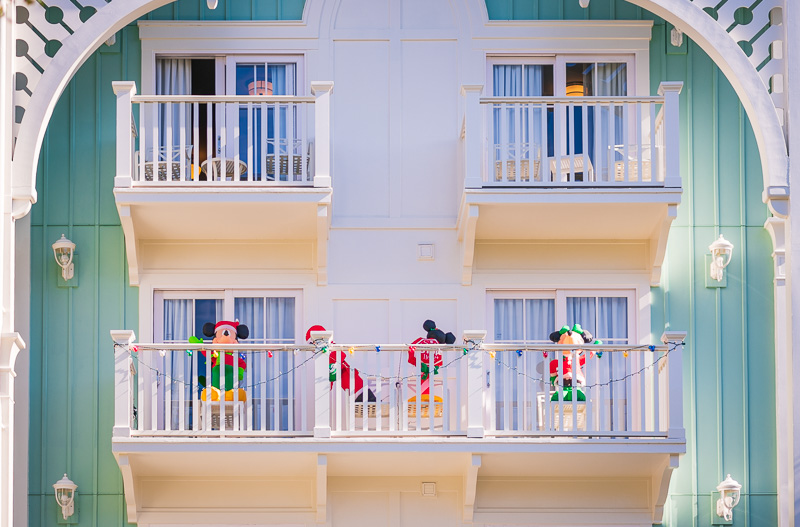
Here’s the message about this crackdown posted in the “Ear for Each Other” community:
Good evening, Ear For Each Other community,
Many of you have seen the conversations online regarding where, or if, 3rd party vendors can still offer their services on property. While we have little information on these changes, we want to share what, in fact, we do know at this time.
Recently, a handful of our vendors (as well as vendors not in this group) have been provided written documentation from WDW Security Administration advising that their services were not permitted on property effective immediately.
This explains why some members received cancellations or adjustments to plans last minute.
Admins and vendors all agreed that it was important to share what we DO know by highlighting some key points:
- Affected vendors will be reaching out to their clients to make arrangements to go off property or they are unfortunately cancelling appointments
- We will respect Disney policy and procedures
- This did not impact all vendors in this group. Our group offers a wide range of services (many of which have nothing to do with parks/resorts) such as art, baked goods, wreaths, woodworking, stickers, stroller tags, handmade crafts, and clothing and therefore do not appear to be impacted at this time.
- Guests have inquired if the therapist, chefs, photographers, etc. can be put on their reservation as a way to keep their appointments. We are all committed to following the direction provided by Disney and therefore we cannot honor this request.
- What made us who we are, at our core, is that we were able to pivot when thrown a curve ball. There is no reason to believe that we won’t be able to pivot again!
- It is important to highlight that these businesses aren’t closing – they simply have to expand their network and seek out other opportunities to share their talent.
As we have in the past, we can all help get the word out that these services are still available in the Orlando community.
We will leave commenting on if you want to leave a note of encouragement to our therapists, photographers, and chefs or offer any ideas of how they can pivot their services in the community.
Any comments below that do not meet our mission will be removed as the goal is to remain positive even in the face of adversity. As always, thank you for finding the silver lining, focusing on a solution, and keeping a positive outlook!
Thank you for being Ear For Each Other!
The EFEO Team
For those who are unfamiliar with it, “Ear For Each Other” began in 2020 with a mission to provide a place where furloughed Walt Disney World Cast Members could showcase their side hustles. The group was able to connect guests with talented vendors, often offering a service that Walt Disney World wasn’t at the time (or hadn’t offered, period).
“Ear For Each Other” created a community that helped keep the lights on for Cast Members during a difficult time. That’s a mild understatement. COVID closures hit Central Florida’s economy hard, and was devastating for many families. It was also a time when the community pulled together (both the local one and fans) and helped those in need.
Long after the closures ended, “Ear for Each Other” has continued. While I can’t speak to the motivations of each individual that opted to start a solo or small shop instead of returning to Disney, the clear consensus from my conversations is that former Cast Members felt undervalued and taken for granted, while being their own bosses offered greater freedom, flexibility, higher pay, and more. Not difficult to see why so many made the decision they did to strike out on their own.

Separately, we’ve talked to Nate Root, one of our friends in the Orlando photography community. He shared that they received a courtesy call from the head of Disney Fairytale Weddings (as opposed to a cease & desist), who requested that they not do photoshoots at the Disney resort hotels unless there for a contracted event. Wedding days are unaffected since photographers who work with Disney Fairytale Weddings sign a waiver for those and have authorization for those events.
The word among photographers is that those who work with Walt Disney World closely got a call. Those who are known to shoot portrait sessions at resort hotels but don’t have an established working relationship got cease & desists.
Others still seem to have flown under the radar and haven’t heard anything. But there’s reason to believe the crackdown will apply to all photographers equally, at least to the extent of portrait sessions (again, weddings are a different story and outside of this).

I’m probably biased as a photographer (albeit not one of humans), but this one hits close to home for me. Part of that is in knowing the people impacted. But another is in knowing that so many of these photographers are consummate professionals (as evidenced by relationships with Disney Fairytale Weddings) who have unrivaled skills and expertise.
Sarah and I have often half-joked that we should get married again at Walt Disney World just so we could use Root Photography. And in fact, two of our closest friends (one of whom is also a photographer) actually had them shoot their wedding in California. (It was worth it–best wedding photos I’ve ever seen!)
Prior to this crackdown, Walt Disney World was directing guests to these third party photographers for portraiture sessions at the resorts, since there is no “competing” service offered directly. Resort managers had good working relationships with some of these photographers. That’s because these professional photographers were an asset to guests and Disney, not a liability.

Although Walt Disney World has not commented on the crackdown, we more or less know what they’d say based on the third party tour group ban a couple years ago. The implicit reason for this is pretty simple and straightforward; that Disney is simply enforcing rules that already exist.
Here’s Walt Disney World’s official list of prohibited activities from their official park rules website website:
- The sale of goods or services, or the display of goods or services, unless prior written approval has been obtained.
- Engaging with other Guests or impeding operations while posing as or portraying any character in costume.
- Engaging in any unsafe act or other act that may impede the operation of the Walt Disney World Resort or any part thereof.
- Unauthorized events, speeches, or use of any flag, banner, sign or other material for commercial purposes, or as part of a demonstration.
- Photography, videotaping or recording of any kind, or otherwise engaging in any activity, for unapproved commercial purposes.
- Obstructing sidewalks, entrances, driveways, patios, vestibules, stairways, corridors, halls or landings.
- Hanging any clothing, towels, bedding or other similar items over or on balconies at a Disney Resort hotel or from fire suppression sprinklers.
By these standards, every one of the businesses receiving cease and desist warnings is in violation.
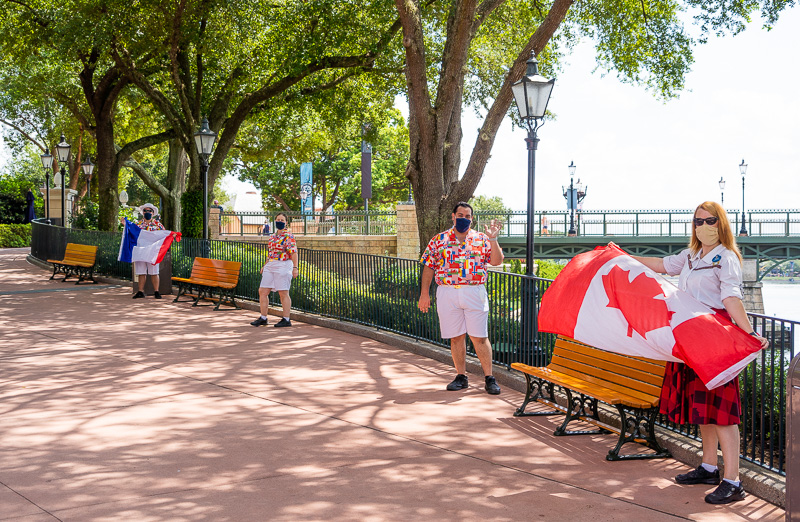
I’m conflicted about this. From the perspective of the stated rules and legally, Walt Disney World is clearly in the right. It’s private property, and the businesses receiving cease & desist letters are violating the rules. Even in the absence of legitimate liability, safety and economic concerns, Disney is free to make and enforce its rules as the company sees fit.
Nevertheless, my stomach sank when reading the “Ear for Each Other” news and hearing from photographers. This was all happening out in the open; it wasn’t some secret black market. Walt Disney World has turned a blind eye to it for years (that’s how they knew where to send the C&Ds), letting people build livelihoods as they’ve worked hard to create their small shops.
The people getting hurt aren’t faceless corporations. They’re small businesses dedicated to guest service, and trying to make a living by serving Walt Disney World guests. Many of them are former Cast Members that the company itself laid off. A lot of these small shops only exist in the first place because Disney furloughed so many Cast Members during COVID!
Maybe it’s one of those “you had to be there” types of things, but that’s my perspective as someone who lived through COVID in Central Florida. It was bleak. And I know that was the case everywhere, but with tourism grounded to a halt, few places were as decimated as Orlando–only Las Vegas comes to mind.
We saw firsthand what many of these people went through, why “Ear for Each Other” came to fruition, and how it was a rare ray of sunshine. The rational side of me fully understands why this is happening, but it’s nevertheless discomforting. It feels like there has to be a better solution than sending out blanket cease and desist letter; that strikes me as a measure of last resort, not first resort.

In fairness, Disney’s motivations go beyond simply enforcing the rules for the sake of enforcing the rules. Those rules exist for a reason, whether to protect Walt Disney World’s business interests, ensure guest safety, reduce potential legal liability, or create the desired upscale environment at the parks and resorts.
If something goes wrong during a third-party service on-property, Disney could face legal exposure even though they didn’t authorize or approve the provider. The argument could be made that Walt Disney World had constructive notice of the activity or purposefully turned a blind eye to said commercial activity.
As the party with the deeper pocket, it might behoove an impacted guest to name Disney in a legal complaint addition to a small shop. This isn’t to say the plaintiff would prevail in court–they probably would not–but that’s not always the aim of litigation. (Nuance that’s often missed when discussing lawsuits is that filing is not the same as prevailing.)
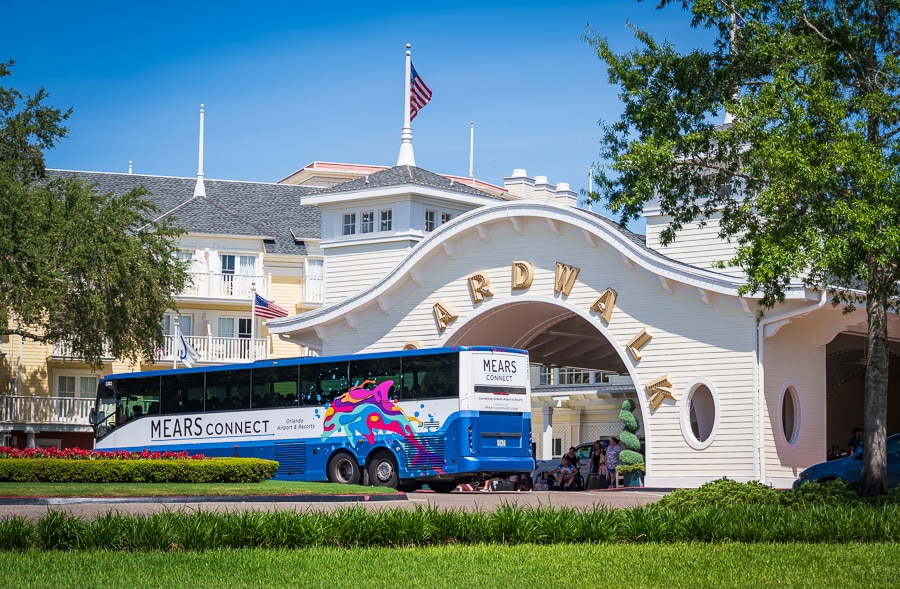
Walt Disney World works with approved vendors who carry proper insurance, licensing, and bonding. Small businesses operating through Facebook groups may or may not have appropriate coverage. Not only that, but vetting isn’t easy.
There are a lot of legitimate concerns that are mostly downstream of this, and relate to a lack of control. Disney can’t guarantee the quality of services they don’t authorize, but nevertheless occur at Walt Disney World. And if Disney doesn’t provide authorization, they also have little recourse for knowing which small shops doing business on property are legitimate and which aren’t. Or which are scams. Etc.
The cynics out there will likely argue that Walt Disney World is doing this to boost its own revenue. And that certainly makes sense in some instances. But in many of the aforementioned examples, Disney doesn’t even offer “competing” services.
Walt Disney World does not offer in-room massages, or personal chef dinners in DVC villas. They mostly do not offer professional photography at the resort hotels. Shutting down these services without providing alternatives just means guests lose options.

It would make sense from a business perspective if this were narrowly targeted at protecting Disney’s own services at a time when spending is slowing, but that’s not what’s happening here. At least, not the only thing happening. Accordingly, we do not believe Disney has profit motives for this crackdown.
If anything, the argument could be made that some of these curated and high-end personalized offerings are bringing business to Disney. That could be in the form of filling a service void that is common to competing luxury resorts; for example, Four Seasons Orlando and Conrado Orlando actually do offer some services that WDW does not. It could also be via attracting guests to Walt Disney World in the first place; we know a few couples who have flown down to Florida specifically for engagement shoots at Walt Disney World.
Nevertheless, it’s not surprising that Disney Legal and Security would want control over commercial activity on Walt Disney World property due to the aforementioned guest safety and legal liability concerns. If anything, it’s more surprising to me that the “Ear for Each Other” group hasn’t had more issues over the last few years.

In all likelihood, most small businesses will comply with the cease & desists. We’re already seeing this with some in the “Ear for Each Other” group reportedly pivoting to Universal Orlando or off-site.
Non-compliance means risking trespassing charges, and as evidenced by the aforementioned small shop that found itself in federal court, litigation risk and legal fees. Even if they reach a favorable settlement, there’s still considerable time, expense, and stress in taking on Disney in court. Most don’t have the resources for that, and they’re not going to win.
Eventually, the current scrutiny will subside…and new vendors will emerge (or reemerge). We’ve seen this same cycle play out with the Etsy small shops. This isn’t like ECV or RV drop-offs; there’s less visibility when many of these services are rendered.
What I hope happens is that Walt Disney World creates an approved vendor or preferred partner program, which is what should’ve happened in the first place, before C&Ds. This would establish a legitimate marketplace and official avenue for working with these small businesses.
It would be win-win-win, too. The small businesses would receive increased exposure courtesy of Walt Disney World, which would bring more attention to these services among casual visitors and first-timers (I’m guessing many of you had never heard of the “Ear for Each Other” group, and we’re diehard fans here!).
Meanwhile, Walt Disney World wins because these ‘authorized’ vendors would pay fees, meet standards, and carry the appropriate licensing, insurance, etc. to satisfy safety and legal concerns. Guests would win because they’d continue to have access to specialized services that Walt Disney World doesn’t offer directly.
As an added bonus, this could be a PR win for Disney. My best guess is that this news is going to garner a mixed reaction among fans. Most will understand that it’s Walt Disney World property, so they set the rules. That there are obvious and legitimate reasons for the crackdown.
But at the same time, I’d expect a sense of unease or discomfort (or at least sympathy?) that the corporate behemoth is cracking down on the little guy, especially when so many of these small shops are former Cast Members.
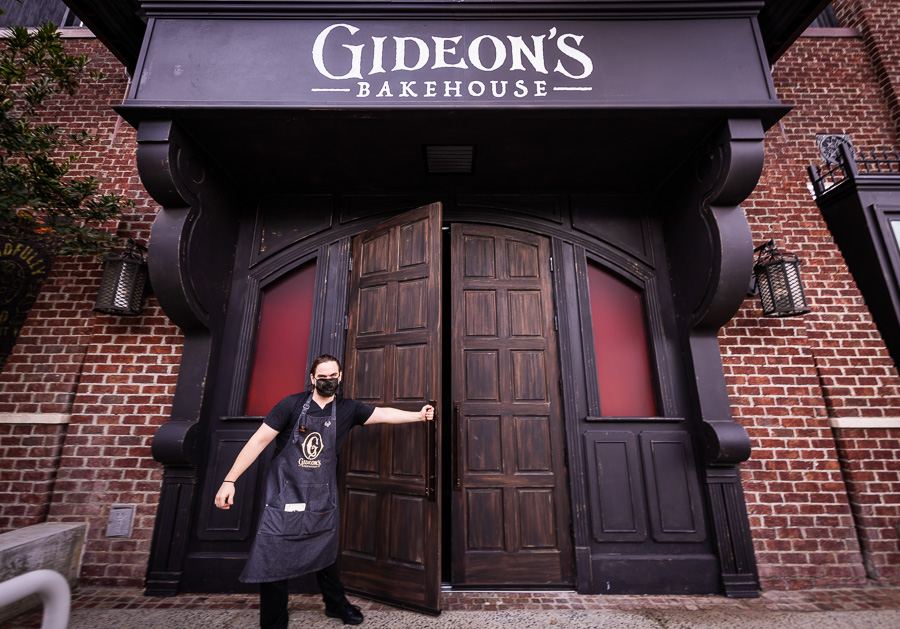
By contrast, Walt Disney World creating a program to partner with local Florida businesses is an unequivocally positive, feel-good story. It’s similar to Gideon’s Bakehouse opening at Disney Springs, when Orlando bands perform at EPCOT, etc.
As we saw during COVID, Central Florida’s economy revolves around Walt Disney World; almost every business is somehow in ‘orbit’ of the parks and resorts. Walt Disney World has done tremendous things for the community, to be sure. At the same time, there’s an implicit responsibility that comes with being the dominant force in that community.
Planning a Walt Disney World trip? Learn about hotels on our Walt Disney World Hotels Reviews page. For where to eat, read our Walt Disney World Restaurant Reviews. To save money on tickets or determine which type to buy, read our Tips for Saving Money on Walt Disney World Tickets post. Our What to Pack for Disney Trips post takes a unique look at clever items to take. For what to do and when to do it, our Walt Disney World Ride Guides will help. For comprehensive advice, the best place to start is our Walt Disney World Trip Planning Guide for everything you need to know!
YOUR THOUGHTS
Thoughts on Walt Disney World cracking down on third parties doing business on-property? Does this news leave you feeling conflicted, or do you think Disney is clearly in the right or wrong? Have you used “Ear for Each Other” or any small businesses at or around WDW in the past? Agree or disagree with our perspective? Please share your comments, just be sure to err on the side of kindness and empathy and don’t engage in personal attacks, antagonism, or trolling.