


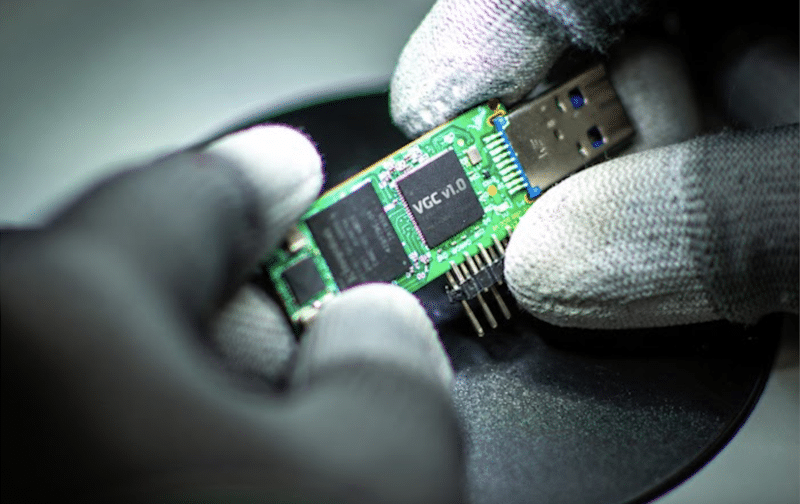
Can a country secure its digital infrastructure by controlling the technology that protects its data? Vietnam’s first domestically designed security chip takes that effort to hardware.
Vietnam’s Government Cipher Committee (GCC) in collaboration with Viettel has developed a locally-designed secure chip known as VGC v1.0. This will help improve the protection of data through localised, hardware solutions for cryptographic processes. The goal of the project was to increase the level of protection of data on Vietnam’s digital infrastructure through the use of localised security technology.

By moving cryptographic processes into hardware it can improve performance in terms of speed. VGC v1.0 was shown to complete encryption and decryption of data around 15 times faster than a software solution would be able to.
The chip itself is 10x10mm with 300 million transistors within its 28nm CMOS design. This is the first product produced through a secure semiconductor platform developed collaboratively between GCC and Viettel. This aims to move Vietnam’s cryptographic algorithms from a purely software based solution into a dedicated silicon chip.
Throughout the development of the chip there were security measures implemented. The engineers implementing the design added technical security protections to help reduce the amount of information leaked from the design of the chip throughout manufacturing.
The development follows an approach also seen in dedicated security hardware such as Google’s Titan M and Apple’s Secure Enclave, which support cryptographic processing and data protection in their respective devices.
The first batch of VGC v1.0 chips passed technical testing and received certification for use in socio-economic activities in the first quarter of 2026. Its unveiling marks a step towards building domestic capabilities in secure semiconductor design and hardware-level cryptography.
Click here for the official announcement.