

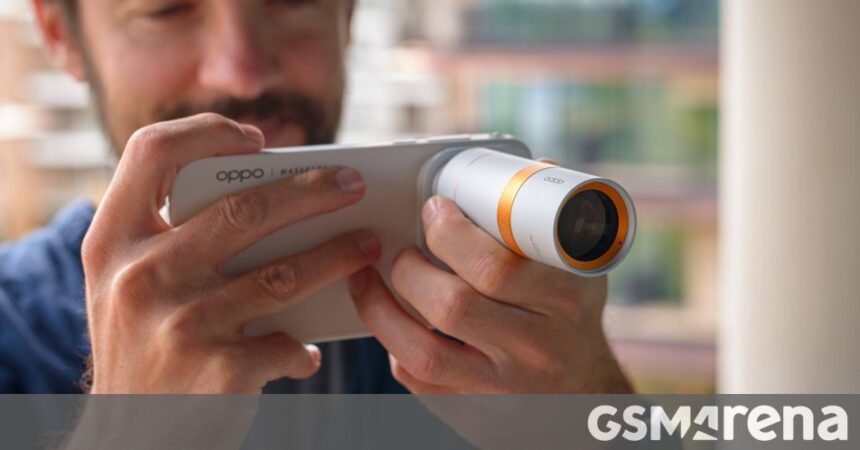
Hasselblad Teleconverter Kit overview
It has become the norm for high-end cameraphones to offer support for a telephoto accessory lens and the Find X10 Pro Max can be outfitted with the Hasselblad Teleconverter Kit. We already did the unboxing a couple of weeks ago, but we now have some samples to show you. But still, let’s go over the hardware in a bit more detail first.
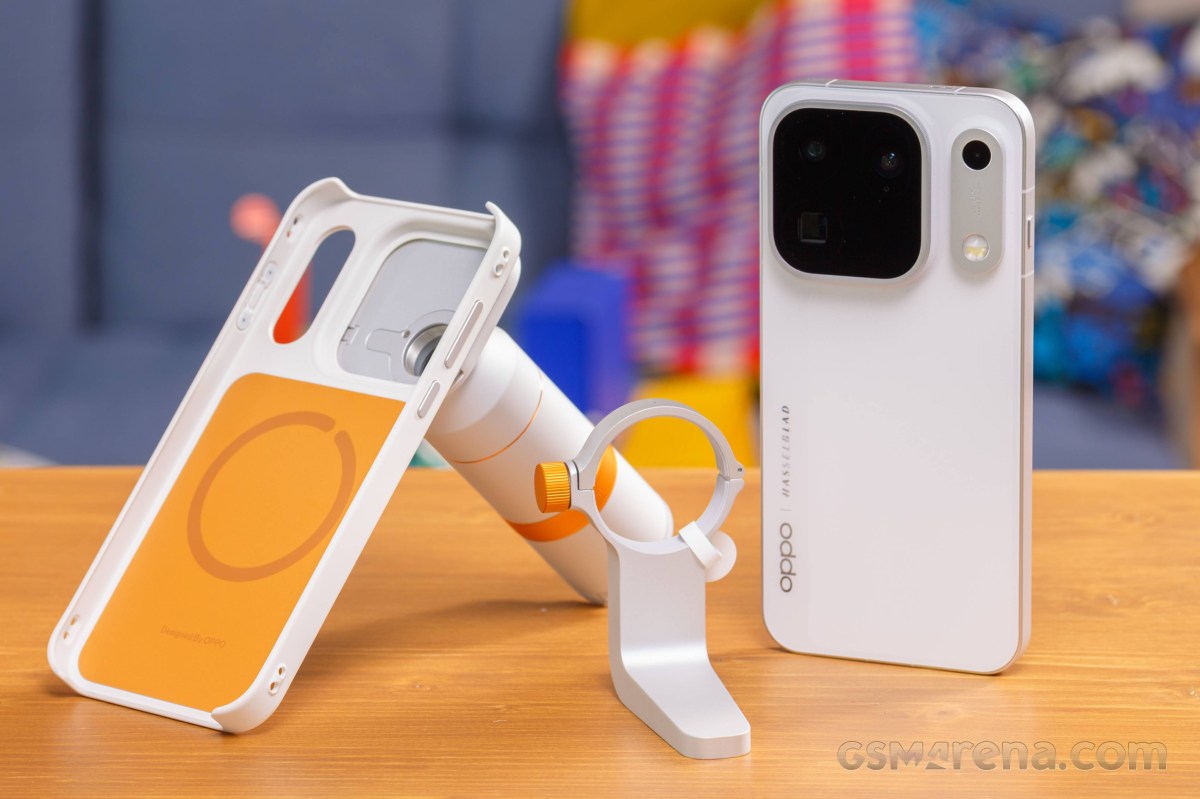
The concept and most of the practical implementation of the teleconverter is the same as on the Find X9 Pro. You have a lens extender for the telephoto camera, which bayonets to a metal plate, itself sliding to mount to a dedicated case. The plate requires a bit more force to slide on than ideal, practically rendering the latch that secures it unnecessary, though it might loosen with use. Then again, the assembly now feels more stable than it did on the X9 Pro, so it just might be all for the better. Still, there remains some play in the bayonet mount after all.
The lens offers a 3.28x zoom multiplier on top of the telephoto camera’s 70mm equivalent lens, making the total 230mm, or more or less 10x from the main camera’s 24mm(-ish) lens. We wouldn’t be surprised if the teleconverter is entirely identical in its optics to the previous gen, though it is some 6g lighter than before. However, the complete case-plate-lens assembly, with the front lens cap on, is 216g, which is 3g heavier than the same configuration on the X9 Pro. The case is a thicker and more substantial product than the aramid shell for the X9 Pro, which could explain the difference.
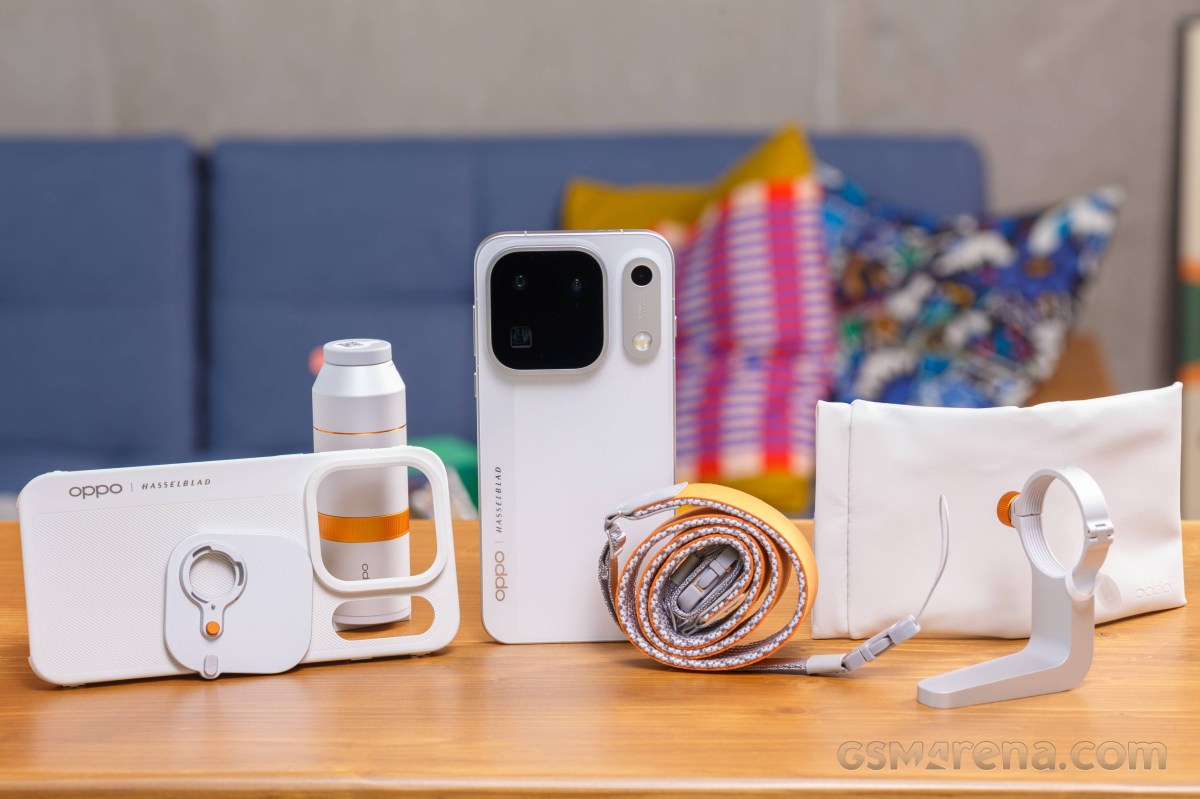
It’s worth pointing out that the metal plate blocks the other two cameras, so you can’t just remove the lens to use the ultrawide and the main cameras – you have to undo the plate too (which isn’t all too easy, as mentioned).
The suboptimal lens cap design remains too – in practice, you have to squeeze it from the outside even though it looks like it’s a pinch style. You also can’t reliably stand the lens on it either. Oppo did optimize the lens tripod collar though and, while still probably way overkill, it’s now a slightly more streamlined and lighter design (64g vs. 72g).
Also unchanged is the way that Oppo goes about the software implementation of the teleconverter. It’s still a mode itself, as opposed to being a toggle you can just enable in every other mode – so while you do get photo and video recording capabilities, you can’t use the teleconverter in Pro mode (or use Pro mode with the teleconverter attached). Well, technically you could, but you’ll be dealing with an upside down viewfinder.
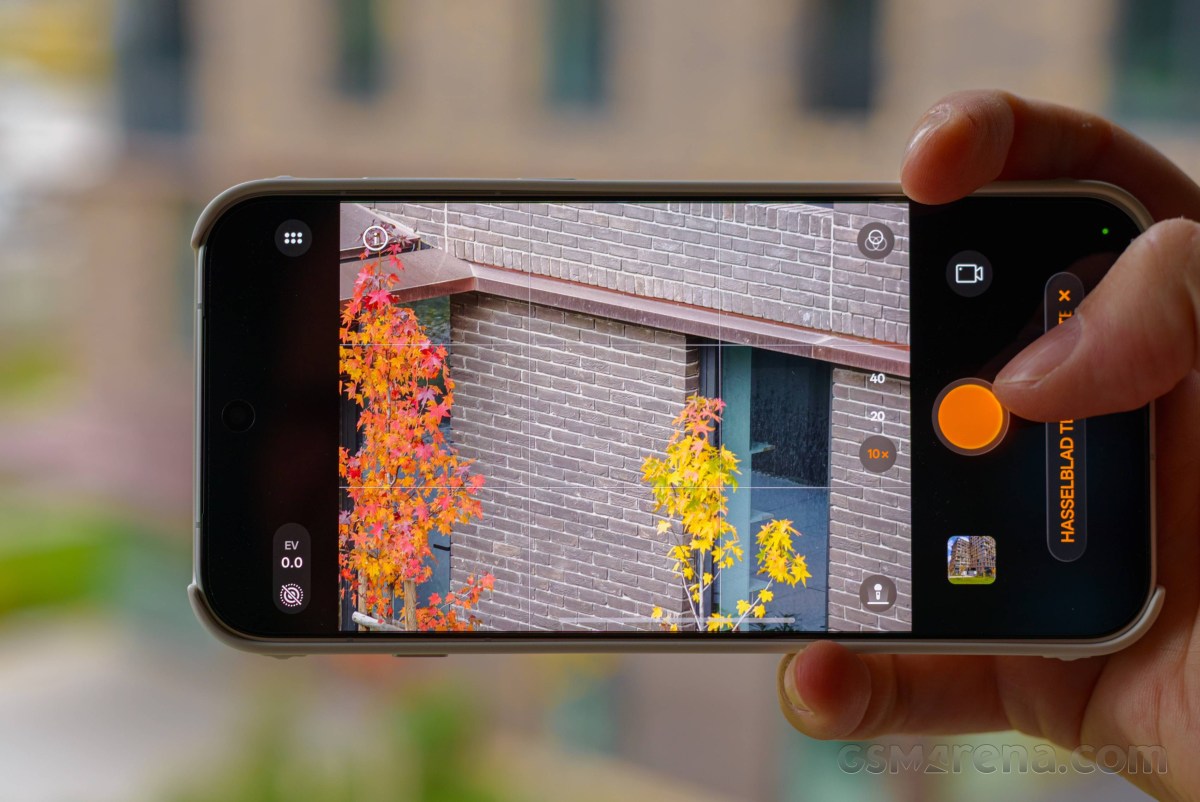
Samples and comparison
Daylight
In teleconverted mode, the phone only captures images in 12.6MP resolution. At 10x zoom they are super sharp, and detail looks really nice.




Daylight samples, teleconverter (10x)
The minimum focusing distance is around 116cm from the phone or 105cm from the front of the lens, so it’s not exactly short, but you can still shoot some reasonably tightly framed close-ups with shallow depth of field and plenty of subject separation.




Daylight samples, teleconverter (10x), close-ups
Those virtues should extend to portraiture, you’d think. Well, in a way they do, but while the subject will be sharp and the background will be blurred away, busy backgrounds will remain busy and out of focus specular highlights won’t be round. That, and the fact that 230mm is quite long of a focal length for portraits, will make the teleconverter better suited to other uses.



Portrait samples, teleconverter (10x)
Well, yes, you could spy on your neighbors, but we won’t be showing samples of that. At 20x you still get quite good sharpness overall, particularly with man-made subjects with straight lines, though truly random detail is more in the so-so territory.




Daylight samples, teleconverter (20x)
The 40x zoom level’s results are hardly perfect, but all things considered the output is quite usable, which is saying something given the 920mm equivalent focal length.




Daylight samples, teleconverter (40x)
Finally, to get an idea of how much better your results will be if you do opt to pay extra for the teleconverter kit, here’s a comparison against what the phone will get you on its own at the same zoom level.






Daylight comparison, 10x: Teleconverter • Phone only
Low light
In the dark, the teleconverter will serve you equally well, bringing distant subjects closer significantly better than what the phone can do on its own. You can count bricks and inspect mortar quality on faraway facades and you can read the bottle labels behind the bartender from across the pub. Because you’d look totally normal waving your 3.28x teleconverter around in the pub.








Daylight comparison, 10x: Teleconverter • Phone only
Once again, the 20x shots look pretty good, with lots of detail and reasonably restrained low-light processing.




Low-light samples, teleconverter (20x)
The 40x zoom level’s results are quite usable too, like we saw in the daytime.




Low-light samples, teleconverter (40x)
Wrap-up
The Oppo-vivo race for offering teleconverters for their top-tier cameraphones is going strong. Vivo seems to be getting a bit more of it right (two lenses that are compatible with more phones, less cumbersome attachment, better software), but Oppo’s counterparts are more or less equally great optically and at the end of the day that should count for something.
So, the Find X10 Pro Max’ Hasselblad Teleconverter Kit delivers on the promise for extra reach and captures high-quality images. As for the practicality of using it, it’s not as clear-cut, though you can reason around its shortcomings if you need the 10x zoom. Whether you’d want to pay full retail price for it is debatable, but getting it in a discounted bundle with the phone may turn it into decent value (itself rather a moot point in 2026, but that’s where we are).