


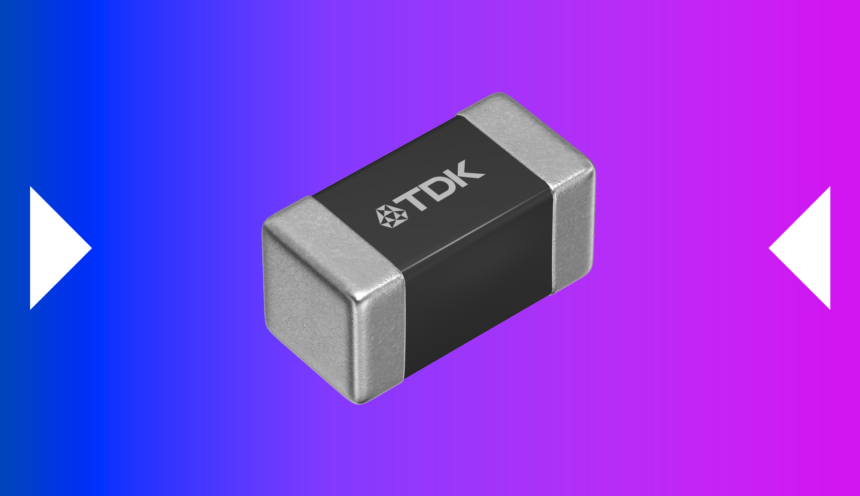
Multilayer inductors support automotive power-over-coax systems by reducing noise while carrying power and data through one cable in camera modules.
TDK Corporation has expanded its MLJ1608-G series of multilayer inductors for automotive power-over-coax (PoC) circuits. Automotive PoC allows power and data to be transmitted through a single coaxial cable. The technology is mainly used in automotive cameras for advanced driver-assistance systems (ADAS). Cameras placed at the front, rear, sides, and other locations of a vehicle capture information about the surrounding environment, which is then processed by an electronic control unit (ECU).
Conventional automotive camera systems typically use separate cables for power and data. PoC combines both functions in one coaxial cable, reducing the number of cables required in the vehicle. This can help reduce wiring size and vehicle weight while improving reliability and reducing CO₂ emissions.
PoC systems use a wideband filter made up of multiple inductors to separate the power and data signals before processing. The expanded MLJ1608-G series uses TDK’s material and structural designs to provide high impedance across the 300 MHz to 2 GHz frequency range.
The inductors have an inductance of 1.2 μH, compared with 0.56 μH for conventional products. Between 100 MHz and 700 MHz, they provide 1.7 to 2 times higher impedance than conventional components, helping suppress noise in the signal path.
The components use a 1608-size package, which can also support smaller automotive camera modules. The company states that it will continue expanding its automotive PoC inductor lineup using multilayer, wire-wound, and thin-film technologies. The company plans to optimise these designs for different market requirements and applications while improving PoC signal transmission quality.
Click here for the original announcement.