


The growing electricity demand is increasing substation loading, making accurate load forecasting essential for transformer planning and reliable operation. This article presents an AI-based substation load growth prediction and monitoring system using the ESP32-WROOM-32, PZEM-004T, Firebase, and Python. The system monitors transformer load in real time, stores data in the cloud, generates peak-load reports, and predicts future demand using machine learning.
Substations rely on high-capacity power transformers to distribute electricity efficiently. Rising transformer loads can cause overheating, reduce equipment life, and lead to failures, making continuous monitoring and predictive analysis essential.
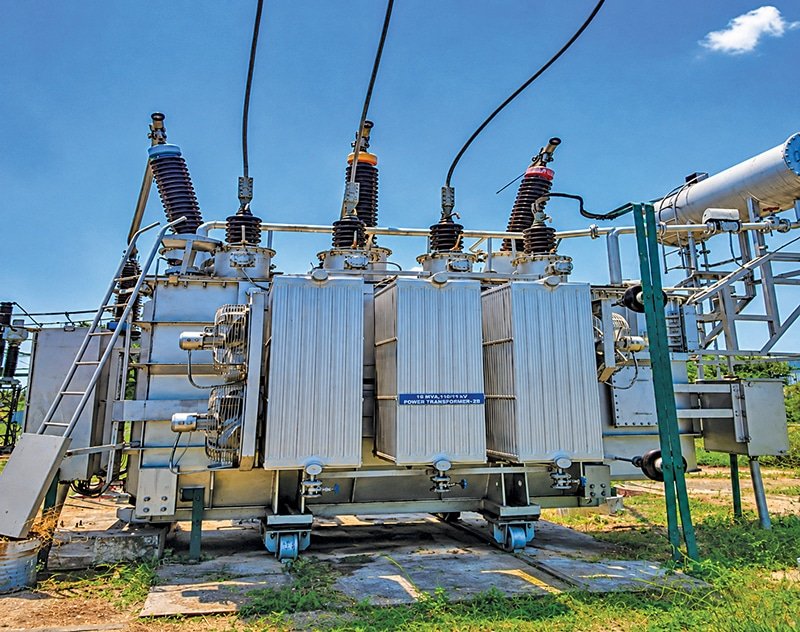
Fig. 1 shows a high-voltage oil-filled power transformer in an outdoor substation. Insulating oil provides cooling and electrical insulation, while radiator fins dissipate heat. High-voltage bushings provide safe electrical connections for reliable power transmission and distribution.
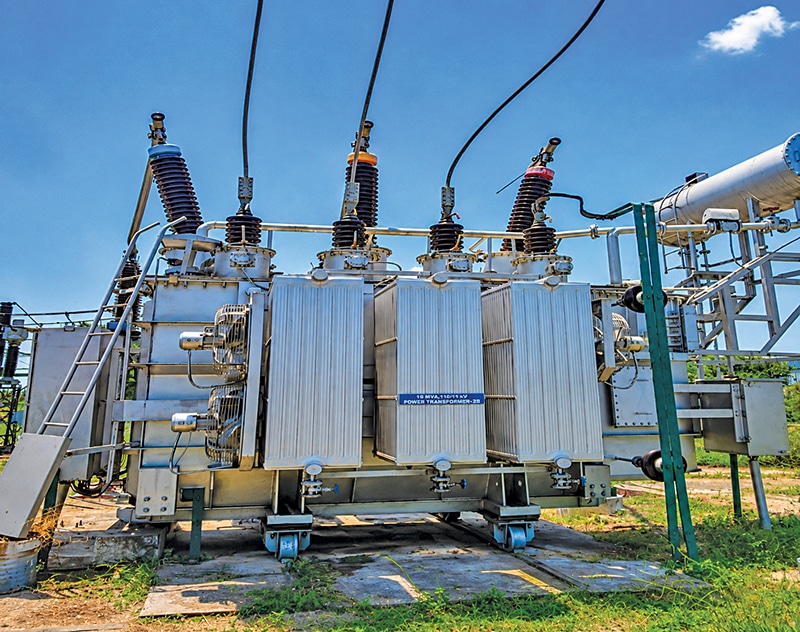
Fig. 2 shows a prototype of an ESP32-based smart power monitoring and control system assembled on a breadboard. It consists of an ESP32 development board, a power supply module, a step-down transformer, and supporting components interconnected with jumper wires. The setup is designed for testing data acquisition, sensor interfacing, wireless communication, and real-time monitoring before final PCB fabrication. Such prototypes help verify circuit operation, troubleshoot hardware, and validate system performance during development.
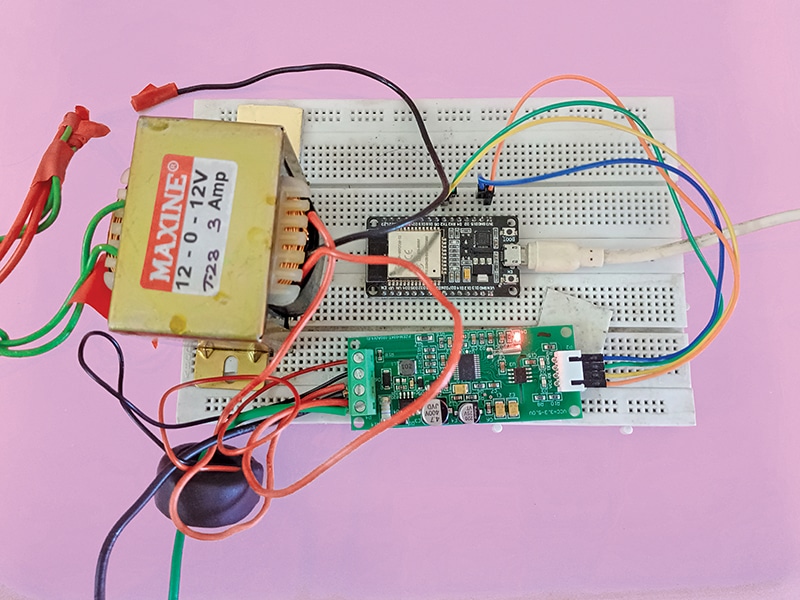
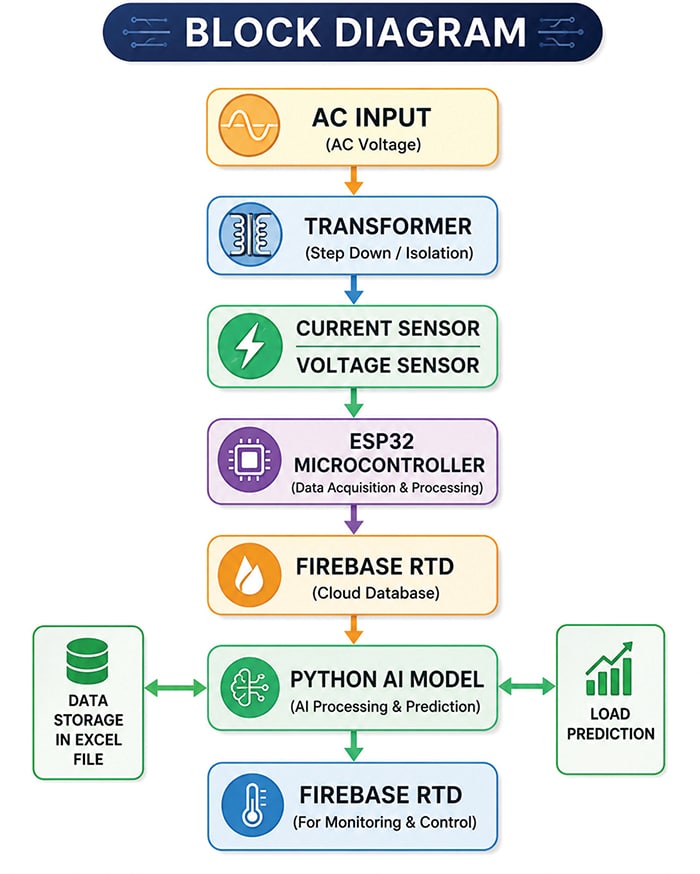
Fig. 3 shows the block diagram of the proposed AI-based substation load monitoring and prediction system. The AC supply is measured through voltage and current sensing, and the data is acquired by the ESP32 microcontroller. The components required to build this system are listed in Bill of Materials table.
| Bill of Materials | ||
| Component | Specification/Description | Quantity |
| ESP32-WROOM-32 | Wi-Fi-enabled microcontroller module | 1 |
| PZEM-004T | AC voltage, current, power, and energy measurement module | 1 |
| Step-down transformer | 230V AC to 24V AC, 1A | 1 |
| USB adaptor cable | USB type-A male to micro-USB female adaptor | 1 |
Circuit diagram and working
Fig. 4 shows the circuit diagram of the load monitoring and prediction system. It is built around an ESP32-WROOM-32, a PZEM-004T energy monitoring module, a 230V-to-24V, 1A step-down transformer, and a 60W bulb used as the load. The transformer provides an isolated AC voltage to the PZEM-004T for voltage measurement, while the ferrite-core current transformer (CT) measures the load current by sensing the current in the live wire. The PZEM-004T communicates with the ESP32 through its UART interface (TX/RX pins), while the 5V and GND pins provide power to the module.
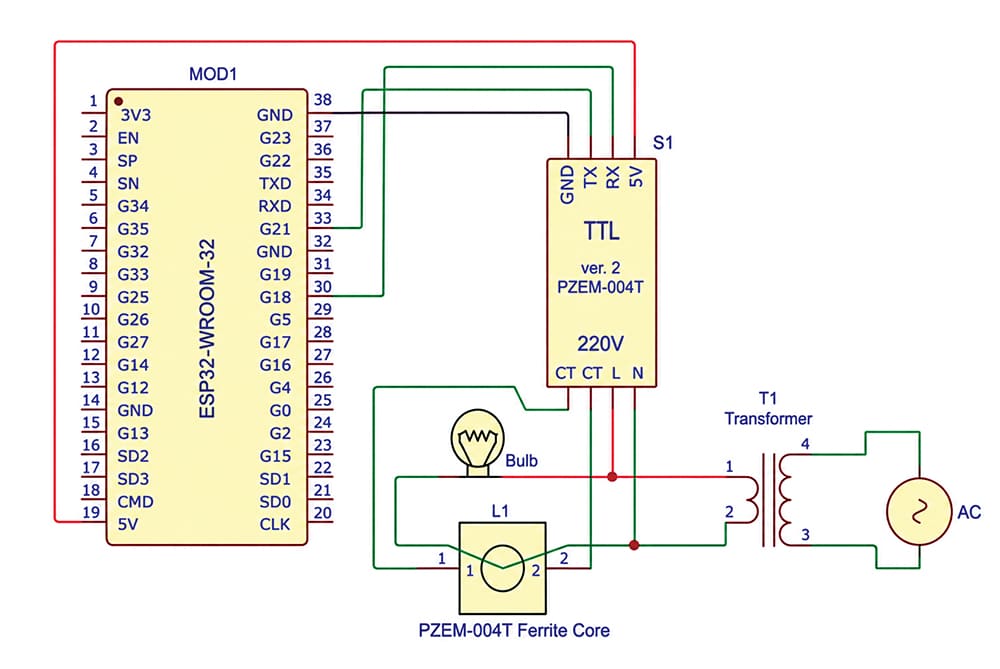
When AC power is applied, the PZEM-004T continuously measures line voltage, load current, active power, energy consumption, frequency, and power factor. The ESP32 periodically reads these parameters, processes the data, and uploads it to the Firebase real-time database over Wi-Fi for remote monitoring.
A Python-based AI application retrieves historical data from Firebase, analyses load trends using machine learning, and predicts future load growth. The prediction results are stored in Firebase and can also be exported to an Excel file for reporting and further analysis. This enables continuous load monitoring, predictive analytics, and proactive transformer capacity planning.
EFY Note: A 230V/12V-0-12V, 1A transformer is used for testing. In actual substations, high-voltage power transformers (for example, 100MVA) are monitored using suitably rated CTs and PTs to provide safe isolation and accurate measurement.
Software and code

EFY++ CONTENT: ACCESS TO THIS CONTENT IS FREE! BUT YOU NEED TO BE A REGISTERED USER.