


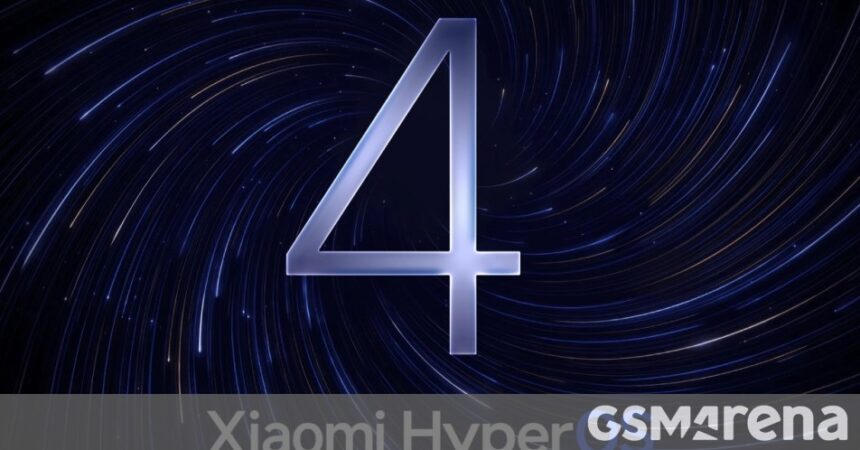
Xiaomi’s HyperOS releases aren’t tied to Android releases – the company is rolling out the Android 17 update as HyperOS 3 and now it has unveiled HyperOS 4, which will most likely be based on the same core. It features a heavily reworked user interface, though.
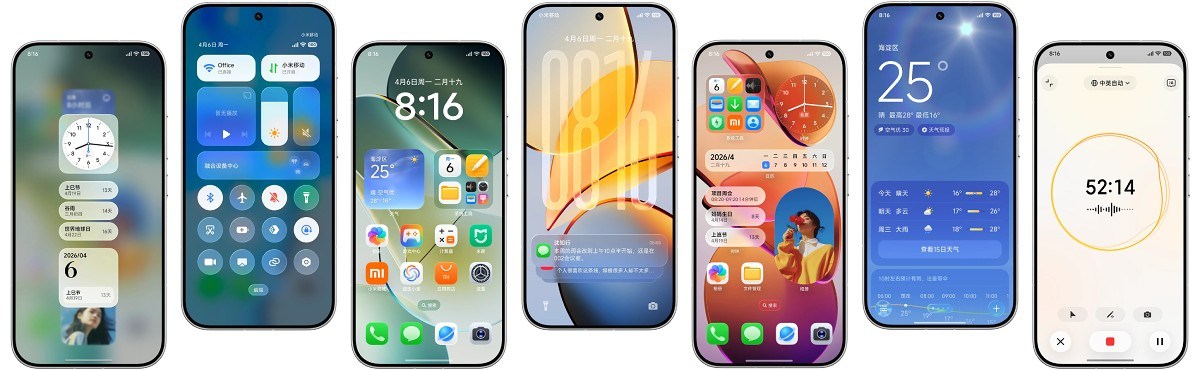
Do you like the new glass UI trend? Well, too bad – it’s the new design language for HyperOS 4. The system will even put effort into rendering realistic-looking refraction.
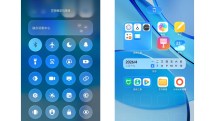
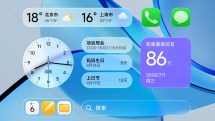
A new glass look for HyperOS 4
The redesigned UI will offer more customization options for the lock screen, letting you arrange the clock and notifications as you see fit. It will also let you resize folders and group widgets. Additionally, the UI will switch seamlessly between portrait and landscape apps and will even rotate any floating apps to match.
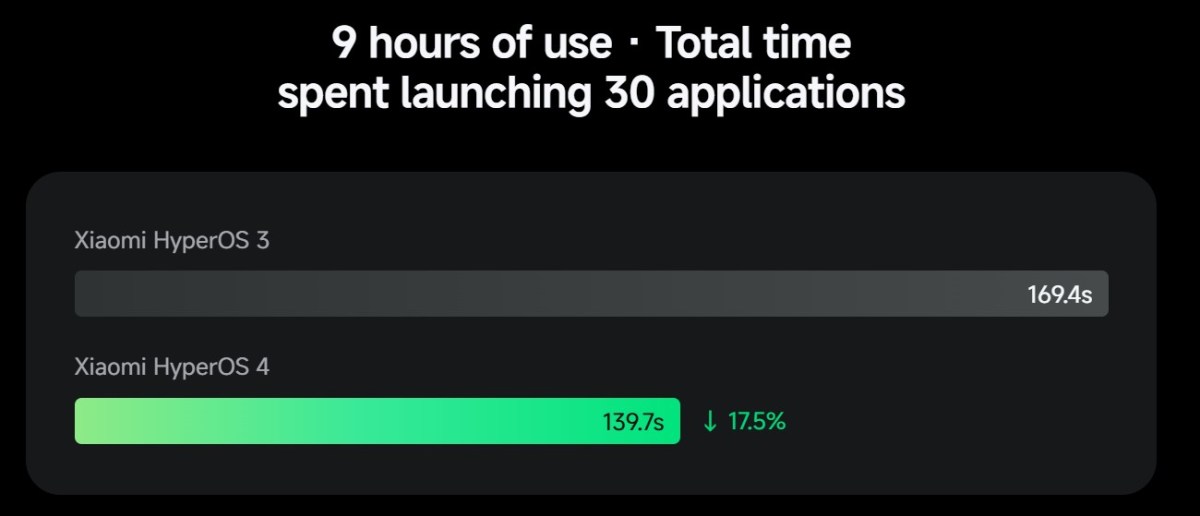
Xiaomi has optimized the internals to speed up application loads. Based on internal testing, after 9 hours of using a phone, it will be around 18% faster in loading apps than it does with the current HyperOS 3.
There are some clever tricks that go on in the background. For example, AI will predict what resources will be needed next and preload them into RAM so that they are ready to go on the user’s command.
The company also tuned up its HDR processing algorithm – whereas an HDR photo might take 310ms to process with the old OS, the new version will do the same job in 240ms. The developers also shaved off 200ms from the camera app’s cold startup time.
Video playback has been significantly improved as well – dropped frames should be a non-issue.
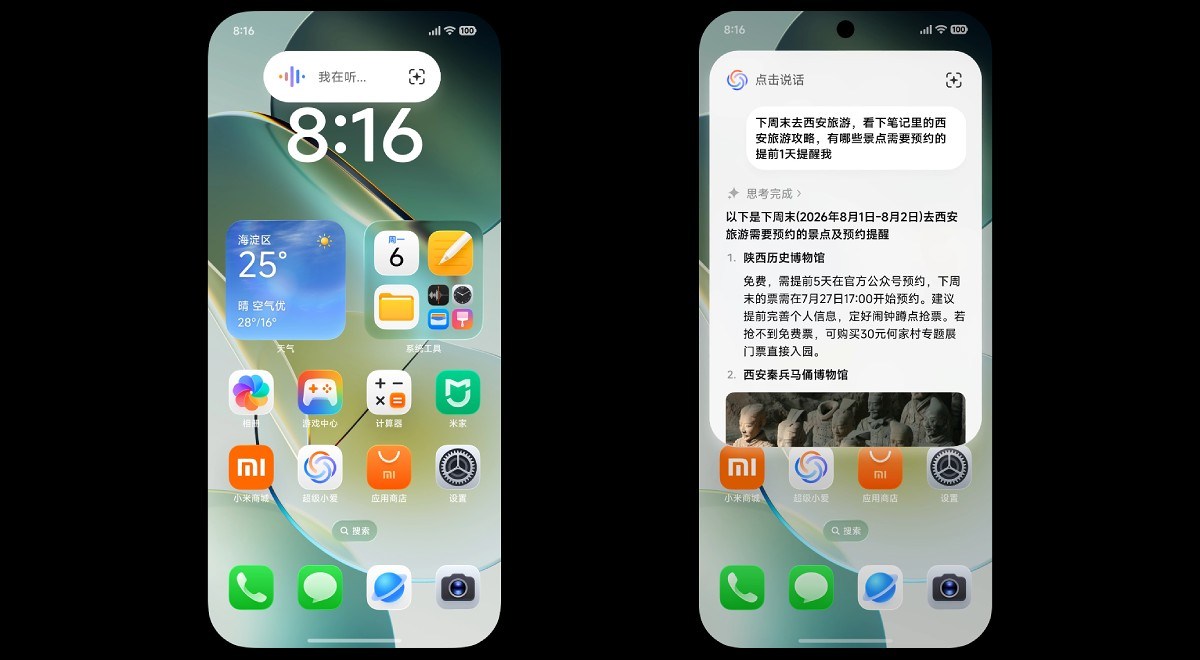
Xiaomi is leveraging its in-house LLM, MiMo, to power “Super AI Assistant 2.0”. It will handle voice transcription and note organization, search your photo album, help you make travel plans, control your smart home (and smart car!), among other things. If you ask it for something more complicated, it will use the Xiaomi Super Island (the popup UI around the punch hole camera) to show you that it heard you and that it’s thinking, only showing a full-screen interface once it has an answer for you.
Xiaomi has built something called “Inspiration Ball”, which works as a pointer to give the UI some context. For example, you can drag it over an address and say “navigate here” to launch maps with a set destination. Or you can drag it over an image of a product you want and ask the AI to find it online. We might not see this in the global release, though, as its functionality overlaps with Google’s Circle to Search.
HyperOS 4 starts public beta testing tomorrow, August 14. This is probably only for China, but the devices below should be more or less the same ones that get the global beta first (we mean the ones available globally, of course).
HyperOS 4 Beta rollout – first batch, August 14
- Xiaomi 17 Ultra (incl. Leica Edition)
- Xiaomi 17 Pro Max
- Xiaomi 17 Pro
- Xiaomi 17
- Redmi K90 Pro Max (incl. Champion Edition)
- Redmi K90
- Xiaomi Pad 8 Pro
- Xiaomi Pad 8
HyperOS 4 Beta rollout – batch #2, August 27
- Xiaomi 17 Max
- Xiaomi 17T Pro
- Xiaomi 17T
- Xiaomi 15 Ultra (incl. Satellite Edition)
- Xiaomi 15S Pro
- Xiaomi 15 Pro
- Xiaomi 15
- Redmi K90 Max
- Redmi K90 Ultra
- Redmi K Pad 2
HyperOS 4 Beta rollout – batch #3, September 17
- Redmi K100 Pro Max
- Redmi K100 Pro
- Redmi K80 Pro
- Redmi K80 Pro Extreme Edition
- Redmi K80
- Xiaomi Mix Flip 2
- Xiaomi Pad 7 Ultra
- Xiaomi Pad 7S Pro 12.5
The first batch of phones should get the new software in the afternoon on the 14th, while the second and third batches will have a more gradual rollout.