

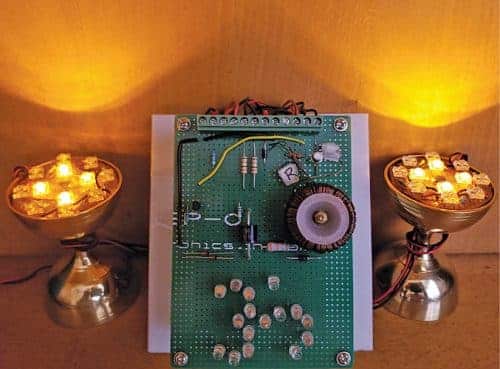
In this article, we have compiled some of the best DIY solar-powered electronics projects that you can build, learn from, and adapt for your own applications. Each project showcases a unique use of solar energy, making this collection a valuable resource for anyone interested in renewable energy and electronics design.
Solar Energy Harvesting Circuit
A low-light solar energy harvesting system using the LTC3105 with built-in MPPT can efficiently extract power from indoor ambient light (as low as a few lux), start from voltages as low as 250 mV, and store energy in a supercapacitor to enable battery-less IoT devices. By continuously operating at the PV cell’s maximum power point, the design significantly improves efficiency (up to ~80–90%), making it ideal for wearables, sensor nodes, and energy-autonomous systems.
Automatic Solar Light Circuit
Automatic solar lights offer bright illumination without the need for complex wiring or a connection to the grid. Plus, they help lower your electricity bill while keeping your garden eco-friendly and hassle-free.
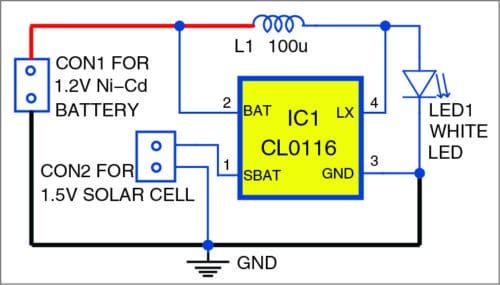
It is built around a solar lamp controller IC CL0116 (IC1), a miniature solar cell, a bright white LED (LED1) and a few other components.
Solar Lamp That Runs Non-Stop
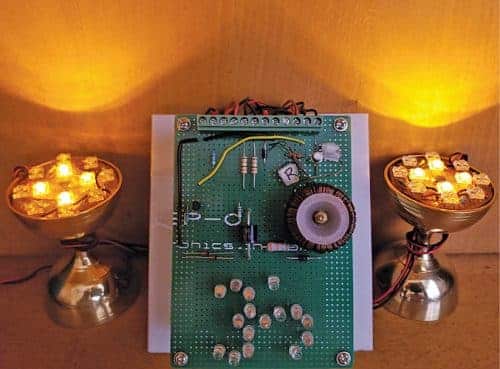
In this system, a small solar photovoltaic (PV) panel turns on the LEDs during the daytime and charges two supercapacitors during the day. In the evening, when the daytime LEDs turn off, another set of LEDs (joule thief) is turned on using energy stored in the supercapacitors.
As supercapacitors can be charged and discharged any number of times, the whole system can work nonstop for 15 years or more.
Solar Powered Home Lighting System
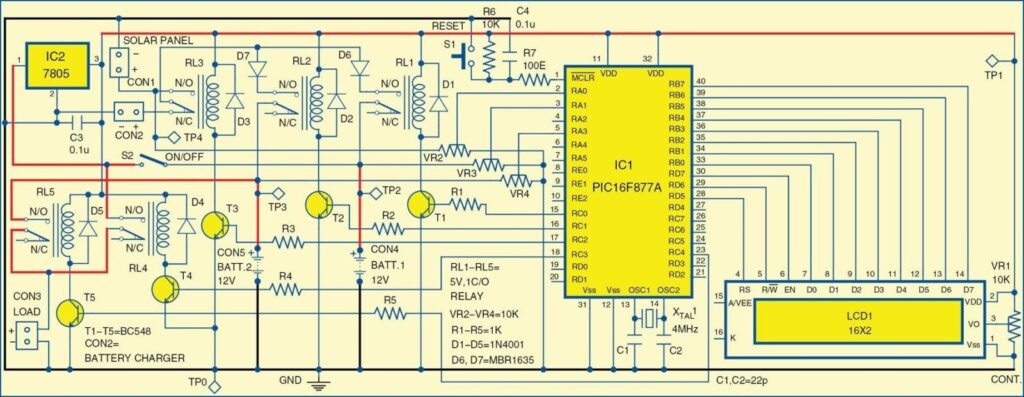
This project suggests a solar-powered home lighting system that uses solar power and LED lighting technology in a more efficient way. Solar power systems use solar panels to convert the sun’s energy directly to electricity. This electricity is stored in the batteries that can supply only a DC output. All available lighting systems, including LED lights, work on AC power. So the DC supply needs to be converted to AC using inverters, which causes some loss of power. The amount of power lost during this process depends on the efficiency of the inverter.
But, if we look closely, in most of the LED lighting systems, the AC is converted back to DC using switched-mode power supplies (SMPS) having an efficiency of around 80 per cent.
This system proposes to use the power from the battery directly for LED lighting, eliminating the need for DC-to-AC conversion by the inverter and AC-to-DC conversion by the LED light’s SMPS supply.
Portable Solar Lantern Cum Bedlight
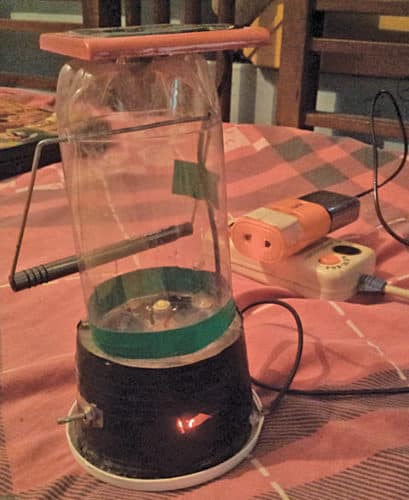
This portable, solar-powered lantern with an auto bedlight for everyday use can be made from readily available components. It is built around a 5.5V, 60mA solar panel, LDR1, transistor BC547 (T1), 1-watt white LED (LED2), two 1N4007 rectifier diodes (D1, D2), and a few other components.
Solar Powered Pedestal Lighting System
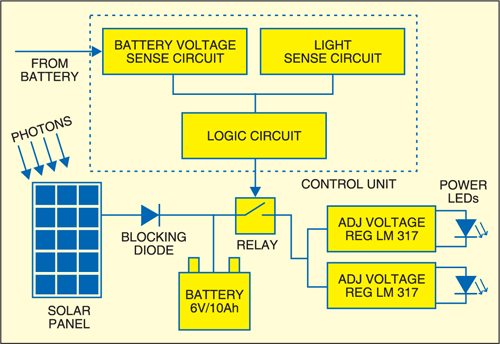
This solar-powered pedestal lighting system uses power LEDs for lighting. Solar energy is first converted into DC electricity by a solar photovoltaic cell and used to charge a storage battery. The solar energy stored in the battery is utilised at night for pedestal lighting using power LEDs.
Solar Day Lamp with Battery Backup
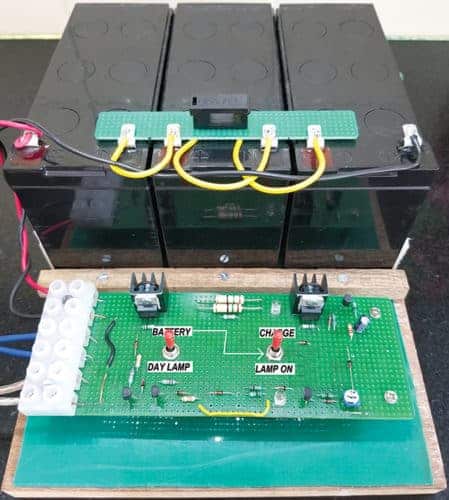
This solar day lamp with battery backup can be used in offices, homes, shops, warehouses, temples, etc. It offers a cost-effective way of harnessing solar energy. It is simple to manufacture and has a long life.
Wireless IoT Solar Power Plant Monitoring System
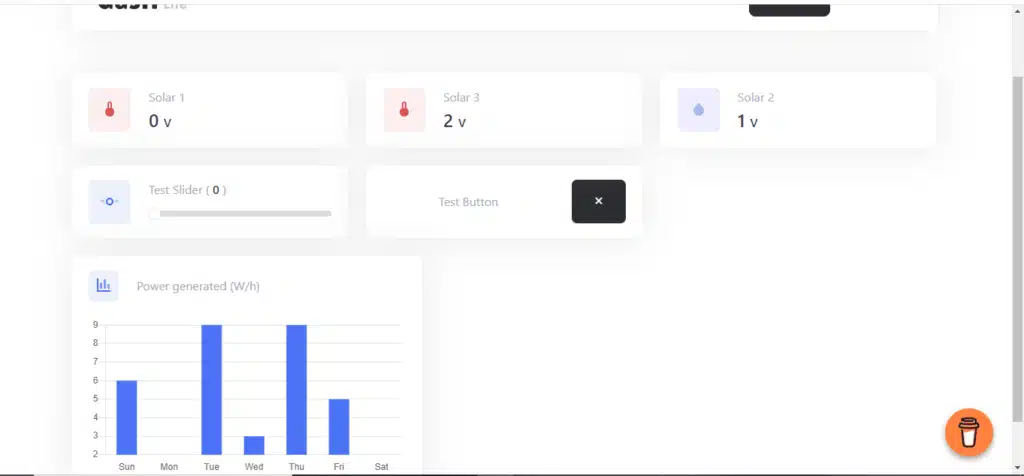
In this project, you will learn to build an IoT solar monitoring system that maintains the overall solar-based electricity supply while consuming minimal power for its function. Based on the performance of each solar power unit, you will get a live graph and information on the amount of electricity required by clients. Using the dashboard, you can also monitor in real-time the power produced by each solar panel and track the efficiency of each solar panel.
Solar Power MPPT Controller Reference Design
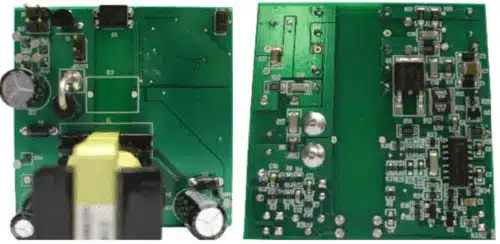
This ready-made off-grid streetlamp reference design simplifies solar lighting development with power tracking, flexible configurations, and performance adjustments.
Solar Powered Street Light Reference Design
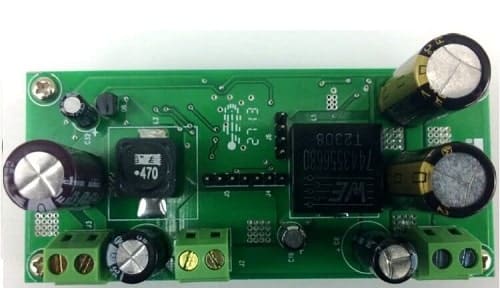
This reference design can help you build a high-efficiency solar-powered street light. The reference design is of a 12A Maximum Power Point Tracking (MPPT) solar charge controller with a 700mA LED driver. It has an efficiency of over 90% for the LED driver and over 95% for the MPPT charger.
The street light reference design is capable of driving up to 15 LEDs in series, as it can provide a continuous current of 700mA. The design is made for a 12V Li-Ion battery, but with minor modifications, it can be used for a 12V Lead-acid battery or a 24V Li-Ion battery system by just changing the MOSFETs.
– Advertisement –