


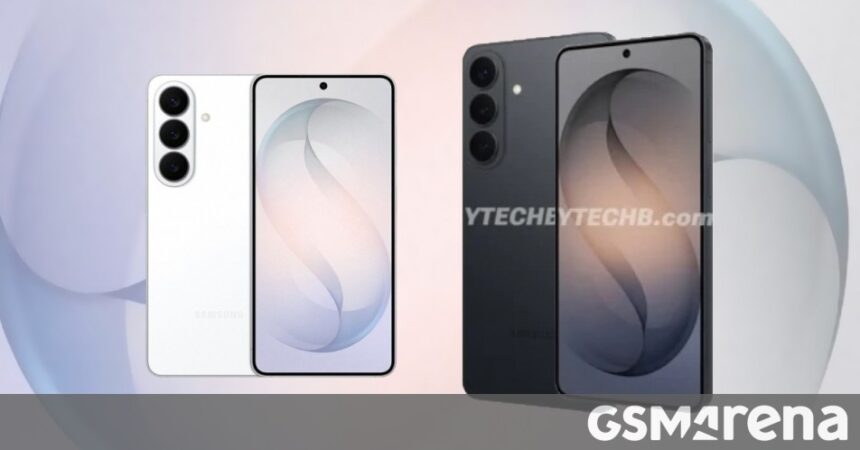
The Galaxy S26 series launch is officially happening on February 25. There will be three models as usual – we already had a close look at all the Galaxy S26 Ultra leaks, now it’s time to do the same for the other two models. Here is what we think we know about Samsung’s upcoming flagships.
No Pro, No Edge
Samsung never officially confirmed it, but it was reportedly developing a Galaxy S26 Pro to replace the vanilla model and a Galaxy S26 Edge to replace the Plus model. Poor sales of the S25 Edge made sure that the latter isn’t happening. As for the S26 Pro, we’re not sure what killed that project, but it may have been a simple re-branding, anyway. Whatever the case may be, the S26 Pro and S26 Edge are not happening.
Last minute changes
The decision to cancel the S26 Edge came pretty late and insiders claim that Samsung had to scramble to get the Galaxy S26+ ready in time. This means that the Plus model will miss out on a display upgrade – the 2026 model should use an almost identical display to the S25+. It should get better glass (see below), but that’s about it.
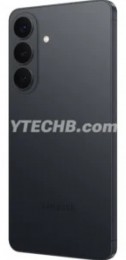
Samsung Galaxy S26+ (speculative renders)
The Galaxy S26 may be a bit taller but lighter
Unlike its Plus sibling, the Samsung Galaxy S26 is getting an upgraded display. It will reportedly feature a new 6.27” panel, up from the 6.16” panel of its predecessors (expect this to be rounded up to 6.3” in most spec sheets).
The vanilla S26 will be around 3mm taller and 1mm wider than its predecessor, according to a yet unconfirmed leak. The thickness should remain the same. You can see a size breakdown in the table below:
| Galaxy S25 | Galaxy S26 | Galaxy S25+ | Galaxy S26+ | |
|---|---|---|---|---|
| Display | 6.2” | 6.3” | 6.7” | 6.7” |
| Height | 146.9mm | 149.6mm | 158.4mm | 158.4mm |
| Width | 70.5mm | 71.7mm | 75.8mm | 75.8mm |
| Thickness | 7.2mm | 7.2mm | 7.3mm | 7.3mm |
| Weight | 162g | 137g | 190g | 190g |
| Battery | 4,000mAh | 4,300mAh | 4,900mAh | 4,900mAh |
The vanilla model will come with a bigger battery, but more on that in a moment. For now, let’s highlight the expected weight – it has been a long while since we’ve seen a mass-market smartphone under 140g. Assuming these numbers are correct, of course. We’ve also seen 167g get thrown around (that would be 5g more than the S25).
One unconfirmed report suggests that all three models will use Gorilla Armor 2 glass, the special anti-reflective glass that was featured only on last year’s Ultra. Take this with a grain of salt, though. Additionally, the new Privacy Screen will be exclusive to the Ultra.
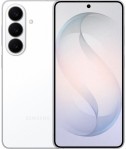
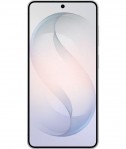
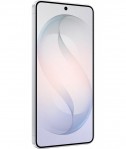
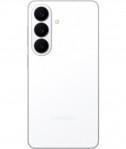
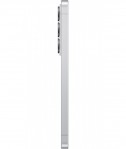
Samsung Galaxy S26 (speculative renders)
Batteries and charging speeds
As you already saw above, the Samsung Galaxy S26+ will have the same 4,900mAh battery capacity as its predecessor – a TÜV certification from a couple of months ago confirmed it. It will support the same 45W wired as its predecessor plus slightly faster 20W wireless charging (up from 15W).
As for the vanilla model, Samsung supposedly managed to squeeze 300mAh more capacity into the Galaxy S26, giving it a total of 4,300mAh. We’ve seen some rumors that the S26 will be bumped up to 45W charging, but we’ll believe it when we see it.
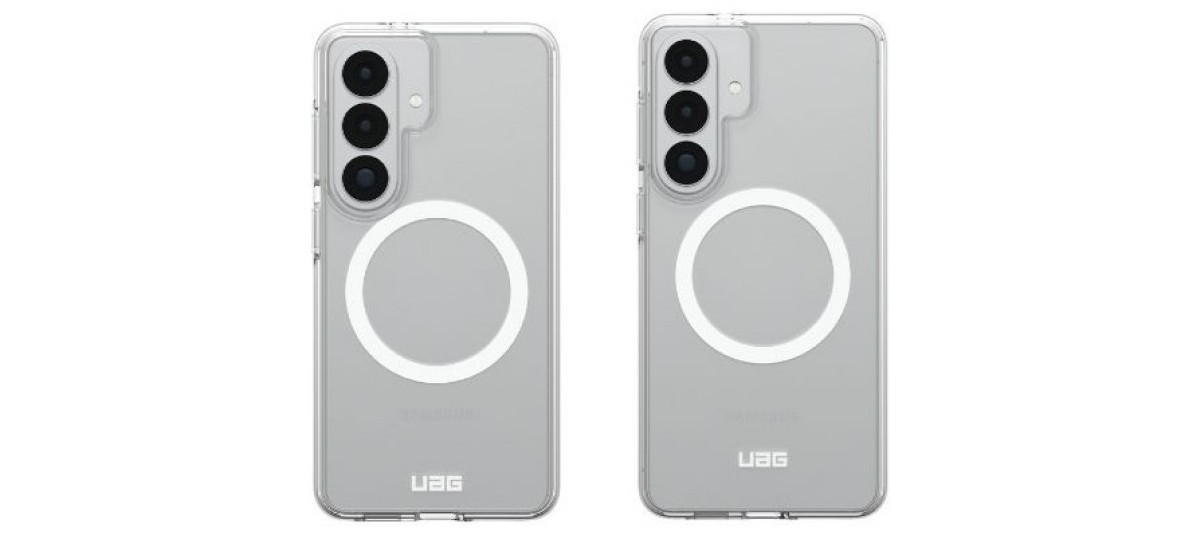
Magnetic cases for the Galaxy S26 and S26+
Note that the S26 series will not have built-in magnets. This was confirmed by the WPC certification, which listed all three phones with Qi 2.2.1 Base Power Profile support only (no Magnetic profile). Buyers who want to use magnetic charging and/or other magnetic accessories will have to buy a magnetic case first.
That won’t stop Samsung from selling a magnetic Qi2 charger and a magnetic Qi2 power bank, though. The charger advertises 25W max speed, which is what the S26 Ultra will support, the other two will top out at 20W. The power bank will be able to send 15W to the phone and can itself be charged at up to 20W over USB-C.
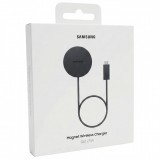
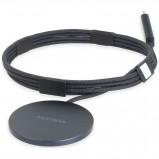
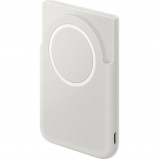
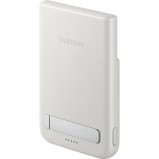
25W magnetic Qi2 charger • 25W magnetic Qi2 charger • 15W magnetic Qi2 power bank
Exynos 2600 in some markets, Snapdragon 8 Elite Gen 5 in others
Recently, a Korean Galaxy S26 was spotted running Geekbench with an Exynos 2600. Before that, a US-bound unit ran the benchmark with the Snapdragon 8 Elite Gen 5. In other words, be prepared for another regional split. This applies to the Galaxy S26+ too, by the way. Only the S26 Ultra will use Snapdragon chips exclusively.
Now, the Snapdragon should be pretty familiar at this point. There is a chance that it will be a “for Galaxy” model, but that shouldn’t make much of a difference. At least not judging by these benchmark results. Do keep in mind that the performance of pre-release hardware and software may not be indicative of the performance of the retail unit.
Here are a few key details about the Exynos 2600. It is the world’s first 2nm mobile chipset as it is fabbed on Samsung Foundry’s 2nm GAA node. It has a 10-core CPU using ARM C1 cores (one Ultra at 3.8GHz, three Pro cores at 3.25GHz and six lower-power Pro cores at 2.75GHz). This is paired with an Xclipse 960 GPU.
According to Samsung, the CPU on the new chipset is 39% faster than that of its predecessor, while the GPU offers 50% higher ray tracing performance. The new NPU offers a massive 113% improvement for those all-important AI apps.
256GB base storage for the Galaxy S26, no changes for the S26+
While the S25 finally got the bump up to 12GB of RAM, it still had 128GB as its base storage. That’s not great on any phone, least of all on a flagship. But that’s in the past now. Leaks show that the Galaxy S26 will be offered in 256GB and 512GB options, the same as the Galaxy S26+.
Camera improvements… maybe?
Samsung has started teasing the upcoming Galaxy S26 series with several short videos that highlight camera improvements. They don’t promise anything concrete, though.
Leaks, meanwhile, paint a harsh picture of reality – the Galaxy S26 will reuse the Galaxy S25 cameras. This means a 50MP main with a 1/1.56” sensor, a 10MP 3x telephoto with a 1/3.94” sensor and a 12MP ultra-wide with a 1/2.55” sensor. The S26+ will, as usual, have the same camera setup as its vanilla sibling.
Some of you will be keen to point out that these aren’t really the S25’s cameras – they are basically the same as the S24 and S23 cameras. And that is indeed true, which could spell trouble for Samsung when it comes time to compare the new S-models with the iPhone 17 series.
Satellite communication
Another thing that Samsung fell behind on is adopting satellite communication. The Galaxy S26 series will finally fix that as the FCC listings for the US variants of the S26, S26+ and S26 Ultra include Non-Terrestrial Network (NTN) and Supplemental Coverage From Space (SCS).
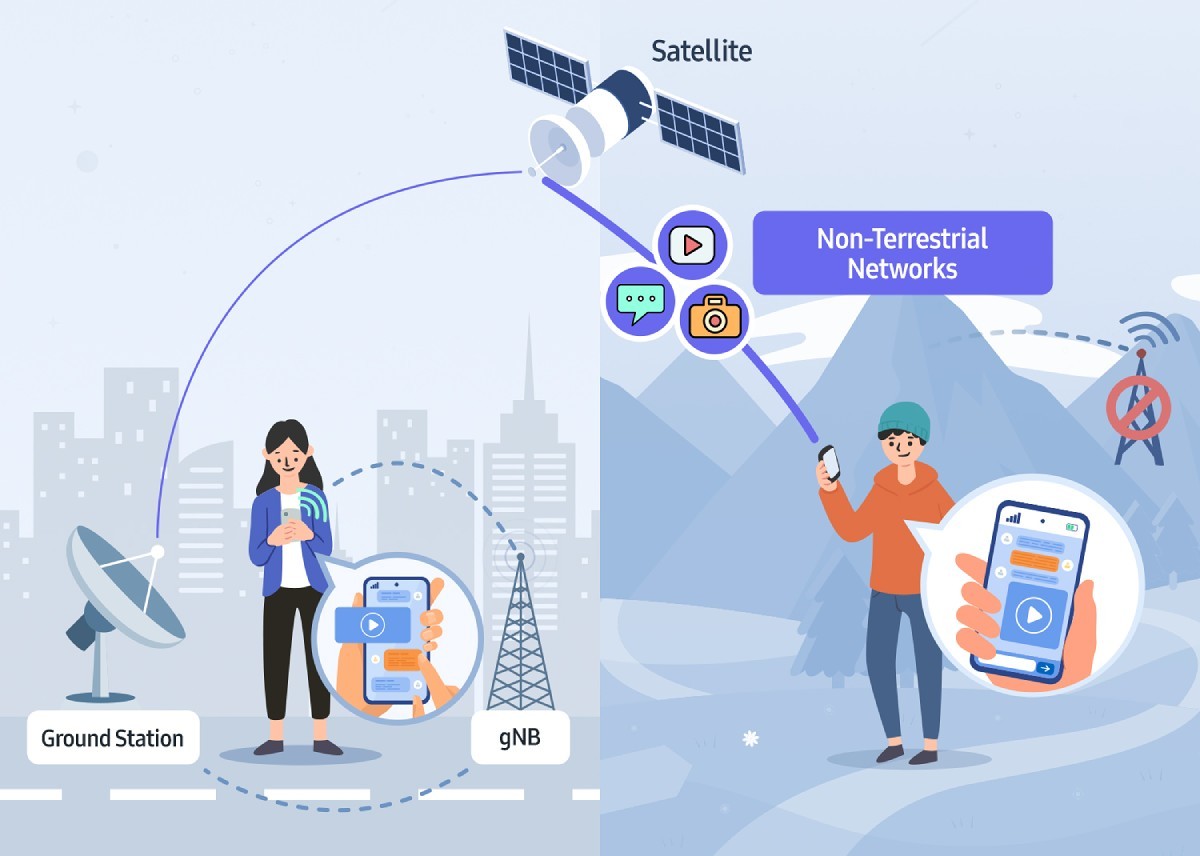
They may even get satellite voice calls too. Do keep in mind that hardware capabilities also depend on local rules, regulations and availability of satellite services.
One more thing – the vanilla Galaxy S26 should finally feature UWB connectivity and close the gap to the Plus and Ultra models. This is important as it enables direction finding when tracking smart tags.
New prices
You didn’t think that upgrading the base storage on the Galaxy S26 to 256GB will be free, did you? One report claims that this model will cost a bit extra. The 512GB variant, meanwhile, will be a bit cheaper.
The Galaxy S26+ should cost the same as its predecessor if you go for the 256GB option, while the 512GB variant could see a small adjustment. We don’t have concrete numbers for either model, unfortunately.
Of course, during the pre-order period, Samsung will most likely offer free storage upgrades (i.e. selling 512GB models for the price of a 256GB unit), plus other perks like trade-in bonuses and a small discount ($30/€30) for people who joined the pre-reservation program.
Specs overview for the Galaxy S26 and S26+
Here is a detailed spec sheet for the Galaxy S26 and Galaxy S26+ based on the leaks so far. It goes without saying that the information below could be wrong or incomplete.
| Galaxy S26 | Galaxy S26+ | |
|---|---|---|
| Dimensions | 149.6 x 71.7 x 7.2mm | 158.4 x 75.8 x 7.3mm |
| Weight | 167g -or- 137g |
~190g |
| Display | 6.3-inch, Dynamic AMOLED 2X, 1,080 x 2,340px, 120Hz, Corning Gorilla Armor 2 | 6.7-inch, Dynamic AMOLED 2X, 1,440 x 3,120px, 120Hz, Corning Gorilla Armor 2 |
| Software | One UI 8.5 / Android 16 | |
| Chipset 1 | Exynos 2600 1x C1-Ultra 3.8GHz, 3x C1-Prox 3.25GHz, 6x C1-Pro 2.75GHz Xclipse 960 GPU |
|
| Chipset 2 | Snapdragon 8 Elite Gen 5 2x 4.6GHz Oryon V3 Phoenix L, 6x 3.62GHz Oryon V3 Phoenix M Adreno 840 GPU |
|
| Memory and storage | 12GB; 256/512GB | |
| Rear cameras | 1st Camera: 50MP main, f/1.8, 24mm, 1/1.56″, 1.0μm, Dual-Pixel PDAF, OIS 2nd Camera: 10MP telephoto, f/2.4, 67mm, 1/3.94″, 1.0μm, PDAF, OIS, 3x Optical Zoom 3rd Camera: 12MP ultrawide, f/2.2, 13mm, 120°, 1/2.55″, 1.4μm, Super Steady Video |
|
| Features | Panorama, Portrait, 8K@24/30fps, 4K@30/60fps, 1080p@30/60/120/240fps, 10-bit HDR, HDR10+, Stereo Sound, Gyro-EIS | |
| Front camera | 12MP wide-angle, f/2.2, 26mm, 1/3.2″, 1.12μm, dual-pixel PDAF, HDR, 4K@30/60fps, 1080p@30fps | |
| Sensors | Gyroscope, E-compass, Accelerometer, Barometer, Fingerprint Sensor, Proximity Sensor | |
| Positioning | GLONASS, GPS, Galileo, QZSS, BDS | |
| Dual SIM | Yes, Nano/eSIM | |
| Features | 5G, USB-C, NFC, Wi-Fi 7 (be), Bluetooth 5.4, UWB, Satellite connectivity | |
| Battery | 4,300mAh Li-ion, wireless charging, 25W wired charging, possibly 45W | 4,900mAh Li-ion, wireless charging, 45W wired charging |
| Colors | White, Blue, Black, Purple | |
| Price | Around €1,000 | around €1,270 |