


The family of a Colombian man who was killed in a U.S. strike on an alleged drug-carrying vessel in the Caribbean has filed a formal complaint to a leading human rights agency, arguing the man’s death was an extrajudicial killing.

The petition filed by U.S.-based human rights lawyer Daniel Kovalik, on behalf of the family of Alejandro Carranza, says he was killed after the U.S. military bombed his fishing boat on Sept. 15 while he was sailing along Colombia’s Caribbean coast, and that his death violated human rights conventions.
The Inter-American Commission on Human Rights received the petition on Tuesday, which was first reported by The Guardian. Because the U.S. does not recognize the existence of an international court associated with the human rights body, any recommendations given by the commission would not be legally binding.
Kovalik said Carranza’s four children and his wife are seeking compensation, as he was the family’s breadwinner.
Kovalik told the Associated Press that the family chose the commission because of the obstacles a federal case would face, but the possibility is on the table.
“The U.S. does not subject itself to accountability, so we’re using the avenues we have before us,” Kovalik said on Wednesday.
“We believe that a decision in our favour, combined with public pressure, can get us that compensation and also can end the killings in the Caribbean,” he continued.

In November, after the strike that killed Carranza, Colombian President Gustavo Petro accused the U.S. government of murder on X.

Get breaking National news
For news impacting Canada and around the world, sign up for breaking news alerts delivered directly to you when they happen.
“U.S. government officials have committed a murder and violated our sovereignty in territorial waters. Fisherman Alejandro Carranza had no ties to the drug trade and his daily activity was fishing,” Petro wrote.
The U.S. military has killed more than 80 people since September, after it began conducting strikes on boats the Trump administration says were transporting drugs towards the U.S. His administration has not shared any information about the people killed in the strikes, but insists it is targeting foreign terrorists operating drug smuggling vessels.
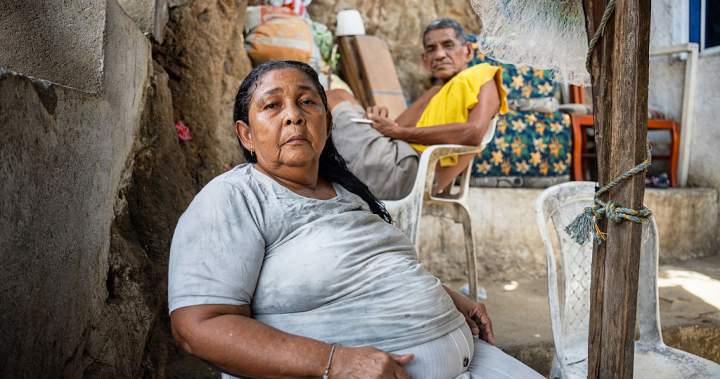
Carmela Medina, mother of Alejandro Carranza, a Colombian man who allegedly died when the US bombed a boat supposedly carrying drugs in the Caribbean, cooks in her kitchen in Santa Marta on October 21, 2025.
(PhoMARCO PERDOMO/AFP via Getty Images


The military attacks began along Venezuela’s Caribbean coast before spreading into the eastern Pacific Ocean. At the same time, the U.S. military has increased its presence in the region to the largest in generations.
The strike that killed Carranza also killed two others. At the time, when probed by reporters for evidence of criminal activity on board, Trump told the press that bags of cocaine and fentanyl were found floating in the ocean.
The White House never released images of the scene Trump was referring to.
Kovalik says there were no drugs on Carranza’s boat, and said his client did not know if other people were on the vessel. Kovalik, who is also representing President Gustavo Petro in the U.S. after the Trump administration imposed sanctions on him, said he met the Carranzas at their home in northern Colombia.
Petro, a left-leaning leader, has called the boat attacks “murders” and criticized the U.S. military’s use of force.
The attacks have faced growing scrutiny after the Washington Post reported that Defense Secretary Pete Hegseth issued a verbal order to “kill everybody” on the first boat targeted by the military.
An admiral approved a follow-up strike — said to have killed two survivors of the initial hit. Hegseth has said the admiral “made the right call” and he “had complete authority to do” so, the AP reported.
Carranza’s lawyer also says the family does not have access to the resources necessary to obtain reparations in Colombia, and they have received death threats from right-wing paramilitary groups in the country for denouncing the death of their loved one.
— With files from the Associated Press
© 2025 Global News, a division of Corus Entertainment Inc.